Best AI Agriculture Monitoring Tools in 2025
The AI Revolution in Modern Agriculture
Agriculture is experiencing its most significant transformation since mechanization. AI-powered monitoring tools are helping farmers increase crop yields by 15-30%, reduce water usage by 20-40%, and cut operational costs by 10-25%—all while minimizing environmental impact.
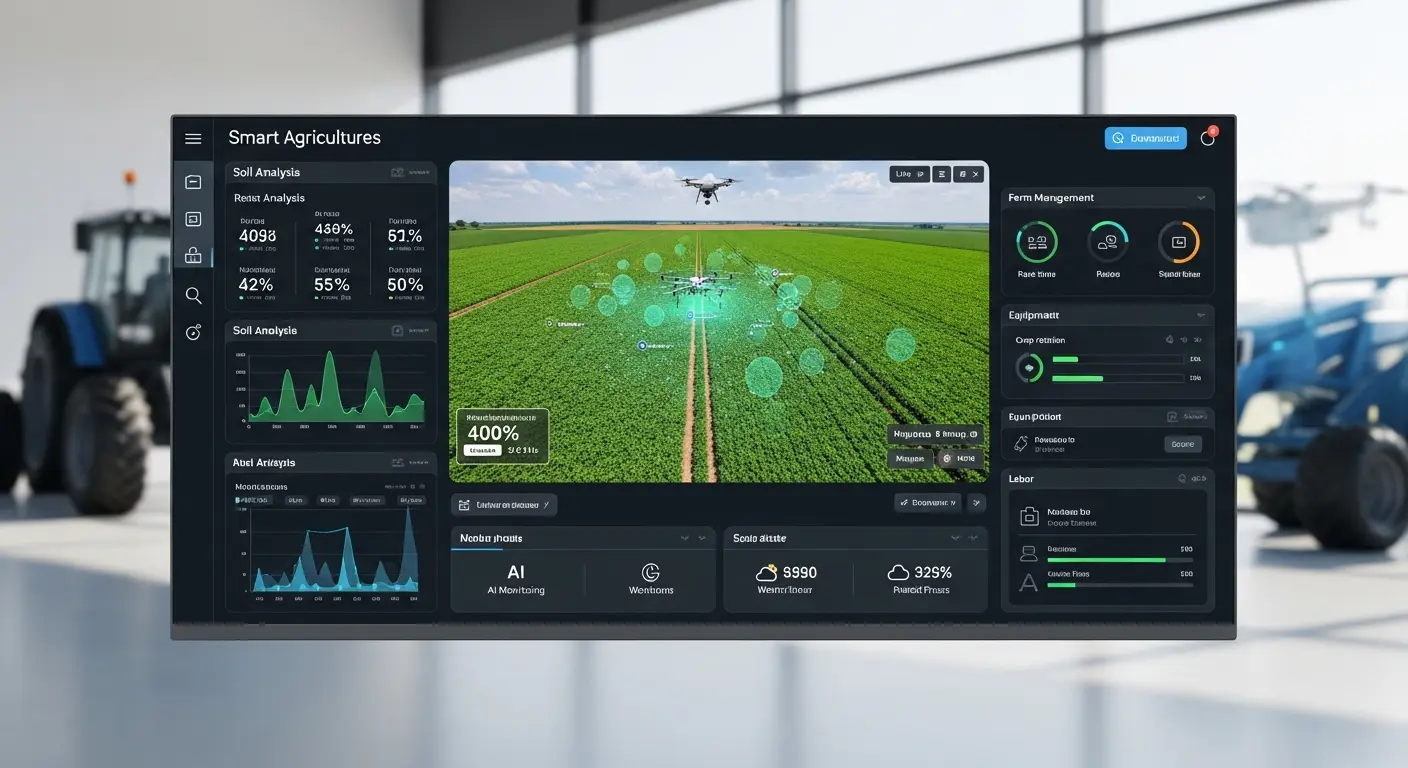
In 2025, AI agriculture platforms have become accessible to farms of all sizes, from small family operations to large commercial enterprises. These tools leverage satellite imagery, drones, sensors, and machine learning to provide actionable insights that were impossible just a few years ago.
The Reality: Farmers using AI monitoring report saving 10-15 hours weekly on field inspections while catching problems days or weeks earlier than traditional methods.
Understanding AI Agriculture Technology
How AI Transforms Farming
Modern AI agriculture platforms combine:
- Satellite and Drone Imagery: Monitor crop health across entire fields daily
- IoT Sensors: Real-time soil moisture, temperature, and nutrient tracking
- Weather Analytics: Hyper-local forecasting and risk assessment
- Machine Learning: Predict yields, detect diseases, optimize irrigation
- Computer Vision: Identify pest infestations and nutrient deficiencies
- Predictive Maintenance: Anticipate equipment failures before they happen
Key Benefits
Increased Efficiency:
- Precise resource application (water, fertilizer, pesticides)
- Reduced labor costs through automation
- Optimized harvest timing
- Better field-to-field decision making
Sustainability:
- Lower chemical usage through targeted application
- Reduced water waste
- Minimized environmental impact
- Carbon footprint tracking
Financial Impact:
- Higher yields per acre
- Lower input costs
- Reduced crop losses
- Better market timing
Top AI Agriculture Monitoring Platforms
1. John Deere Operations Center
Price: Free basic tier | Premium features vary by equipment Best For: Large-scale farms, equipment integration, comprehensive management
John Deere has evolved from equipment manufacturer to ag-tech leader with their Operations Center platform.
Key Features:
- Real-time equipment monitoring and optimization
- Field-level yield analysis and mapping
- Prescription planting and variable rate application
- Equipment diagnostics and predictive maintenance
- Integration with John Deere machinery
- Mobile field notes and documentation
Standout Capability: Seamless integration between planning, planting, monitoring, and harvest—all connected to equipment.
Best For: Farms with John Deere equipment seeking end-to-end digital management.
ROI Example: Farms report 8-12% yield increases through optimized planting patterns and variable rate fertilization.
2. Climate FieldView (Bayer)
Price: Free basic | Plus at ~$2,500/year | Premium at ~$7,500/year Best For: Data-driven decision making, multi-field comparison, independent platform
Climate FieldView is equipment-agnostic, working with all major brands while providing powerful analytics.
Key Features:
- Satellite crop health monitoring (updated every 3-5 days)
- Historical field performance comparison
- Variable rate prescriptions for seeding and fertilization
- Crop disease and pest risk modeling
- Yield comparison across hybrids and varieties
- Integration with 30+ equipment brands
Unique Strength: Field-to-field performance comparison helps identify what works and what doesn't.
Pro Tip: The free tier is surprisingly powerful—great for small-to-medium farms starting their digital journey.
Time Saved: 6-10 hours weekly on field scouting and record-keeping.
3. Taranis
Price: Custom pricing based on acreage Best For: High-resolution field monitoring, early problem detection, specialty crops
Taranis uses ultra-high-resolution aerial imagery (sub-millimeter) to detect issues invisible to satellite or standard drone imagery.
Key Features:
- Sub-millimeter resolution crop monitoring
- Early pest and disease detection (weeks before visible to naked eye)
- Weed pressure mapping
- Stand count and emergence analysis
- AI-powered crop health insights
- Prescription recommendations
Revolutionary Capability: Detects individual plant stress, pest damage, and disease lesions weeks before traditional scouting methods.
Use Case: High-value crops where early intervention dramatically impacts profitability.
ROI: Users report 15-25% reduction in crop losses through early problem detection.
4. FarmLogs
Price: Free basic | Premium at $5-7/acre/year Best For: Small to medium farms, user-friendly interface, financial tracking
FarmLogs combines field monitoring with business management in an accessible platform.
Key Features:
- Satellite-based crop health monitoring
- Rainfall and soil moisture tracking
- Activity logging and field notes
- Financial tracking and profitability analysis
- Equipment maintenance reminders
- Inventory management
- Mobile-first design for in-field use
Standout: Exceptional ease of use—farmers report being productive within 30 minutes of signup.
Best For: Farms seeking simple, affordable entry into precision agriculture without complexity.
User Testimonial: "FarmLogs saved me $12,000 in my first year by optimizing irrigation timing and catching a disease outbreak early." - Mike, Iowa corn farmer
5. CropX
Price: $3-5/acre/year (includes sensor network) Best For: Irrigation optimization, soil monitoring, water conservation
CropX specializes in soil monitoring through a network of underground sensors combined with AI analytics.
How It Works:
- Install wireless soil sensors across fields
- Sensors measure moisture, temperature, conductivity at multiple depths
- AI analyzes data + weather + satellite imagery
- Platform provides irrigation recommendations
- Integrates with irrigation systems for automation
Key Features:
- Real-time soil moisture monitoring
- Automated irrigation scheduling
- Water usage optimization
- Fertility recommendations
- Disease pressure alerts
- ROI tracking
Impact: Users reduce water usage by 25-40% while maintaining or increasing yields.
Best For: Irrigated crops, water-constrained regions, farms focused on sustainability.
Payback Period: Typically 1-2 growing seasons through water and energy savings.
6. Farmers Edge
Price: Custom pricing, typically $8-12/acre/year Best For: Full-service precision agriculture, Canadian and US farms
Farmers Edge provides comprehensive precision agriculture services including installation, support, and agronomic consulting.
Key Features:
- Weather station network (hyper-local forecasting)
- Soil sampling and analysis
- Variable rate prescriptions
- Satellite imagery and scouting
- Agronomic consulting services
- Financial benchmarking against similar operations
Service Model: Hardware + software + agronomic expertise—more consultative than pure software plays.
Best For: Farms wanting full-service support rather than DIY approach.
Specialized AI Tools by Application
For Livestock Management
Cainthus (acquired by Cargill)
- AI-powered computer vision for livestock monitoring
- Behavioral analysis and health alerts
- Feed intake optimization
- Early disease detection
HerdDogg
- Individual animal tracking and health monitoring
- Biometric data collection
- Predictive health analytics
For Vineyard Management
Corvus Drones
- AI-powered vine health monitoring
- Precision spraying guidance
- Yield prediction
- Disease and pest detection
For Greenhouse Operations
Blue Radix
- AI climate control optimization
- Energy usage reduction
- Yield prediction
- Disease risk management
Implementation Strategy
Phase 1: Assessment (Month 1)
Steps:
- Identify primary pain points (water usage, yields, labor, etc.)
- Determine budget and ROI requirements
- Research 3-4 platforms matching your needs
- Request demos and trial periods
- Talk to other farmers using the platforms
Investment: 10-15 hours research time Output: Platform shortlist and implementation plan
Phase 2: Pilot Program (Growing Season 1)
Approach: Start small, prove value, then expand
Recommended Strategy:
- Choose 2-3 representative fields for pilot
- Install sensors or use satellite-only monitoring
- Follow platform recommendations on pilot fields
- Compare results against traditional management
- Track time savings and financial impact
Investment: Platform costs + 5-10 hours weekly initial learning Expected Outcome: 10-20% improvement on pilot fields
Phase 3: Full Deployment (Growing Season 2+)
After proving ROI:
- Expand to all fields
- Add advanced features (variable rate, automation)
- Integrate with equipment and other systems
- Train team members on platform usage
- Optimize workflows based on season 1 learnings
Expected Results: 15-30% overall efficiency improvements
Cost-Benefit Analysis
Small Farm Example (200 acres corn/soybeans)
Traditional Approach:
- Manual scouting: 6 hours/week × 20 weeks = 120 hours
- Uniform inputs across fields
- Reactive problem management
- Average yields
AI-Assisted Approach:
- Platform cost: $1,000-1,400/year
- Monitoring time: 2 hours/week × 20 weeks = 40 hours
- Variable rate application
- Proactive problem detection
- 10-15% yield improvement
Annual Savings/Gains:
- Time saved: 80 hours ($1,600 value at $20/hour)
- Yield increase: 15 bushels/acre × 200 acres = 3,000 bushels
- At $5/bushel = $15,000 additional revenue
- Input optimization savings: $2,000-3,000
Net Benefit: $17,600-19,600 vs $1,400 cost = 12-14x ROI
Large Farm Example (5,000 acres)
AI Platform Costs: $25,000-40,000/year Time Savings: 400-500 hours/season Yield Improvements: 10% = 50,000 bushels Revenue Impact: $250,000+ annually Input Savings: $50,000-75,000
Net Benefit: $300,000-325,000 gain vs $40,000 cost = 8-10x ROI
Integration Best Practices
Connecting Your Tech Stack
Successful farms integrate:
- AI monitoring platform (core)
- Equipment telematics (John Deere, Case IH, etc.)
- Accounting software (QuickBooks, FarmRaise)
- Weather services (local station data)
- Market information platforms
- Input supplier systems
Benefit: Unified view from planning through harvest to sale.
Data Management
Key Considerations:
- Ownership: Ensure you own your farm data
- Portability: Can you export and use elsewhere?
- Privacy: Who can access your information?
- Retention: How long is historical data stored?
- Integration: Does data flow between systems?
Best Practice: Choose platforms with open APIs and data export capabilities.
Overcoming Adoption Challenges
Common Barriers
"Too Expensive"
- Reality: Most platforms offer tiered pricing
- Solution: Start with free/low-cost tiers, scale up after proving ROI
- Fact: Typical payback period is 1-2 seasons
"Too Complex"
- Reality: Modern platforms prioritize ease of use
- Solution: Platforms like FarmLogs are designed for non-technical users
- Support: Most offer training and agronomic consultation
"Internet/Connectivity Issues"
- Reality: Many rural areas have limited connectivity
- Solution: Platforms with mobile-first design and offline modes
- Trend: Rural internet access rapidly improving (5G, Starlink)
"Don't Trust the Recommendations"
- Reality: AI suggestions can seem counterintuitive
- Solution: Start by comparing AI insights to your experience
- Approach: Use AI as decision support, not autonomous control
Future Trends in AI Agriculture
Emerging Technologies
Autonomous Equipment (2025-2026)
- Self-driving tractors and harvesters
- AI-powered weeding robots
- Drone-based targeted spraying
Predictive Analytics (Now)
- Yield forecasting with 90%+ accuracy
- Market timing optimization
- Multi-season planning
Carbon Credit Tracking (Growing)
- Automated sustainability reporting
- Carbon sequestration measurement
- Premium pricing for verified sustainable practices
Frequently Asked Questions
Q: Is AI agriculture only for large farms? A: No. Platforms now serve farms of all sizes, with free and low-cost tiers for smaller operations. Even 50-acre farms see measurable benefits.
Q: How quickly will I see ROI? A: Most farms see positive ROI within 1-2 growing seasons. Time savings are immediate; yield improvements accumulate over multiple seasons.
Q: Do I need special equipment? A: Not necessarily. Satellite-based monitoring works with existing equipment. Advanced features (variable rate) may require compatible equipment or upgrades.
Q: What about data privacy? A: Read platform policies carefully. Ensure you own your data and understand who can access it. Reputable platforms protect farmer privacy.
Q: Can AI replace agronomic expertise? A: No. AI augments human expertise but doesn't replace it. The best results combine AI insights with farmer knowledge and agronomist input.
Q: What internet speed do I need? A: Most platforms work with basic broadband (5-10 Mbps). Many have mobile apps with offline modes for in-field use.
Conclusion
AI agriculture monitoring tools have moved from experimental to essential for competitive farming. The combination of satellite imagery, sensors, weather analytics, and machine learning provides insights that dramatically improve decision-making while reducing costs and environmental impact.
Your Action Plan:
- This Month: Identify your top 3 challenges (water, yields, costs)
- Next Month: Demo 2-3 platforms matching your needs
- Next Season: Run pilot program on select fields
- Season 2: Scale successful approach farm-wide
The farms thriving in 2025 and beyond are those embracing precision agriculture. Start your digital farming journey today and join the agricultural revolution.
Ready to optimize your farm with AI? Choose one platform from this guide, start a trial, and experience data-driven farming firsthand.
Related Resources:
Tags:
Admin
Expert in AI tools and technologies. Passionate about helping others learn and master AI to boost their productivity.