Ages 9–11 · Original editorial sample · October 12, 2026
Authored by Teach AI Tools. This is not a screenshot or output from a compared product. It is a simplified introductory lesson with teacher notes.
SLIDE 1 / 6
Where did the puddle go?
After rain, a puddle becomes smaller. Where might the water have gone?
Teacher notes: Opening question. Listen to explanations before introducing the term evaporation. Do not imply one puddle explains every water-cycle pathway.
SLIDE 2 / 6
Water can change form
Evaporation: liquid water changes into water vapour, a gas.
Teacher notes: Water vapour is not visible smoke. Ask students to describe the starting and ending states.
SLIDE 3 / 6
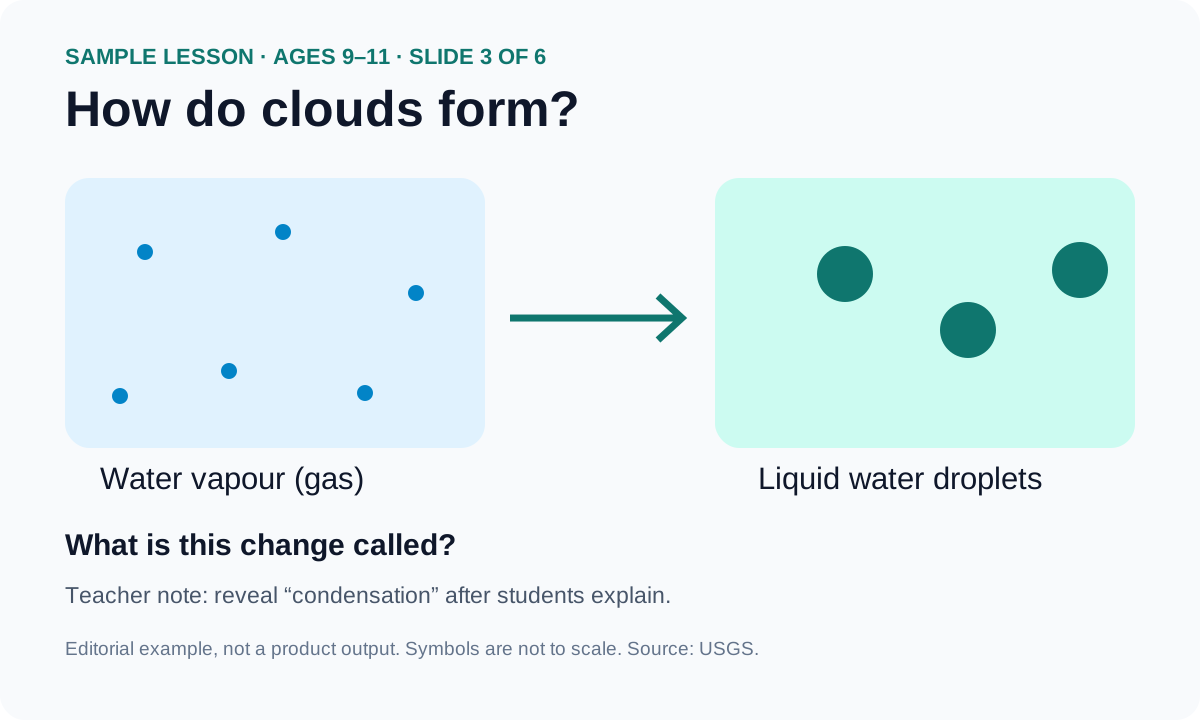
How do clouds form?
Condensation: water vapour changes into liquid droplets.
Teacher notes: Cloud droplets are shown with simplified symbols, not a picture of actual scale. The water cycle also includes pathways omitted from this introductory lesson.
SLIDE 4 / 6
Water returns to the surface
Precipitation falls from clouds. Rain is one example; water can also fall as snow.
Teacher notes: Water collects or moves on and below the surface. This short lesson does not model groundwater, transpiration or every kind of storage.
SLIDE 5 / 6
Explain the change
Water vapour becomes liquid droplets. Is this evaporation or condensation? Explain why.
Reveal answer after discussion
Condensation. Water changes from gas to liquid.
Teacher notes: Let students answer before opening the answer reveal.
SLIDE 6 / 6
Exit question
How are evaporation and condensation different?
Teacher notes: Expected response: evaporation changes liquid to gas; condensation changes gas to liquid. Accept a clear explanation in the student’s own words.