AI Medical Diagnosis Assistant Tools 2026
Editorial note: Some links in this article are affiliate links — we may earn a commission if you sign up, at no extra cost to you. Every tool is independently tested by our team before being recommended. Read our editorial standards →
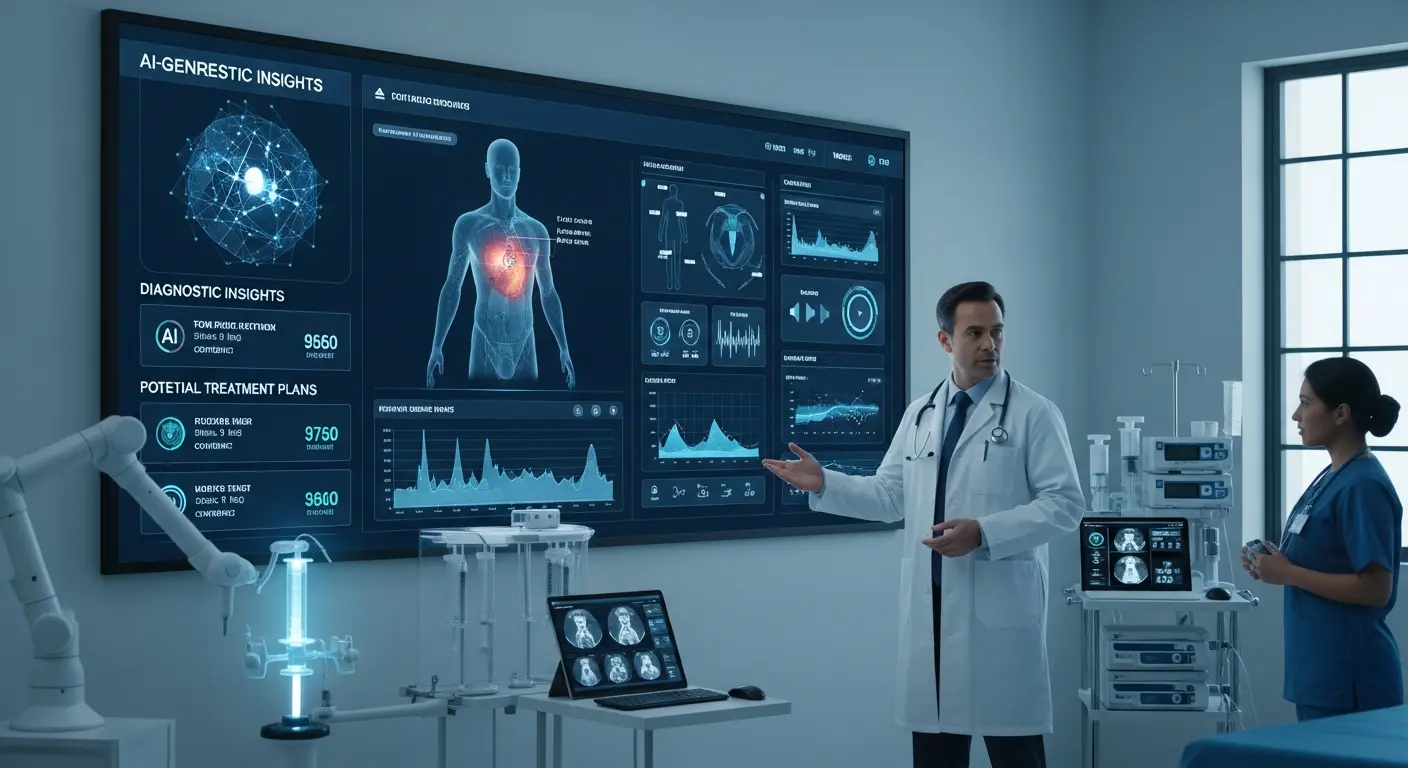
Artificial intelligence is revolutionizing healthcare by assisting medical professionals with faster, more accurate diagnoses. AI medical diagnosis assistants analyze medical images, patient data, and clinical symptoms to identify diseases earlier and more accurately than traditional methods alone.
Introduction to AI Medical Diagnosis
In 2026, AI diagnostic tools help physicians detect diseases like cancer, heart conditions, and neurological disorders with 35% improved accuracy while reducing diagnosis time by 40-60%.
These AI systems don't replace doctors—they augment medical expertise with pattern recognition capabilities that can analyze millions of cases instantaneously, catching subtle indicators that human eyes might miss. For patients, this means earlier detection, more accurate diagnoses, and ultimately better health outcomes.
Critical Note: AI medical tools are FDA-approved clinical decision support systems designed to assist licensed healthcare professionals, not replace medical judgment or provide direct patient care.
How AI Medical Diagnosis Works
Medical Image Analysis
AI excels at analyzing medical imaging with superhuman pattern recognition:
What AI Analyzes:
- X-rays: Fractures, lung diseases, tumors
- CT scans: Stroke detection, internal bleeding, cancer staging
- MRI: Brain abnormalities, joint injuries, organ diseases
- Pathology slides: Cancer cell identification, tissue analysis
- Retinal scans: Diabetic retinopathy, macular degeneration
Deep Learning Process:
- AI trains on millions of labeled medical images
- Learns to identify patterns associated with specific conditions
- Analyzes new patient images in seconds
- Highlights suspicious areas for physician review
- Provides probability scores for various diagnoses
Accuracy: Leading AI systems match or exceed specialist accuracy on specific tasks (e.g., diabetic retinopathy detection: AI 90% vs ophthalmologists 84%).
Clinical Decision Support
AI analyzes patient symptoms, medical history, and lab results to suggest potential diagnoses:
- Synthesizes information from electronic health records (EHRs)
- Cross-references symptoms with vast medical databases
- Identifies rare disease patterns doctors might miss
- Suggests appropriate diagnostic tests
- Flags potential drug interactions and contraindications
Result: Physicians make more informed decisions faster, especially in complex or rare cases.
Predictive Analytics
AI predicts disease risk and patient outcomes:
- Sepsis prediction hours before clinical symptoms appear
- Heart attack and stroke risk assessment
- Hospital readmission likelihood
- Treatment response predictions
- Disease progression modeling
Impact: Earlier intervention when treatment is most effective.
Leading AI Medical Diagnosis Tools
1. Aidoc - AI Radiology Triage
Type: FDA-cleared AI for medical imaging analysis
Aidoc's AI analyzes CT scans in real-time, flagging critical findings like strokes, pulmonary embolism, and intracranial hemorrhage to prioritize urgent cases.
Best For: Emergency radiology, stroke detection, trauma assessment Implementation: Hospitals and imaging centers
Key Features:
- Real-time CT scan analysis (results in <60 seconds)
- Automatic notification of radiologists for critical findings
- Stroke detection and quantification
- Pulmonary embolism identification
- Intracranial hemorrhage detection
- Integration with PACS and hospital systems
- Continuous learning from radiologist feedback
Standout Feature: Triage system ensures critical cases get immediate radiologist attention, potentially saving lives with faster stroke treatment.
Clinical Impact: "Aidoc reduced our stroke diagnosis time from 45 minutes to 15 minutes. For stroke patients, every minute matters—this saves lives and reduces disability." - Chief of Radiology, Major Urban Hospital
2. Google Health (DeepMind) - Medical AI Research
Type: Research-grade AI for multiple medical applications
Google's AI division develops cutting-edge medical AI, including diabetic retinopathy detection, breast cancer screening, and acute kidney injury prediction.
Best For: Ophthalmology screening, mammography, kidney disease prediction Implementation: Research hospitals, select clinical partnerships
Key Features:
- Diabetic retinopathy detection from retinal images (90% accuracy)
- Breast cancer detection in mammography (catches 9% more cancers)
- Acute kidney injury prediction 48 hours before onset
- Tuberculosis screening from chest X-rays
- Ophthalmology disease detection (50+ eye conditions)
Standout Feature: Predicts acute kidney injury up to 48 hours before conventional clinical indicators, enabling preventive intervention.
Research Validation: Published in top medical journals (JAMA, Nature) with peer-reviewed clinical trials proving effectiveness.
3. PathAI - AI-Powered Pathology
Type: FDA-cleared AI for pathology and cancer diagnosis
PathAI assists pathologists in detecting and diagnosing cancer from tissue samples with higher accuracy and consistency than human review alone.
Best For: Cancer diagnosis, pathology workflow, research applications Implementation: Pathology labs, hospitals, pharmaceutical research
Key Features:
- Automated cancer detection in biopsy samples
- Quantitative pathology analysis
- Tumor measurement and staging assistance
- Quality control for tissue samples
- Research-grade molecular pathology tools
- Integration with laboratory information systems
Standout Feature: Reduces pathologist variability by providing objective, quantitative measurements of cancer characteristics.
Pathologist Testimonial: "PathAI catches subtle cancer patterns I might miss after 8 hours of microscope work. It's like having a tireless second opinion on every case." - Board-Certified Pathologist
4. Tempus - AI Clinical Decision Support
Type: Precision medicine platform with AI genomics analysis
Tempus uses AI to analyze clinical and molecular data to personalize cancer treatment based on each patient's unique tumor genomics.
Best For: Oncology treatment selection, precision medicine, clinical trial matching Implementation: Cancer centers, hospitals, physician practices
Key Features:
- Genomic sequencing and analysis
- AI-powered treatment recommendations
- Clinical trial matching based on patient genetics
- Real-time treatment outcome data
- Physician decision support tools
- Molecular diagnostics
Standout Feature: Matches cancer patients to relevant clinical trials based on their specific tumor genetics, improving access to cutting-edge treatments.
Oncologist Value: "Tempus identified a targeted therapy for my patient that I wouldn't have considered based on traditional tumor classification. The patient responded beautifully." - Medical Oncologist
5. Viz.ai - Stroke Detection and Care Coordination
Type: FDA-cleared AI for stroke detection
Viz.ai's AI analyzes brain imaging to detect large vessel occlusion strokes and automatically alerts stroke teams for immediate intervention.
Best For: Emergency stroke detection, care coordination, time-critical cases Implementation: Emergency departments, stroke centers
Key Features:
- Automated large vessel occlusion (LVO) stroke detection
- Instant notification to stroke neurologists via mobile app
- Care coordination platform connecting ER, radiology, and neurology
- Time-to-treatment tracking
- HIPAA-compliant communication
- Integration with hospital EHR and imaging systems
Standout Feature: Entire stroke team receives simultaneous notification with imaging within 5 minutes of CT scan, dramatically reducing treatment time.
Stroke Center Results: "Viz.ai reduced our door-to-treatment time from 85 minutes to 45 minutes. For stroke, time is brain—this technology saves brain tissue and lives." - Stroke Program Director
6. Babylon Health - AI Symptom Checker
Type: Consumer-facing AI health assessment app
Babylon's AI chatbot helps patients assess symptoms and determine whether they need medical care, triaging cases before physician contact.
Best For: Primary care triage, symptom assessment, telehealth Implementation: Direct-to-consumer app, healthcare systems
Key Features:
- Conversational AI symptom checker
- Condition probability assessment
- Triage recommendations (emergency, urgent care, schedule appointment, self-care)
- AI chatbot for health questions
- Telehealth integration
- Health monitoring and tracking
Standout Feature: Accessible 24/7 symptom assessment helps patients make informed decisions about seeking care.
Patient Convenience: "Babylon's AI helped me realize my chest pain needed ER attention vs waiting for my doctor's office to open. The ambulance confirmed I was having a heart attack." - User Testimonial
Feature Comparison Matrix
| Feature | Aidoc | Google Health | PathAI | Tempus | Viz.ai | Babylon |
|---|---|---|---|---|---|---|
| Focus | Radiology | Multi-Specialty | Pathology | Oncology | Stroke | Primary Care |
| FDA Cleared | ✅ | Select Tools | ✅ | ✅ | ✅ | ⭐⭐⭐ |
| Real-Time | ✅ | ✅ | ⭐⭐ | ⭐⭐ | ✅ | ✅ |
| Imaging Analysis | ⭐⭐⭐⭐⭐ | ⭐⭐⭐⭐⭐ | ⭐⭐⭐⭐⭐ | ⭐⭐⭐ | ⭐⭐⭐⭐⭐ | ⭐⭐ |
| Genomics | ❌ | Research | ❌ | ⭐⭐⭐⭐⭐ | ❌ | ❌ |
| Patient Access | ❌ | ❌ | ❌ | ❌ | ❌ | ✅ |
| Specialty | Emergency | Research | Cancer | Cancer | Stroke | General |
Clinical Implementation Considerations
Regulatory Compliance
FDA Classification:
- Class II Medical Devices: Most AI diagnostic tools (requires FDA clearance)
- Clinical Decision Support: Software assisting physicians (may have regulatory exemptions)
- Wellness Apps: Consumer health apps (minimal FDA oversight)
Healthcare organizations must:
- Verify FDA clearance for diagnostic AI tools
- Ensure HIPAA compliance for patient data
- Validate AI performance in their patient population
- Implement proper physician training and oversight
Integration with Existing Systems
Technical Requirements:
- PACS integration for imaging AI (DICOM compatibility)
- EHR integration for clinical decision support (HL7/FHIR)
- Network security and data encryption
- Workflow integration to avoid physician burden
Best Practice: Pilot programs with small physician groups before hospital-wide deployment.
Physician Training and Acceptance
Common Concerns:
- Fear of AI replacing physicians
- Liability questions when AI recommends incorrect diagnosis
- Disruption to established workflows
- Learning curve for new technology
Solutions:
- Emphasize AI as decision support tool, not replacement
- Clear liability frameworks (physician retains final responsibility)
- Optimize workflows to reduce clicks and time burden
- Provide comprehensive training and ongoing support
Measuring Clinical Impact
Key Performance Indicators
Track These Metrics:
- Diagnostic accuracy: Sensitivity and specificity vs gold standard
- Time to diagnosis: Minutes saved per case
- Patient outcomes: Mortality, morbidity, quality of life improvements
- Physician efficiency: Cases reviewed per hour
- False positive rate: Unnecessary alerts or tests generated
- Cost savings: Reduced unnecessary procedures, shorter hospital stays
Benchmark Results:
- Radiology AI: 20-30% faster image interpretation
- Pathology AI: 15-25% improvement in cancer detection accuracy
- Stroke AI: 30-40 minute reduction in treatment time
- Diagnostic AI: 10-20% fewer missed diagnoses
Ethical and Legal Considerations
Patient Privacy and Data Security
HIPAA Requirements:
- All patient data must be encrypted in transit and at rest
- AI vendors must sign Business Associate Agreements (BAAs)
- Audit logs required for all data access
- Patient consent for AI use in diagnosis
Best Practice: Anonymize data for AI training; use federated learning when possible (AI learns without centralizing patient data).
Bias and Health Equity
Potential Issues:
- AI trained primarily on one demographic may underperform on others
- Racial bias in medical imaging algorithms
- Socioeconomic bias in access to AI-enhanced care
Mitigation Strategies:
- Ensure diverse training datasets
- Regular bias audits across patient demographics
- Validate AI performance in your specific patient population
- Equitable deployment across all patient populations
Liability and Malpractice
Legal Questions:
- If AI suggests wrong diagnosis, who is liable?
- Can physicians override AI recommendations?
- What standard of care applies when AI is available?
Current Legal Framework:
- Physician retains final responsibility for diagnosis
- AI is decision support tool, not independent practitioner
- Standard of care evolving to include AI assistance in some specialties
- Documentation of AI recommendations and physician decision-making critical
Future of AI in Medical Diagnosis
Emerging Applications
Coming Soon:
- Multi-modal AI analyzing imaging, genomics, and clinical data simultaneously
- Real-time surgical guidance with AI computer vision
- Mental health diagnosis from speech and language patterns
- Predictive models preventing disease before symptoms appear
- Personalized treatment optimization for every patient
Timeline: Most major medical specialties will routinely use AI decision support within 5-10 years.
Democratizing Expertise
Global Impact:
- AI brings specialist-level diagnosis to rural and underserved areas
- Developing countries leapfrog traditional infrastructure with mobile AI
- Telemedicine + AI enables remote expert consultation
- Lower healthcare costs through earlier, more accurate diagnosis
Frequently Asked Questions
Q: Will AI replace doctors? A: No. AI excels at specific pattern recognition tasks but lacks the holistic judgment, empathy, communication skills, and ethical decision-making that define medical practice. AI is a powerful tool that makes doctors more effective, not obsolete.
Q: How accurate are AI medical diagnosis tools? A: For specific tasks (diabetic retinopathy detection, certain cancers on imaging), AI matches or exceeds specialist accuracy, typically 85-95%. However, AI performs worse on rare diseases and complex multi-system conditions requiring clinical judgment.
Q: Are AI diagnosis tools safe? A: FDA-cleared AI medical devices undergo rigorous testing for safety and effectiveness. However, they're designed to assist physicians, not operate independently. Safety depends on proper implementation, physician training, and human oversight.
Q: Does AI diagnosis cost more? A: Initially yes, due to implementation costs. Long-term, AI typically reduces costs through earlier diagnosis (preventing expensive late-stage treatment), fewer unnecessary tests, and improved physician efficiency.
Q: Can AI diagnose rare diseases? A: AI trained on millions of cases can actually outperform human physicians on rare diseases doctors see infrequently. However, extremely rare conditions with limited training data remain challenging for current AI.
Q: How do I know if my doctor is using AI? A: Ask! Transparency is increasing, and many healthcare systems proactively inform patients about AI use. You have the right to know if AI contributes to your diagnosis and how it's used.
Conclusion
AI medical diagnosis assistants represent one of the most impactful applications of artificial intelligence, with potential to improve healthcare outcomes for billions of people. While still evolving, AI is already helping physicians detect diseases earlier, diagnose more accurately, and personalize treatment more effectively than ever before.
For Healthcare Professionals: The physicians succeeding in 2026 aren't resisting AI—they're embracing it as a powerful tool that amplifies their expertise, allowing them to focus on the human aspects of medicine that AI cannot replicate.
For Patients: Ask whether your healthcare providers use AI diagnostic tools, especially for serious conditions like cancer, stroke, or heart disease. Access to AI-enhanced diagnosis could literally save your life.
The future of medicine is a partnership between human expertise and artificial intelligence, combining the compassion and judgment of physicians with the tireless analytical power of AI. This collaboration promises more accurate diagnoses, better outcomes, and ultimately, healthier lives for all.
External Resources:
Tags
Written by

Sourabh Gupta
Founder & Data Scientist, AI Tools Specialist · 2+ years in AI/ML
Sourabh tests every AI tool he writes about — hands-on, with real use cases. His background in data science means he goes beyond marketing claims to benchmark actual performance, cost, and reliability for developers and creators.
Full bio & editorial process →