Best AI Resume Screening Tools 2025
The Resume Screening Challenge
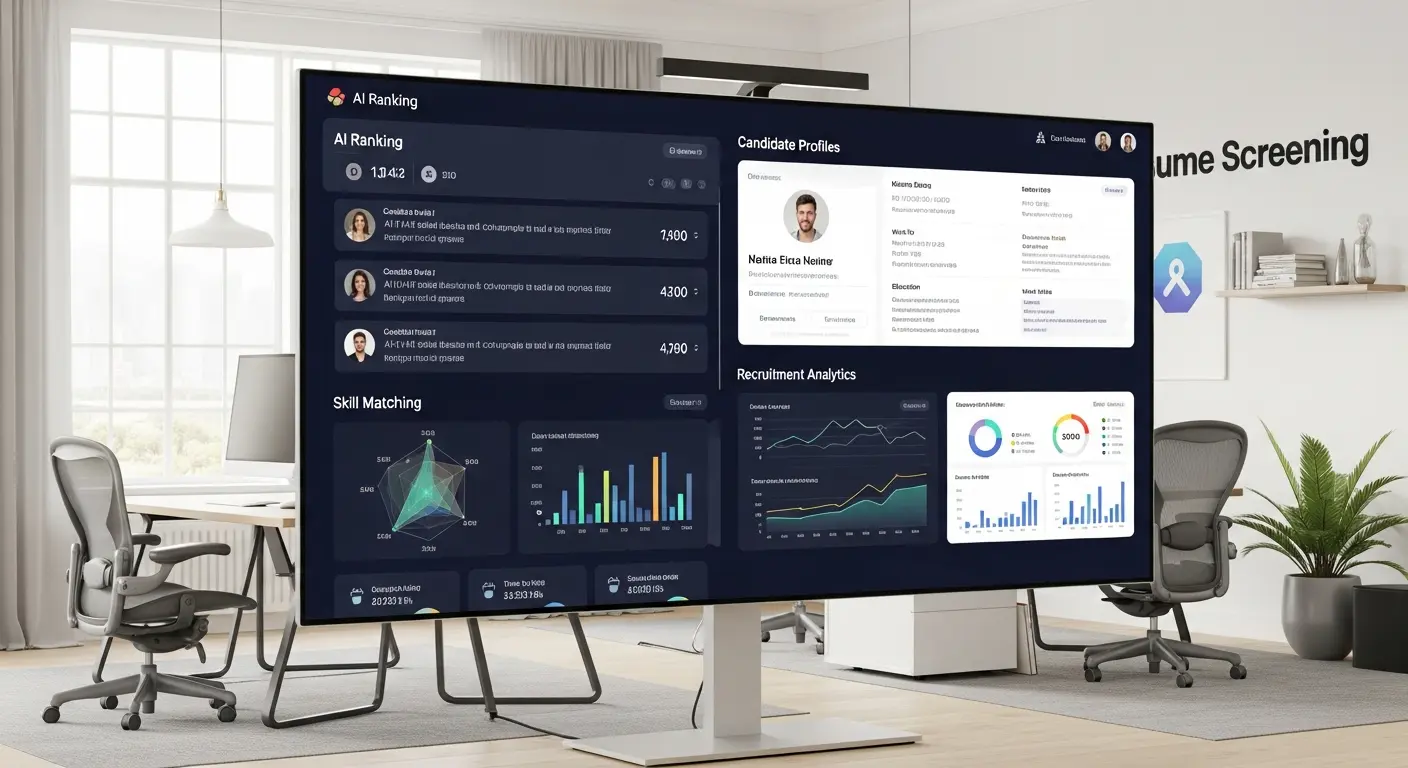
HR teams and recruiters face an overwhelming reality: a single job posting can attract 250-500 applications, yet 75-88% of applicants are unqualified. Manually screening this volume is impossible—it would take 23 hours to properly review 100 resumes at 15 minutes each. AI resume screening tools have emerged as the solution, processing thousands of resumes in seconds while identifying top candidates with unprecedented accuracy.
Impact Reality: AI resume screening reduces time-to-hire by 50-70% while improving quality-of-hire by 30-40% through data-driven candidate matching.
What is AI Resume Screening?
AI resume screening uses natural language processing (NLP) and machine learning to:
- Parse and extract data from resumes automatically
- Match candidates to job requirements
- Rank applicants by fit score
- Eliminate bias in initial screening
- Identify qualified candidates humans might miss
- Predict candidate success and tenure
- Automate communication with applicants
Modern AI screening goes beyond simple keyword matching, understanding context, skills taxonomy, and even predicting cultural fit.
Top AI Resume Screening Tools
1. Greenhouse
Price: Custom pricing (typically $6,000-25,000/year)
Leading ATS with sophisticated AI screening capabilities for growing companies.
AI Features:
- Automated resume parsing and data extraction
- Candidate scorecards with AI recommendations
- Interview kit automation
- Structured hiring workflows
- Diversity and inclusion analytics
- Integration with 450+ tools
- Reporting and analytics dashboard
Best For: Mid-market to enterprise companies (100-5,000 employees) Standout Feature: Structured hiring methodology reduces bias ROI: Customers report 40% reduction in time-to-hire
Customer Story: "Greenhouse helped us screen 1,500 applications for 30 positions in days instead of weeks. Quality of hire improved measurably." - Talent Acquisition Director, 500-person tech company
2. Lever
Price: Starting at $480/month (up to 3 users)
Modern ATS combining CRM and AI screening for talent acquisition teams.
Capabilities:
- AI-powered candidate sourcing
- Resume parsing and matching
- Automated email sequences
- Candidate relationship management (CRM)
- Interview scheduling automation
- EEO compliance and diversity tracking
- Mobile app for on-the-go screening
Best For: Fast-growing companies, tech startups, agencies Standout Feature: Combines ATS + CRM in single platform Integration: 300+ integrations including LinkedIn, Indeed, Slack
3. HireVue
Price: Custom pricing
AI-first hiring platform with video interviewing and resume screening.
Advanced AI:
- Resume screening with ML algorithms
- Video interview analysis (speech, tone, content)
- Predictive analytics for success
- Structured interview guides
- Bias detection and mitigation
- Game-based assessments
Best For: Enterprise companies, high-volume hiring, hourly workforce Standout Feature: AI video interview analysis (controversial but cutting-edge) Scale: Used by 700+ enterprise companies including Hilton, Unilever
4. Workable
Price: Starting at $189/month
User-friendly ATS with AI screening for small to midsize companies.
Features:
- One-click resume parsing
- AI candidate matching and ranking
- Automated sourcing from 400M+ profiles
- Interview scheduling
- Offer letter templates
- Mobile app
- Integration with 70+ tools
Best For: Small businesses (10-250 employees), first-time ATS users Standout Feature: Extremely intuitive interface, minimal training needed Quick Start: Up and running in 1 day
5. iCIMS Talent Cloud
Price: Custom enterprise pricing
Enterprise-grade talent acquisition suite with comprehensive AI.
AI Capabilities:
- Intelligent candidate matching
- Automated resume parsing
- Predictive analytics
- Chatbot for candidate communication
- Text recruiting
- Career site optimization
- Advanced reporting
Best For: Large enterprises (1,000+ employees), complex hiring workflows Standout Feature: Handles extremely high application volumes Clients: Fortune 500 companies including Uber, Dow, Southwest Airlines
6. Manatal
Price: Starting at $15/user/month
Affordable AI-powered ATS for small businesses and agencies.
Capabilities:
- AI resume parsing and enrichment
- Candidate scoring and recommendations
- Social media profile enrichment
- Email campaigns
- Kanban pipeline view
- Chrome extension for LinkedIn
- 4,000+ free job board integrations
Best For: Startups, small businesses, recruitment agencies Standout Feature: Best value for money with robust AI features Adoption: 15,000+ companies worldwide
7. Paradox (Olivia AI)
Price: Custom pricing
AI assistant (chatbot) that automates candidate screening and communication.
Olivia AI:
- Conversational resume screening via text/chat
- 24/7 candidate Q&A
- Interview scheduling without human touch
- Application completion assistance
- Automated candidate nurturing
- Multi-language support
Best For: High-volume hourly hiring, hospitality, retail, healthcare Standout Feature: 90% of candidates prefer chatbot interaction for basic screening Speed: Screens and schedules in minutes, not days
8. Eightfold AI
Price: Custom enterprise pricing
AI-first talent intelligence platform with deep learning capabilities.
Advanced AI:
- Deep learning candidate matching
- Skills inference from experience
- Career trajectory prediction
- Internal talent marketplace
- Diversity hiring AI
- Talent rediscovery (past applicants)
Best For: Large enterprises with complex talent needs Standout Feature: Most sophisticated AI—understands career paths and potential Innovation: Founded by ex-Google, Facebook AI researchers
How AI Resume Screening Works
1. Resume Parsing
Process:
- AI reads resumes in any format (PDF, Word, text, image)
- Extracts structured data (name, contact, work history, education, skills)
- Standardizes information across different resume formats
- Enriches with data from LinkedIn and public profiles
Accuracy: Modern AI parsers achieve 95-98% accuracy
2. Job Matching and Scoring
AI analyzes:
- Hard skills match (specific technologies, certifications)
- Soft skills inference (leadership, communication)
- Experience relevance (industry, company size, role level)
- Education requirements
- Location and remote preference
- Career progression patterns
Output: Candidate fit score (typically 0-100%)
3. Ranking and Recommendations
AI prioritizes candidates based on:
- Overall fit score
- Must-have vs nice-to-have qualifications
- Recency and relevance of experience
- Career trajectory and growth potential
- Retention prediction (likely to stay or leave quickly)
Result: Ranked candidate list—top 10-20% flagged for human review
4. Bias Detection and Mitigation
AI helps reduce bias by:
- Blind screening (removing names, photos, age indicators)
- Standardized evaluation criteria
- Focus on skills and experience, not demographics
- Flagging potentially biased language in job descriptions
- Diversity analytics to track hiring patterns
Impact: Companies using AI screening see 25-35% improvement in diversity metrics
Key Features to Evaluate
Must-Have Features
Resume Parsing Accuracy
- Handles all file formats
- Extracts data with >95% accuracy
- Works with international resumes
- Updates candidate profiles automatically
Intelligent Matching
- Skill taxonomy understanding (Python = programming)
- Contextual relevance (5 years Java vs 1 year Java)
- Alternative qualifications (MBA or equivalent experience)
- Cultural and soft skill inference
Workflow Automation
- Auto-rejection of clearly unqualified applicants
- Automated email responses
- Interview scheduling integration
- Task assignment to hiring team
Reporting and Analytics
- Time-to-hire metrics
- Source effectiveness
- Candidate pipeline analytics
- Diversity and inclusion tracking
- Bottleneck identification
Advanced Features
Predictive Analytics
- Success prediction based on historical hires
- Turnover risk scoring
- Promotion potential
- Cultural fit assessment
AI Chatbots
- Answer candidate FAQs 24/7
- Pre-screen with conversational AI
- Schedule interviews automatically
- Provide status updates
Talent Rediscovery
- Re-surface past applicants for new roles
- Silver medalist tracking (second-choice candidates)
- Internal mobility suggestions
Implementation Best Practices
Phase 1: Preparation
Before implementation:
- Document current screening process
- Identify pain points and inefficiencies
- Define success metrics (time-to-hire, quality-of-hire)
- Get buy-in from hiring managers
- Audit job descriptions for clarity and bias
Phase 2: Setup
Initial configuration:
- Import or create job descriptions
- Define must-have vs nice-to-have qualifications
- Set up interview workflows
- Configure email templates
- Integrate with existing tools (HRIS, email, calendar)
- Train AI on your ideal candidates
Phase 3: Testing
Pilot program:
- Test with 1-2 open positions
- Compare AI recommendations to manual screening
- Identify false positives/negatives
- Refine matching criteria
- Gather recruiter feedback
Phase 4: Training
Team enablement:
- Train recruiters on platform
- Educate hiring managers on new process
- Create documentation and best practices
- Establish support channels
Phase 5: Optimization
Continuous improvement:
- Monitor quality-of-hire metrics
- Adjust AI parameters based on outcomes
- A/B test job descriptions
- Refine automated communications
- Quarterly review of screening criteria
Measuring Success
Key Metrics to Track
Efficiency Metrics:
- Time-to-screen: 23 hours → 2 hours (91% reduction)
- Time-to-interview: 18 days → 7 days (61% faster)
- Time-to-hire: 45 days → 28 days (38% improvement)
- Cost-per-hire: $4,500 → $3,100 (31% reduction)
Quality Metrics:
- Quality-of-hire score: Track first-year performance
- Candidate satisfaction: Survey applicant experience
- Hiring manager satisfaction: Interview quality feedback
- Retention rate: 90-day and 1-year retention
Diversity Metrics:
- Interview-to-hire conversion by demographics
- Diversity of candidate pools
- Bias in screening (track false negatives)
ROI Calculation Example
100-person company, 50 hires/year:
Manual screening costs:
- Recruiter time: 23 hrs × 100 applicants/position × 50 positions × $40/hr = $460,000
- Longer time-to-fill productivity loss: $200,000
- Total: $660,000
AI screening costs:
- Platform: $12,000/year
- Recruiter time (reduced 90%): $46,000
- Productivity loss (faster hiring): $80,000
- Total: $138,000
Annual savings: $522,000 (79% cost reduction) ROI: 4,250%
Common Challenges and Solutions
Challenge: AI Rejects Qualified Candidates
Why it happens: Over-optimization for exact keyword matches
Solution:
- Expand skill taxonomies (include synonyms)
- Weight must-haves vs nice-to-haves properly
- Review rejected candidates monthly
- Adjust thresholds based on market availability
Challenge: Bias Concerns
Why it happens: AI trained on historical (potentially biased) data
Solution:
- Use bias-detection features
- Blind screening options
- Regular diversity audits
- Train AI on diverse successful candidates
- Human review of AI recommendations
Challenge: Poor Candidate Experience
Why it happens: Over-automation with no human touch
Solution:
- Personalize automated communications
- Provide clear timeline expectations
- Offer human contact options
- Give feedback to rejected candidates
- Keep application process short (<15 minutes)
Frequently Asked Questions
Q: Will AI replace recruiters? A: No. AI handles high-volume repetitive screening, freeing recruiters for high-value activities: interviewing, relationship building, closing candidates, and strategic talent planning.
Q: How accurate is AI screening? A: Modern AI achieves 85-95% accuracy at identifying qualified candidates. Human recruiters average 60-70% (due to bias, fatigue, and volume constraints).
Q: Is AI biased? A: AI can perpetuate historical bias if trained on biased data. However, properly configured AI reduces bias compared to human screening. Use bias-detection features and audit regularly.
Q: Can AI handle unconventional candidates? A: Advanced AI systems understand career gaps, career changers, and non-traditional backgrounds. Configure flexibility and use soft skill inference.
Q: How long does implementation take? A: Basic setup: 1-2 weeks. Full customization and integration: 4-8 weeks. Depends on complexity and change management.
Q: What about GDPR and data privacy? A: Reputable platforms are GDPR-compliant and handle candidate data securely. Verify compliance certifications before purchasing.
Choosing the Right Tool
For Startups and Small Businesses (<50 employees)
Recommendation: Workable or Manatal
- Affordable ($15-189/month)
- Quick setup
- User-friendly
- Essential AI features
For Growing Companies (50-500 employees)
Recommendation: Greenhouse or Lever
- Scalable
- Robust AI capabilities
- Strong integrations
- Structured hiring processes
For High-Volume Hiring
Recommendation: Paradox (Olivia AI) or HireVue
- Chatbot screening
- Fast candidate communication
- Video interview AI
- Retail, hospitality, healthcare focus
For Large Enterprises (500+ employees)
Recommendation: iCIMS or Eightfold AI
- Enterprise-grade
- Advanced AI and predictive analytics
- Complex workflow support
- Global compliance
Conclusion
AI resume screening is no longer optional for competitive talent acquisition teams. The combination of speed, accuracy, and scalability enables recruiters to process higher volumes while improving candidate quality and reducing bias.
Your Action Plan:
- This Week: Calculate time and cost of current screening process
- Week 2: Demo 2-3 platforms matching your needs and budget
- Month 1: Implement chosen platform and configure basic workflows
- Month 2: Pilot with real job openings, gather feedback
- Month 3+: Full rollout and continuous optimization
The companies winning the war for talent aren't just moving faster—they're using AI to identify and engage qualified candidates before competitors even finish manually screening resumes.
Ready to transform your recruitment process? Start a free trial of an AI resume screening tool today.
Related Resources:
Tags:
Admin
Expert in AI tools and technologies. Passionate about helping others learn and master AI to boost their productivity.