AI Tools for Investing & Trading: Optimize Portfolios & Find Alpha in 2026
Editorial note: Some links in this article are affiliate links — we may earn a commission if you sign up, at no extra cost to you. Every tool is independently tested by our team before being recommended. Read our editorial standards →
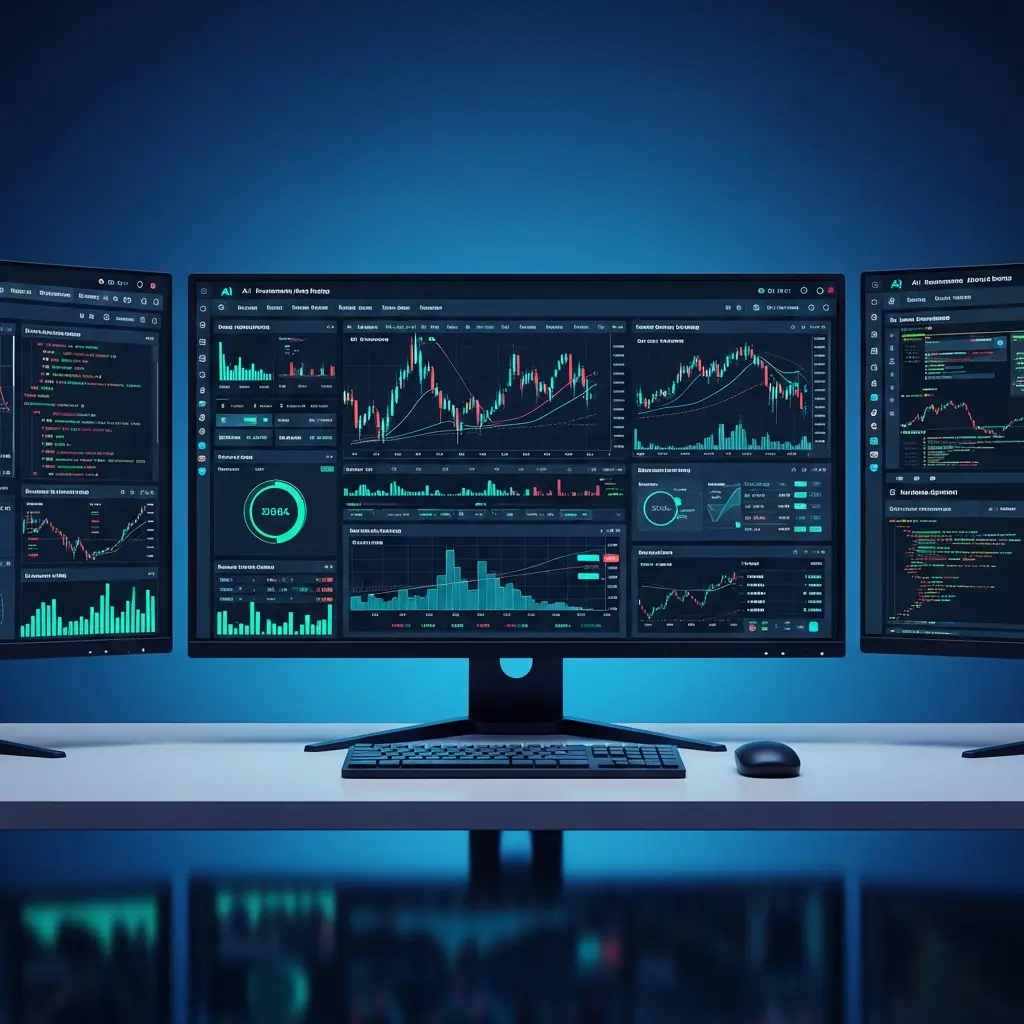
AI can help investors process more information, but it cannot remove market risk or turn a dashboard into a guaranteed edge. The most useful products make research, screening, portfolio monitoring, or idea generation easier to manage; they do not replace a clear investment process.
This guide compares where each tool is genuinely useful, what type of investor it suits, and the limits worth keeping in mind before acting on an automated signal.
The Death of "Gut Feeling" Investing
Institutional hedge funds in New York spent billions on supercomputers and armies of quantitative analysts to scrape alternative data, while retail investors at home were left trying to read lagging candlestick charts and relying on "gut feelings" or Reddit forums.
In 2026, Artificial Intelligence has democratized Wall Street.
As a data scientist, I look at financial markets as massive, complex datasets. Human beings are terrible at processing millions of data points simultaneously, and we are even worse at managing our own psychology. Fear and greed cause retail investors to sell at the bottom and buy at the top, resulting in an average annual underperformance of 3% to 5% compared to benchmark indices.
Artificial Intelligence removes the emotion. Today's AI trading platforms don't just execute trades — they use Natural Language Processing (NLP) to read earnings call transcripts in milliseconds, predictive modeling to identify algorithmic chart patterns, and machine learning to optimize tax-loss harvesting.
While no AI can guarantee you will magically beat the market by 30% a year (beware of anyone who tells you otherwise), investors utilizing AI tech stacks report saving 10+ hours a week on research, significantly lowering their portfolio volatility, and uncovering momentum shifts hours before the retail crowd.
In this comprehensive guide, we will break down the data science of algorithmic trading, review the top AI investing tools of 2026, and outline how to build a quantitative, emotionless portfolio.
The Data Science Behind Financial AI
Before you hand your capital over to an algorithm, you need to understand how the machine actually thinks. Modern financial AI relies on three core analytical models:
1. Sentiment Analysis & NLP (Natural Language Processing)
Stock prices aren't just driven by revenue — they are driven by human sentiment. Modern AI tools ingest millions of unstructured data points daily: Twitter feeds, SEC 10-K filings, global news wires, and live earnings calls. The NLP models analyze the tone of a CEO's voice on a call. If a CEO uses defensive language when asked about supply chains, the AI flags a negative sentiment divergence and alerts you to short the stock before the market reacts.
2. Pattern Recognition & Predictive Modeling
Technical analysis used to mean drawing manual trendlines on a chart. Today, AI scans 10,000 global equities simultaneously. Using neural networks, the AI identifies complex historical price formations (like double bottoms or head-and-shoulders patterns) that have a statistically high probability of breaking out, delivering real-time buy/sell signals straight to your dashboard.
3. Alternative Data Ingestion
Institutional AI looks at data outside of the stock market to predict it. Models analyze satellite imagery of retail parking lots to predict Walmart's quarterly earnings before they are announced, or track global shipping transponder data to gauge supply chain health. Retail AI tools are finally beginning to offer these "Alt-Data" insights to individual investors.
Quick Comparison: Top AI Investing Platforms in 2026
| Platform | Best For | Standout AI Feature | Starting Price |
|---|---|---|---|
| Trade Ideas | Active Day Traders | "Holly" AI automated trading signals | $118/mo |
| Magnifi | Retail Investors | Conversational AI investing copilot | $14/mo |
| Kavout | Quantitative Analysis | "K Score" machine learning stock rating | Custom |
| Seeking Alpha | Fundamental Analysis | Quant-driven factor grading & summaries | $239/year |
| Tickeron | Swing Traders | AI pattern recognition & trend prediction | $19/mo |
| Alpaca | Algorithmic Coders | Developer-first API for AI trading bots | Free tier |
Deep Dive: The 6 Best AI Investing & Trading Tools
1. Trade Ideas — Best for Active Day Traders
If you are sitting in front of multi-monitor setups looking to capture intraday momentum, Trade Ideas is the gold standard.
The Tech: Trade Ideas is an AI-powered stock scanner that processes tick-for-tick market data in real-time.
How the AI Works: The platform features an AI engine named "Holly." Every night after the market closes, Holly runs millions of simulated trades against historical data to see what strategies are working in the current macro environment. Before the opening bell, Holly provides a curated list of statistically optimized trade setups, complete with exact entry prices, profit targets, and stop-loss levels.
The Verdict: Essential for serious day traders who want to remove emotion and trade strictly on statistical probability.
2. Magnifi — Best for Casual Retail Investors
Not everyone wants to read charts all day. Magnifi is built for the everyday investor who wants institutional-grade advice without the complexity.
The Tech: Magnifi acts as a conversational AI copilot (similar to ChatGPT, but legally compliant and tied to live brokerage data).
How the AI Works: You can type or speak to the app: "I want to invest $5,000 in companies working on renewable energy that also pay a dividend of at least 3%." The AI will instantly screen the entire market, build a customized ETF/Stock portfolio matching your exact criteria, and allow you to execute the trades directly through their integrated brokerage.
The Verdict: The ultimate tool for thematic investing and portfolio diversification.
3. Kavout — Best for Quantitative Edge
Kavout brings hedge-fund-level machine learning to the individual investor.
The Tech: Kavout's flagship feature is the "K Score," a predictive stock rating system powered by advanced machine learning.
How the AI Works: The AI ingests massive amounts of fundamental, technical, and alternative data. It analyzes price momentum, value factors, and earnings quality, distilling millions of data points into a single number from 1 to 9 (the K Score). Stocks with a K Score of 9 have a historically proven probability of outperforming the broader market over the next month.
The Verdict: Perfect for swing traders and mid-term investors looking for a mathematical edge over standard fundamental analysis.
4. Seeking Alpha Premium — Best for Fundamental Research
If you prefer holding stocks for years rather than minutes, you need deep fundamental analysis.
The Tech: Seeking Alpha blends crowd-sourced human financial modeling with rigid, AI-driven quantitative ratings.
How the AI Works: Their "Quant Rating" system algorithmically grades every stock based on five factors: Value, Growth, Profitability, Momentum, and Revisions. In 2026, Seeking Alpha also uses Generative AI to instantly summarize 40-page earnings transcripts into 5 bullet points, immediately highlighting red flags or growth catalysts so you don't have to read the entire document.
The Verdict: The absolute best value for long-term, fundamental stock pickers.
5. Tickeron — Best for Pattern Recognition
Technical analysis is incredibly subjective. Two humans can look at the same chart and draw two different trendlines. Tickeron makes it objective.
The Tech: Tickeron utilizes neural networks for instant pattern recognition across thousands of tickers.
How the AI Works: If you want to trade "Cup and Handle" breakouts, you don't have to scan charts manually. Tickeron's AI alerts you the exact minute a stock forms the pattern. It also provides a "Prediction Engine" that calculates the historical odds of that specific pattern reaching its target price, giving you clear risk/reward ratios before you risk a dollar.
The Verdict: The most powerful tool for eliminating subjectivity from technical analysis.
6. Alpaca — Best for Developers & Algorithmic Bots
If you are a programmer or data scientist who wants to build your own AI, you need a brokerage that speaks code.
The Tech: Alpaca is an API-first brokerage designed specifically for algorithmic trading.
How the AI Works: Alpaca doesn't give you trading signals — it gives you the infrastructure to deploy your own. You can write a machine learning script in Python that uses OpenAI to gauge Twitter sentiment, and then use the Alpaca API to automatically buy or sell fractional shares based on your script's logic, entirely hands-free.
The Verdict: The undisputed platform for quant developers building bespoke trading bots.
The Data Scientist's Warning: Overfitting and Black Swans
As someone who builds AI models, I have to give you a critical warning before you deploy capital using these tools: Beware of Overfitting.
In data science, "overfitting" occurs when an AI model is trained so perfectly on historical data that it looks like a guaranteed money-maker in backtesting. However, because it memorized the past rather than learning the underlying principles, it fails spectacularly in live markets.
Furthermore, AI cannot predict Black Swan events. A machine learning model cannot predict a sudden global pandemic, an unexpected geopolitical war, or an erratic late-night tweet from a central bank chair.
The Golden Rule for 2026: Use AI for idea generation, risk management, and screening. Let the algorithm find the setup, but let your human judgment manage the sizing and the macro-economic context.
The 3-Step AI Trading Workflow
If you want to orchestrate an ecosystem that runs your investments systematically, here is the ultimate 2026 tech stack:
-
The Screener (Idea Generation) — Use Kavout or Seeking Alpha's Quant Ratings to filter out the noise. Let the AI hand you a watchlist of 10 stocks with the highest statistical probability of upside momentum.
-
The Timing (Execution) — Plug that watchlist into Trade Ideas or Tickeron. Do not buy blindly. Wait for the AI's pattern recognition software to alert you to an optimized technical entry point where your stop-loss is tight and your risk is low.
-
The Guardian (Risk Management) — Once you are in the trade, use an automated trailing stop-loss. If the market turns against you, the algorithm will automatically sell your position to protect your capital, completely removing human "hope" from the equation.
Frequently Asked Questions
Q: Do I need to know how to code to use AI trading tools?
Not anymore. While platforms like Alpaca are built for developers, tools like Magnifi, Tickeron, and Trade Ideas feature "No-Code" natural language interfaces. You can leverage institutional-grade algorithms using simple dropdown menus and conversational prompts.
Q: Will AI trading bots make me rich passively?
Be incredibly skeptical of any software promising guaranteed passive wealth. AI tools provide a statistical edge, but they still experience drawdowns and losing streaks. Successful retail quants use AI to manage risk and save time, not to find a magical money printer.
Q: Are these platforms integrated with my current brokerage?
Most premium AI tools offer API integration with major brokerages like TD Ameritrade (Charles Schwab), Interactive Brokers, and E*TRADE. This allows the AI tool to send signals directly to your brokerage account for seamless execution.
Conclusion
The era of trading on "gut feelings" and internet rumors is over. You are competing against supercomputers — you need to arm yourself accordingly.
By leveraging Trade Ideas for intraday execution, Seeking Alpha for fundamental quant grading, and Magnifi for portfolio curation, you are essentially hiring an elite team of Wall Street analysts to work for you 24/7.
Stop guessing. Let the algorithms crunch the data, manage your risk, and give you the mathematical edge you need to survive and thrive in the modern market.
Pro Tips from Power Users
To maximize the potential of AI tools for investing and trading, consider the following expert-level tips:
- Leverage Multi-Asset Class Analysis: Power users combine equity, bond, commodity, and cryptocurrency data to identify correlations and divergences, allowing for more informed portfolio optimization. For instance, analyzing the relationship between gold prices and bond yields can help predict market volatility. Utilize AI platforms that can handle multi-asset class analysis to uncover hidden patterns.
- Implement Risk Parity Strategies: Allocate risk equally across different asset classes, rather than focusing solely on returns. This approach helps minimize portfolio volatility and maximizes returns over the long term. AI tools can assist in identifying the optimal risk parity allocation based on individual investor goals and risk tolerance.
- Use Alternative Data Sources: Incorporate non-traditional data sources, such as social media sentiment, weather patterns, or economic indicators, to gain an edge in the market. AI platforms can process and analyze these alternative data sources to identify potential trading opportunities. For example, analyzing Twitter sentiment can help predict stock price movements.
- Backtest and Refine Strategies: Utilize AI tools to backtest trading strategies on historical data, refining parameters and optimizing performance. This approach helps minimize potential losses and maximizes returns. Power users continuously refine their strategies to adapt to changing market conditions.
- Monitor and Adapt to Market Regime Shifts: AI tools can help identify changes in market regimes, such as shifts from bull to bear markets. Power users continuously monitor these regime shifts and adjust their strategies accordingly to stay ahead of the curve.
- Integrate AI with Human Judgment: While AI tools can provide valuable insights, they should be used in conjunction with human judgment and experience. Power users combine AI-generated recommendations with their own expertise to make more informed investment decisions.
Frequently Asked Questions
- Q: What is the minimum investment required to use AI tools for investing and trading? A: The minimum investment required to use AI tools varies depending on the platform and the type of investment. Some AI-powered robo-advisors offer services with minimal or no investment requirements, while others may require a minimum investment of $1,000 or more. It's essential to research and compares different AI platforms to find one that suits your investment goals and budget. Additionally, consider the fees associated with using the AI tool, as they can eat into your returns. When selecting an AI platform, look for one that offers transparent pricing and minimal fees.
- Q: Can AI tools guarantee higher returns on investment? A: No AI tool can guarantee higher returns on investment. While AI can provide valuable insights and help optimize portfolios, investing always carries risk, and there are no guarantees of returns. It's essential to set realistic expectations and understand that AI tools are meant to augment, not replace, human judgment and experience. Power users combine AI-generated recommendations with their own expertise to make more informed investment decisions. AI tools can help minimize potential losses and maximize returns, but they should be used in conjunction with a well-diversified portfolio and a long-term investment strategy.
- Q: How do I choose the right AI tool for my investment needs? A: Choosing the right AI tool depends on your investment goals, risk tolerance, and experience level. Consider factors such as the type of investments you want to make, the level of customization you need, and the fees associated with the platform. Research and compare different AI platforms, reading reviews and testimonials from other users to find one that suits your needs. It's also essential to evaluate the platform's security and transparency, ensuring that your data is protected and that the AI tool is using reliable and accurate information.
- Q: Can I use AI tools for both short-term and long-term investing? A: Yes, AI tools can be used for both short-term and long-term investing. However, the approach and strategy will differ depending on your investment goals. For short-term investing, AI tools can help identify trading opportunities and optimize portfolio performance. For long-term investing, AI tools can assist in creating a diversified portfolio, optimizing asset allocation, and minimizing risk. Power users adapt their AI-powered strategies to suit their investment horizon and goals. When using AI tools for short-term investing, it's essential to monitor and adjust your strategy regularly to stay ahead of the market.
- Q: How do I integrate AI tools with my existing investment portfolio? A: Integrating AI tools with your existing investment portfolio requires a thorough understanding of your current investments and goals. Start by assessing your portfolio's strengths and weaknesses, then identify areas where AI can add value. Consider consulting with a financial advisor or using a platform that offers integration with existing brokerage accounts. When integrating AI tools, it's essential to evaluate the potential impact on your portfolio's tax efficiency and risk profile. AI tools can help optimize tax-loss harvesting and minimize portfolio volatility, but they should be used in conjunction with a well-diversified portfolio and a long-term investment strategy.
- Q: What is the role of human judgment in AI-powered investing? A: Human judgment plays a crucial role in AI-powered investing. While AI tools can provide valuable insights and recommendations, they should be used in conjunction with human experience and expertise. Power users combine AI-generated recommendations with their own judgment to make more informed investment decisions. Human judgment helps to identify potential biases in AI recommendations, evaluate market conditions, and make adjustments to the investment strategy as needed. When using AI tools, it's essential to strike a balance between relying on AI-generated recommendations and using your own judgment and experience.
- Q: Can AI tools help with tax optimization and planning? A: Yes, AI tools can help with tax optimization and planning. Many AI platforms offer tax-loss harvesting, tax-deferred investing, and other tax optimization strategies. These tools can help minimize tax liabilities and maximize after-tax returns. Power users utilize AI tools to optimize their tax strategy, ensuring that their investment portfolio is aligned with their overall financial goals. When using AI tools for tax optimization, it's essential to consider your individual tax situation and goals, as well as any potential tax implications of your investment strategy.
- Q: How do I stay up-to-date with the latest developments in AI-powered investing? A: Staying up-to-date with the latest developments in AI-powered investing requires ongoing education and research. Follow industry leaders, research papers, and news outlets to stay informed about the latest advancements in AI technology and its applications in investing. Attend webinars, conferences, and workshops to network with other investors and learn from their experiences. Power users continuously update their knowledge and skills to stay ahead of the curve and maximize their investment returns. When staying up-to-date with the latest developments, it's essential to evaluate the credibility and reliability of the sources you consult, ensuring that you're getting accurate and unbiased information.
Compare All AI Investing & Trading Tools
See every tool from this guide ranked on the FinTech AI Terminal — algo trading platforms, portfolio optimization AI, and market intelligence tools with AI-powered scoring, multi-chat, and side-by-side comparisons.
Open FinTech AI Terminal →Tags
Written by

Sourabh Gupta
Founder & Data Scientist, AI Tools Specialist · 2+ years in AI/ML
Sourabh tests every AI tool he writes about — hands-on, with real use cases. His background in data science means he goes beyond marketing claims to benchmark actual performance, cost, and reliability for developers and creators.
Full bio & editorial process →