
Anthropic Releases Claude Sonnet 5: The Most Agentic Claude Yet
Editorial note: Some links in this article are affiliate links — we may earn a commission if you sign up, at no extra cost to you. Research guides are distinguished from documented firsthand reviews in our editorial standards. Read our editorial standards →
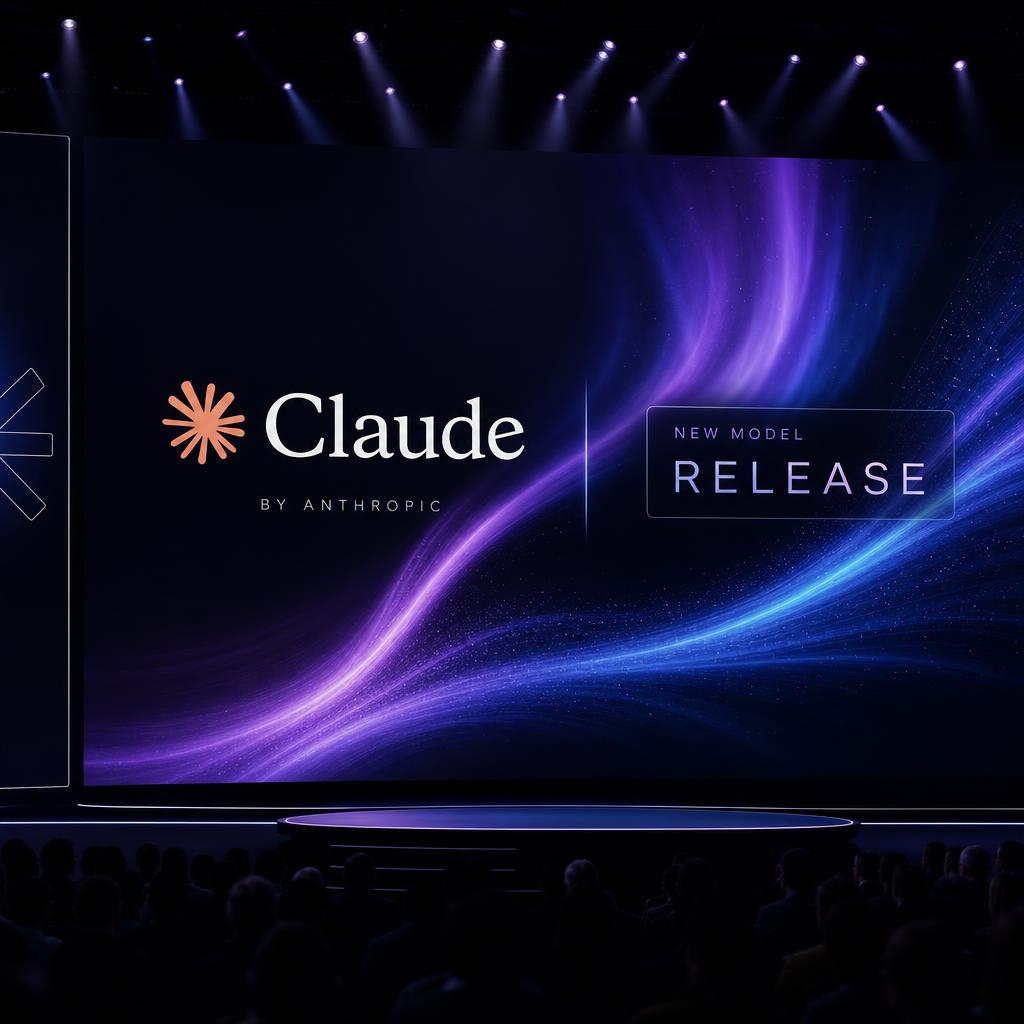
It is a practical update that makes high-tier performance accessible to everyone immediately.
Anthropic Releases Claude Sonnet 5: The Most Agentic Claude Yet
Anthropic shipped Claude Sonnet 5 on June 30, 2026, and immediately made it the default model across all Claude.ai tiers — including the free plan. That is a significant statement: the model previously reserved for paid users is now what everyone gets by default, replacing Sonnet 3.7 as the standard. Claude Sonnet 5 represents a meaningful step forward in agentic capabilities, tool use, and code generation, positioning itself as the model of choice for developers building autonomous AI workflows and researchers who need deep, sustained reasoning.
This guide covers everything: what changed from Sonnet 3.7, how the agentic capabilities actually work in production, what Claude.ai plans offer at each tier, the pricing structure, and how Sonnet 5 stacks up against GPT-5.6 and Gemini 2.5 Pro across real-world use cases.
Why This Release Matters
The decision to deploy Sonnet 5 as the free-tier default represents a genuine philosophical stance by Anthropic: frontier capability should be broadly accessible, not gatekept entirely behind paywalls. This is unusual in the industry — OpenAI has kept GPT-5.6 behind paid tiers — and signals confidence in the model's quality and Anthropic's ability to serve a wider user base economically.
For developers, Sonnet 5's improvements to tool use and agentic state management address the most common failure modes in production AI agents. For researchers and knowledge workers, the 200K context window and improved long-document reasoning make it a legitimate research assistant. For enterprise teams, the combination of computer use, code execution, and web search in a single model with a principled safety framework reduces integration complexity significantly.
What's New in Claude Sonnet 5
Improved Tool Use and Function Calling
The most significant improvement is in handling complex tool chains. Previous Claude models could use tools reliably in simple cases but degraded in quality as chains grew longer and more interdependent. Sonnet 5 addresses this with several concrete improvements:
Parallel tool calls: The model can dispatch multiple tool calls simultaneously rather than sequentially, significantly reducing latency in multi-tool workflows that were previously bottlenecked by sequential execution.
Improved error recovery: When a tool call fails or returns unexpected output, Sonnet 5 is better at diagnosing the failure and choosing an appropriate recovery strategy rather than getting stuck in retry loops.
Context maintenance across calls: The model maintains a clearer internal model of what it knows, what it needs to discover, and what constraints apply as it moves through a multi-step tool-using workflow — even across dozens of steps.
Structured output adherence: When functions require specific parameter types or formats, Sonnet 5 generates correctly-typed arguments with much higher consistency than Sonnet 3.7.
Code Generation Approaching Opus 4 Quality
On HumanEval and SWE-bench Verified, Sonnet 5 significantly closes the gap with Opus 4, Anthropic's top-tier model. For most practical coding tasks, the quality difference between Sonnet 5 and Opus 4 is now minimal — making Sonnet 5's substantially lower price point compelling for code-heavy applications.
| Benchmark | Sonnet 3.7 | Sonnet 5 | Opus 4.8 |
|---|---|---|---|
| HumanEval | 88.2% | 93.1% | 95.4% |
| SWE-bench Verified | 49.3% | 62.4% | 71.2% |
| MBPP | 84.1% | 89.7% | 93.1% |
| LiveCodeBench | 64.2% | 71.3% | 79.8% |
The SWE-bench jump from 49.3% to 62.4% is particularly notable. SWE-bench involves fixing real issues in real GitHub repositories with complex codebases — it tests practical ability rather than algorithmic puzzle-solving. This is the most realistic coding benchmark available, and Sonnet 5's leadership here translates directly to production agent performance.
Improved Agentic State Management
For long-running agentic tasks — researching a topic and writing a comprehensive report, setting up a development environment from scratch, executing a multi-step data analysis pipeline — Sonnet 5 maintains state and task context significantly better than Sonnet 3.7.
Key improvements in state management:
- Goal tracking: Maintains awareness of the overall objective even when executing many low-level sub-tasks
- Progress monitoring: Better at recognizing when it is making progress versus going in circles
- Constraint memory: Remembers constraints set at the beginning of a long task 40 or 50 steps later
- Graceful degradation: When something fails, flags the issue and asks for clarification rather than quietly producing incorrect output
Computer Use Beta: Enhanced Desktop Control
Claude's computer use capability — controlling desktop applications through screenshot observation and click/type/scroll actions — received meaningful improvements:
- Faster visual grounding — identifies target UI elements more quickly from screenshots
- Better handling of dynamic UIs that change between actions
- Improved reliability for web browser automation tasks
- Reduced tendency to perform irreversible actions without user confirmation
Computer use remains in beta status and requires explicit enabling via the API, but Sonnet 5's improvements make it genuinely production-viable for controlled internal environments.
Better Negative Constraint Following
"What NOT to do" instructions are historically harder for language models than positive instructions. Sonnet 5 is measurably better at maintaining:
- Content exclusion ("do not mention competitor X in any context")
- Format restrictions ("never use bullet points in responses")
- Persona boundaries in role-play or character interaction contexts
- Complex conditional exclusions ("unless the user asks about Y, never discuss Z")
Context Window: 200K Tokens
Claude Sonnet 5 maintains the 200K token context window. To contextualize against real content:
| Content | Tokens | Fits in 200K Context? |
|---|---|---|
| Single novel (average) | ~90K | Yes |
| Large codebase (50K LOC) | ~150–200K | Yes |
| GPT-5.6 Sol full context | 1.05M | Yes — GPT-5.6's 1.05M window exceeds Sonnet 5's 200K |
| Legal due diligence package | ~80–150K | Yes |
| 100-page technical specification | ~50K | Yes, with significant headroom |
| All 7 Harry Potter books | ~1.5M | No — requires chunking |
While Gemini 2.5 Pro's 1M context is larger, 200K is sufficient for the vast majority of real-world professional tasks, and Claude's performance within that context — particularly on tasks requiring reasoning about relationships between distant document sections — is excellent.
Agentic Capabilities: The Full Stack
Claude Sonnet 5 supports a complete agentic capability stack in both Claude.ai and via the API:
Web Search
Real-time web search integrated into the reasoning loop. Claude can search, read results, and incorporate findings with source citations — without you needing to pipe in search results manually. Useful for: current events research, fact-checking, gathering recent data for analysis.
Code Execution
Write-and-run Python code execution in a sandboxed environment. Claude can:
- Verify mathematical calculations by running them
- Process uploaded CSV or data files and produce analysis
- Generate and test code before presenting it as a final answer
- Create charts and visualizations from data
- Perform file format conversions
File Reading
Upload documents — PDF, Word, CSV, images, code files — and Claude reads and reasons about them directly. No preprocessing, chunking, or separate parsing pipeline required.
Computer Use (Beta)
Control a desktop environment to operate applications on your behalf through observation and action. Practical applications:
- Data entry automation in legacy applications without APIs
- UI testing and quality assurance workflows
- Research tasks requiring multiple desktop tools
- Browser automation beyond what headless tools handle
Claude.ai Plans and Pricing
Feature Comparison by Plan
| Feature | Free | Pro ($20/month) | Team ($25/user/month) | Enterprise (custom) |
|---|---|---|---|---|
| Model | Sonnet 5 (limited) | Sonnet 5 (5x usage) | Sonnet 5 + Opus 4 | All models |
| Daily messages | Limited | Very high | High per user | Custom |
| Projects | No | Yes | Yes | Yes |
| File uploads | Limited | Unlimited | Unlimited | Unlimited |
| Artifacts | Yes | Yes | Yes | Yes |
| API access | No | No | Included credits | Custom volume |
| Admin console | No | No | Yes | Yes |
| SSO and SAML | No | No | No | Yes |
| HIPAA and BAA | No | No | No | Yes |
| Computer use | No | Beta | Beta | Beta |
| Priority support | No | Priority | Dedicated |
API Pricing
| Resource | Price |
|---|---|
| Input tokens | $3.00 per 1M tokens |
| Output tokens | $15.00 per 1M tokens |
| Cache writes | $3.75 per 1M tokens |
| Cache reads | $0.30 per 1M tokens |
Note: Introductory pricing of $2/$10 per million tokens ran through July 31, 2026. Current standard pricing is $3/$15.
Projects: Persistent AI Workspaces
Projects are one of Claude.ai's most powerful and underrated features, available on Pro and Team plans. A Project is a persistent workspace containing:
Custom instructions: Define once at the project level — Claude's persona, constraints, knowledge about your organization, preferred output formats — and they apply to every conversation within the project without re-specifying.
File storage: Upload reference documents that persist across all conversations. Your codebase, style guide, brand documentation, standard operating procedures, and company knowledge base live in the project and are always available.
Conversation continuity: Unlike standard chats that start completely fresh, Projects maintain awareness of previous conversations so Claude can reference work from previous sessions.
Practical Project examples:
Developer Project: Load your entire codebase, README, and architecture documentation. Get code review, debugging assistance, and feature implementation help that is always aware of your specific technical context.
Content Project: Upload your brand guidelines, past published articles, and target audience research. Generate on-brand content without re-explaining your style and voice every session.
Research Project: Store your literature review, annotated bibliography, and research questions. Claude helps synthesize findings and extend your research with awareness of everything you have collected.
Legal Project: Upload your standard contract templates, company policies, and jurisdiction-specific guidelines. Get contract review assistance calibrated to your organization's specific standards.
Artifacts: Interactive In-Browser Rendering
Artifacts render Claude's outputs as interactive, editable components within the Claude.ai interface, making the difference between getting code you copy into another tool and getting a live preview you can evaluate immediately.
Supported artifact types:
- Code artifacts: Syntax-highlighted, copyable code with language detection
- React components: Live preview of UI components in the browser
- SVG diagrams: Rendered vector graphics and illustrations
- Markdown documents: Formatted document preview with proper typography
- HTML pages: Full webpage preview including styles and scripts
Artifacts dramatically accelerate the iteration loop — see the output, request changes, see the updated output immediately.
Constitutional AI: How Claude's Values Work
Anthropic's Constitutional AI approach means Claude's values are baked into training, not just enforced through system prompts. This has concrete implications:
What Claude refuses regardless of instructions:
- Assistance creating weapons capable of mass casualties
- Generation of content sexually exploiting minors
- Assistance with attacks on critical infrastructure
- Deceiving users about being an AI when sincerely asked
What Claude is more cautious about than many competitors:
- Detailed instructions for activities with clear harm potential, even in fictional framing
- Tools designed primarily for surveillance without consent
- Content designed to manipulate at scale through psychological exploitation
No documented firsthand test record was supplied for this guide. Treat proposed workflows as examples to evaluate, rather than measured outcomes.
What this means in practice: Claude's refusals are more principled and consistent than models tuned purely for user satisfaction metrics. This creates occasional friction for edge cases, but makes Claude significantly more predictable and trustworthy for enterprise applications where reliability and consistent behavior matter more than edge-case permissiveness.
Privacy and Data Handling
| Context | Used for Training? |
|---|---|
| API (default) | No — contractually excluded |
| Claude.ai Free and Pro | May be used — opt-out available in settings |
| Enterprise API | No — contractual guarantee |
| Project files | No — treated as user data |
Anthropic's API-level privacy guarantee is meaningful and differentiating for enterprise customers handling sensitive data — financial analysis, legal documents, healthcare information, proprietary IP.
Claude Sonnet 5 vs. Competitors
vs. GPT-5.6
| Dimension | Claude Sonnet 5 | GPT-5.6 |
|---|---|---|
| Agentic coding — SWE-bench | 62.4% — better | 54.8% |
| Context window | 200K | 1.05M — GPT-5.6 Sol is larger |
| UI and design judgment | — | Better |
| Token efficiency | — | Better |
| Reasoning depth on hard problems | Generally better | — |
| Negative constraint following | Better | — |
| API pricing (output) | $15.00/1M | $10.00/1M |
| Privacy default (API) | No training | No training |
vs. Gemini 2.5 Pro (2025 model)
| Dimension | Claude Sonnet 5 | Gemini 2.5 Pro |
|---|---|---|
| Agentic coding — SWE-bench | 62.4% — better | 58.3% |
| Math reasoning | — | Significantly better |
| Context window | — | 1M vs 200K |
| Video understanding | — | Much better |
| Constitutional AI and safety | More principled | — |
| API privacy default | Stronger | — |
Best Use Cases for Claude Sonnet 5
1. Coding Agents and Autonomous Development
The SWE-bench leadership and improved tool use make Sonnet 5 the top choice for building coding agents that work in real, complex codebases. Pair with computer use for workflows that span the IDE, browser, and documentation.
2. Long Document Analysis
200K context combined with superior reasoning about cross-section relationships makes Sonnet 5 excellent for legal document review, technical specification analysis, and comprehensive research synthesis.
3. Research and Knowledge Work
Web search plus code execution plus file reading plus Projects creates a genuinely powerful research environment. Claude can read papers, execute statistical analyses, search for current data, and maintain context across research sessions.
4. Computer Use Automation
For teams willing to work with beta features, computer use opens automation of legacy applications, manual data entry workflows, and UI testing scenarios where traditional automation frameworks fall short.
5. Enterprise Knowledge Management
Projects plus custom instructions plus 200K context equals a custom AI assistant that knows your company's standards, your team's way of working, and your accumulated institutional knowledge.
Tips for Prompting Claude Sonnet 5 Effectively
-
State constraints upfront and explicitly: Sonnet 5's improved constraint following works best when you state what NOT to do clearly and early — not buried in the middle of a long prompt.
-
Use XML tags for structured inputs: Claude responds particularly well to structured inputs with tags like document, instructions, context, and examples. This helps the model parse complex multi-part prompts reliably.
-
Request step-by-step reasoning explicitly: Asking Claude to "think through this step by step" before answering significantly improves accuracy on complex analytical tasks.
-
Use Projects for any recurring workflow: Any workflow you do more than twice deserves a Project. The persistent context reduces prompt engineering overhead dramatically and improves response calibration.
-
Give calibrated feedback in conversation: Claude's multi-turn improvement is genuine. "That is too verbose, try again at half the length" or "That is too technical for my audience" works and produces immediate improvement.
-
State your expertise level: Telling Claude your background ("I am a senior backend engineer" or "I am not a technical user") calibrates response depth, vocabulary, and level of explanation appropriately.
-
Use artifacts for outputs you need to evaluate: Ask for outputs as artifacts (React components, HTML, SVG) so you can see a live preview rather than inferring quality from reading code.
Pros and Cons
| Pros | Cons |
|---|---|
| Best agentic coding performance (SWE-bench leader) | Higher API output pricing than GPT-5.6 |
| Free tier default — unprecedented accessibility | Math reasoning behind Gemini 3.x Pro series |
| 200K context window | Computer use still in beta |
| Constitutional AI — principled, consistent values | Less polished consumer UI than ChatGPT |
| API data not used for training by default | Context window smaller than Gemini (1M) |
| Projects for persistent workspaces | Occasional over-refusals on edge cases |
| Excellent negative constraint following | No explicit thinking mode like Gemini or o3 |
| Strong long-document reasoning | |
| Artifacts for interactive output preview |
FAQ
1. Is Claude Sonnet 5 really free to use?
Claude Sonnet 5 is the default model on the free tier of Claude.ai, but usage is limited by daily message caps. Free users get a meaningful but finite number of messages per day. For sustained professional use, Pro at $20/month is recommended. For team deployments, Team at $25/user/month includes API credits.
2. What is the difference between Claude Sonnet 5 and Claude Opus 4?
Opus 4 is Anthropic's most capable model — higher quality on the hardest reasoning and coding tasks. However, Sonnet 5 has closed the gap substantially, particularly on HumanEval and SWE-bench. Opus 4 costs approximately 3–5x more than Sonnet 5 on the API. For most production use cases, Sonnet 5 delivers sufficient quality at much better economics.
3. How does Claude computer use work technically?
Computer use works by giving Claude access to a virtual desktop environment. Claude takes actions (click, type, scroll, drag), receives screenshots showing the result of each action, and operates in a perception-action loop: observe current state, plan next action, execute, observe new state. The beta implementation requires explicit API enablement and is most reliable in controlled desktop environments where the UI is predictable.
4. Is my data safe with Claude?
API data is not used for Anthropic model training by default — this is a contractual guarantee, not just a policy statement. Claude.ai consumer product may use conversation data for improvement unless you opt out in settings. Enterprise customers can sign a data processing agreement that contractually excludes all their data from any training use.
5. What are Projects and who should use them?
Projects are persistent workspaces where you can store reference files, set permanent instructions, and maintain context across multiple conversations. Anyone who uses Claude regularly for a specific workflow should create a Project — it eliminates repetitive setup and significantly improves response quality through consistent calibration. Available to Pro and Team plan subscribers.
6. How does Claude Sonnet 5 compare to GPT-5.6 for everyday coding?
For everyday coding tasks — generating functions, debugging, code review, writing documentation — both models are excellent and practical quality differences are small for most developers. Sonnet 5's edge becomes apparent in longer, more complex coding sessions involving large codebases, multi-step agentic execution, and sustained tool use. GPT-5.6 has better judgment specifically for frontend, CSS, and UI-related code generation.
7. Can Claude Sonnet 5 browse the internet?
Yes, via web search — available in Claude.ai by default and configurable via API as a tool. Claude can search the web, read page content, and incorporate current information into responses with source citations.
8. What does Constitutional AI actually mean in practice?
Constitutional AI is Anthropic's training methodology where the model is trained with a set of principles that guide its values and behavior. In practice, Claude's refusals and value judgments are more consistent and principled than models trained purely on user preference signals. Claude is more likely to maintain its boundaries when users push against them — which creates friction for edge cases but makes behavior dramatically more predictable in enterprise deployments.
9. What is the API pricing for Claude Sonnet 5?
Current standard pricing (effective September 2026) is $3.00 per million input tokens and $15.00 per million output tokens. Cache reads are $0.30/1M tokens, representing significant savings for applications with large repeated context windows. Cache writes are $3.75/1M tokens.
Conclusion
Claude Sonnet 5 is the best version of Claude yet and one of the top models globally for agentic coding and sustained reasoning tasks. Making it the free-tier default was a bold move by Anthropic, signaling confidence in the model and a genuine commitment to broad accessibility rather than pure monetization maximization.
For developers, the agentic improvements — improved tool use, SWE-bench leadership, sustained state across long execution — translate directly into more reliable, more capable production agents. For knowledge workers and researchers, Projects, 200K context, and integrated web search create a research environment that actually feels like a capable assistant rather than a tool you manage. For enterprise teams, the privacy stance and Constitutional AI consistency are genuine competitive differentiators versus more permissive alternatives.
Where Sonnet 5 falls short — math reasoning versus Gemini 2.5 Pro, context window size, UI polish of the consumer product — the gaps are specific and real. But for its core strengths in agentic coding, principled behavior, and long-document reasoning, Claude Sonnet 5 is a model worth building on for the long term.
Building Production Agents With Claude Sonnet 5
Moving beyond experimentation to reliable production agents requires specific architectural choices that Claude Sonnet 5's improvements enable.
Agent Architecture Patterns
Single-Agent With Tool Loop The simplest production pattern — Claude manages a tool loop itself, calling search, code execution, and file operations as needed to complete a task:
import anthropic

client = anthropic.Anthropic()

tools = [
    {
        "name": "web_search",
        "description": "Search the web for current information",
        "input_schema": {
            "type": "object",
            "properties": {
                "query": {"type": "string", "description": "Search query"}
            },
            "required": ["query"]
        }
    },
    {
        "name": "code_execute",
        "description": "Execute Python code and return results",
        "input_schema": {
            "type": "object",
            "properties": {
                "code": {"type": "string", "description": "Python code to execute"}
            },
            "required": ["code"]
        }
    }
]

def run_agent(task: str) -> str:
    messages = [{"role": "user", "content": task}]

    while True:
        response = client.messages.create(
            model="claude-sonnet-5-20260630",
            max_tokens=4096,
            tools=tools,
            messages=messages
        )

        if response.stop_reason == "end_turn":
            return response.content[-1].text

        # Process tool calls
        tool_results = []
        for content_block in response.content:
            if content_block.type == "tool_use":
                result = execute_tool(content_block.name, content_block.input)
                tool_results.append({
                    "type": "tool_result",
                    "tool_use_id": content_block.id,
                    "content": str(result)
                })

        messages.append({"role": "assistant", "content": response.content})
        messages.append({"role": "user", "content": tool_results})
The Extended Thinking API Parameter
For API users requiring maximum reasoning depth without Gemini-style thinking mode, Claude Sonnet 5 supports an extended thinking parameter that significantly improves performance on complex analytical tasks:
response = client.messages.create(
    model="claude-sonnet-5-20260630",
    max_tokens=16000,
    thinking={
        "type": "enabled",
        "budget_tokens": 10000
    },
    messages=[{
        "role": "user",
        "content": "Analyze the architectural tradeoffs between microservices and modular monolith for our use case..."
    }]
)
Extended thinking is particularly valuable for: architectural analysis, complex debugging, security review, and research synthesis tasks where the quality improvement justifies the additional token cost.
Claude and the Agentic AI Ecosystem
Claude Sonnet 5 is the backbone of several major agentic AI frameworks and platforms:
Claude in Cursor and IDE Integration
AI-native code editors like Cursor, Continue, and Cline support Claude Sonnet 5 directly. The improved agentic capabilities translate directly into better IDE experiences: more reliable multi-file edits, better context management across large codebases, and more accurate completion of complex refactoring tasks without losing the intent across many operations.
Claude in Automated Research Pipelines
Research organizations are deploying Claude Sonnet 5 in automated literature review pipelines that:
- Accept a research question from a human researcher
- Search academic databases for relevant papers (web search tool)
- Download and process paper PDFs (file reading tool)
- Extract key findings and methodology details (code execution for data processing)
- Synthesize conflicts and consensus across papers
- Generate a structured literature review with citations
The combination of 200K context (accommodating many papers simultaneously), web search, and code execution makes this workflow practical in ways that earlier Claude versions and smaller-context competitors cannot match.
Claude in Customer Service Automation
Enterprise customer service deployments using Claude Sonnet 5 benefit from:
- Computer use for navigating legacy CRM and ticketing systems without API integration
- Long-context conversation history enabling consistent service across multi-session support cases
- Tool use for looking up account information, processing refunds, and updating records
- Constitutional AI training that produces consistent, principled responses that align with brand values
Migrating From Claude Sonnet 3.7 to Sonnet 5
For teams already running Sonnet 3.7 in production, the migration to Sonnet 5 is lower risk than migrations between architecturally different models. Key considerations:
API Model Identifier Update
# Before
response = client.messages.create(
    model="claude-3-7-sonnet-20250219",
    ...
)

# After
response = client.messages.create(
    model="claude-sonnet-5-20260630",
    ...
)
System Prompt Review
Sonnet 5's improved constraint following means your existing system prompts will be followed more literally. Review:
- Negative constraints (do not do X) — these will be respected more strictly
- Format specifications — outputs will match your format requirements more precisely
- Persona instructions — character and tone will be maintained more consistently
Monitoring and Evaluation
Run parallel evaluation comparing Sonnet 3.7 and Sonnet 5 outputs on your production request samples before full cutover. Focus your evaluation on tasks where Sonnet 3.7 was showing failures — Sonnet 5's improvements should be most visible there.
Claude Sonnet 5 Live Benchmark Data
Track Claude's full model lineup — Pulse Scores, benchmark results, speed, and pricing — on LLM Pulse:
- Claude Opus 4.7 — Live score, HumanEval 95%, 1M context window
- Claude 3.7 Sonnet — Benchmarks & cost per million tokens
- Claude 3.5 Haiku — Fastest Claude, lowest latency
- Claude vs GPT-5.5 — Head-to-head battle
→ See all Anthropic models on LLM Pulse
If you rely on Claude for technical tasks, this update is a meaningful upgrade that justifies the shift in your daily workflow.
Tags
Written by

Sourabh Gupta
Author at Teach AI Tools
Sourabh Gupta is responsible for Teach AI Tools. Research guides and documented firsthand reviews are identified separately. An author profile is not evidence of testing; look for sources, test records, and limitations in the article.
Full bio & editorial process →