Meta Launches Muse Image and Muse Video: AI Generation From Meta Superintelligence Labs
Editorial note: Some links in this article are affiliate links — we may earn a commission if you sign up, at no extra cost to you. Research guides are distinguished from documented firsthand reviews in our editorial standards. Read our editorial standards →
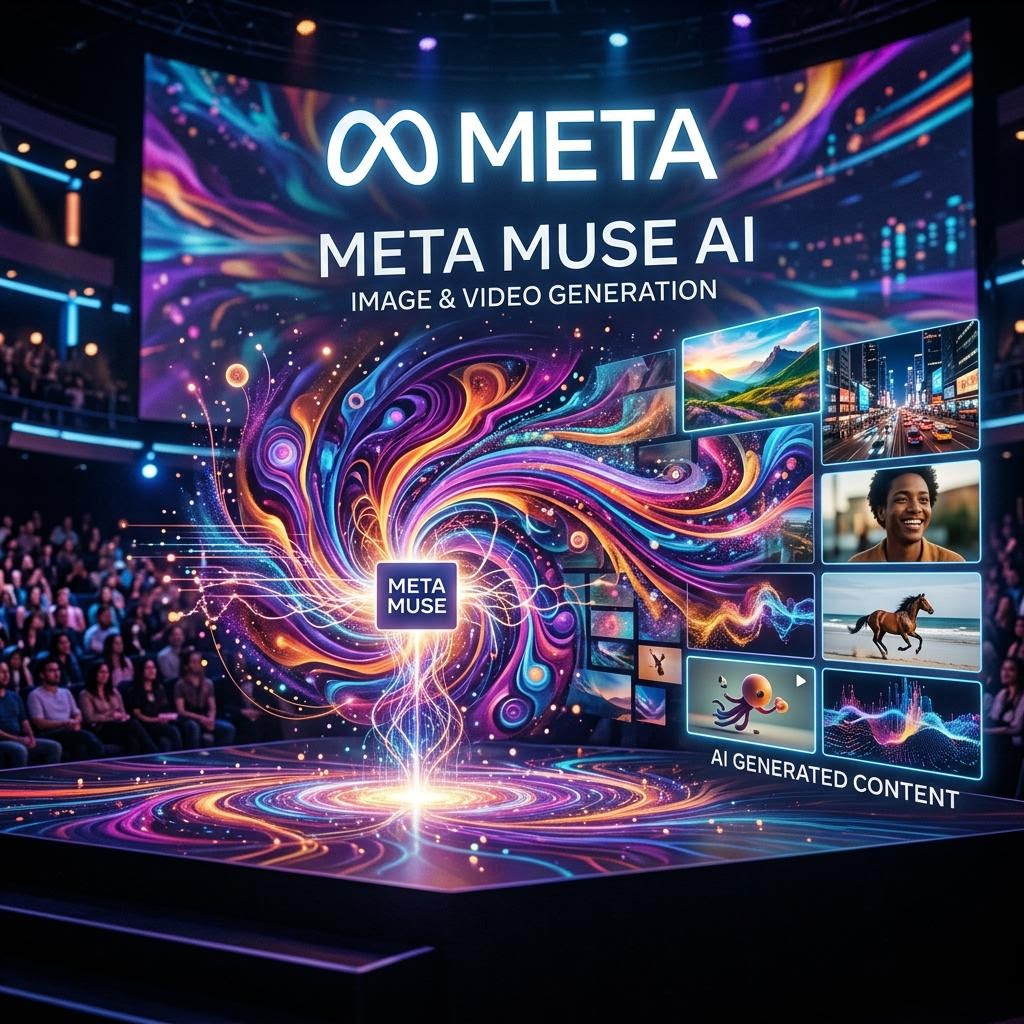
It is interesting to see the company shifting its focus toward high-end creative generation tools to keep pace with the rapidly evolving AI landscape.
Meta Launches Muse Image and Muse Video: AI Generation From Meta Superintelligence Labs
Meta launched Muse Image and Muse Video on July 7, 2026, introducing its first image and video generation models from the newly formed Meta Superintelligence Labs (MSL). The launches arrived alongside Muse Spark 1.1 — a significant upgrade to MSL's flagship language model — positioning Meta as a serious competitor in the AI-generated media space for the first time.
This represents Meta's most significant AI product moment since the Llama open-source model releases, and the first time Meta has deployed frontier-grade generative image and video models in its consumer products.
What Are Muse Image and Muse Video?
Muse Image
Muse Image is Meta's first AI image generation model from MSL, available directly in Meta AI (the AI assistant accessible across Facebook, Instagram, WhatsApp, and Messenger). The model is described as "built for your world" — designed to understand social and cultural context in ways that have historically been weaknesses for AI image generators.
Key capabilities:
- High-quality photorealistic and artistic image generation
- Text-to-image from natural language prompts
- Editing existing images with AI modification
- Cultural and contextual awareness across global audiences
- Integration within Meta AI across all Meta platforms
Muse Video
Muse Video is Meta's AI video generation model, also launched July 7. While specific technical specifications have not been fully disclosed, early demonstrations showed:
- Text-to-video clip generation
- Image animation (static image to video)
- Short-form video creation for social media contexts
The positioning aligns with social media use cases — creating video content for Instagram Reels, Facebook Stories, and WhatsApp Status.
Muse Spark 1.1: The Foundation Model
Muse Image and Muse Video are built on top of Muse Spark 1.1, the latest language model from Meta Superintelligence Labs released on the same day. According to Meta's announcement, Muse Spark 1.1 represents "a significant upgrade" from Muse Spark 1.0, with improvements in:
- Multimodal reasoning (understanding and generating text, images, and video)
- Real-world knowledge and factual accuracy
- Instruction following for complex, multi-step tasks
- Cultural context awareness for global audiences
- Code generation capabilities
Muse Spark 1.1 is available via the Meta Superintelligence Labs API for developers.
Where Can You Access Muse Image and Video?
Meta is rolling out Muse Image and Muse Video through Meta AI across its platforms:
- Meta AI (meta.ai) — Standalone AI interface
- Facebook — In comments, posts, and Messenger AI assistant
- Instagram — In DMs and as a creative tool in Stories/Reels
- WhatsApp — In chat via Meta AI integration
Availability is rolling out globally, with some features launching first in the United States.
How Does Muse Image Compare to Competitors?
| Feature | Muse Image | Midjourney v7 | DALL-E 3 | Adobe Firefly |
|---|---|---|---|---|
| Photorealistic quality | Strong | Best-in-class | Very good | Very good |
| Social/cultural context | Strong differentiator | Limited | Limited | Limited |
| Commercial license | Meta Terms | Standard plan+ | Yes | Yes |
| Platform integration | Facebook, IG, WhatsApp | Discord, Web | ChatGPT | Adobe CC |
| API access | ✅ (MSL API) | Limited | ✅ | ✅ |
| Free access | ✅ (via Meta AI) | ❌ | Limited (ChatGPT) | Limited |
Meta's key differentiation claim is cultural and social awareness — the ability to generate images that feel appropriate and resonant across different cultures, communities, and social contexts globally. This is potentially significant given Meta's 3+ billion global user base.
User Reaction: Concerns and Praise
The Muse Image launch has generated divided reaction:
Positive response:
- Accessibility via free Meta AI (no separate subscription)
- Quality impressions from early users testing the system
- Excitement about social media content creation possibilities
- Praise for cultural diversity in generated imagery
No documented firsthand test record was supplied for this guide. Treat proposed workflows as examples to evaluate, rather than measured outcomes.
Concerns:
- Training data transparency — Like most AI image generators, Meta has not fully disclosed what images Muse Image was trained on. This has prompted questions from artists and content creators about whether their work was used without consent.
- Deepfake potential — Video generation capabilities raise concerns about synthetic media and misinformation, particularly given Meta's reach on social platforms
- Content moderation — Questions about Meta's ability to prevent generation of harmful content at scale across its platforms
Meta has stated that Muse Image and Video incorporate safety classifiers and content policies, but independent evaluation of these systems is pending.
The Meta Superintelligence Labs Context
Meta established MSL in early 2026, bringing together leading AI researchers under a dedicated AI research division with significant resource investment. The Muse model family is MSL's first product line, indicating a strategic shift from Meta's approach of releasing open-source research models (Llama) toward deploying proprietary frontier models in consumer products.
This puts Meta in direct competition with OpenAI (DALL-E, Sora), Google (Imagen, Veo), Stability AI, and Midjourney in the generative media space — a market that's grown significantly as social media platforms increasingly integrate AI creation tools.
For Creators and Marketers: What This Means
For social media creators: Free access to a quality AI image and video generator inside Instagram and Facebook is significant. If Muse Image delivers on its quality promises, it reduces the need to pay for separate tools like Midjourney or Adobe Firefly for basic social content creation.
For businesses: Integration with Meta's advertising platform is the key question — if Muse Image can generate ad creative directly within Meta Ads Manager, it would be a major workflow improvement for social advertisers.
For professional designers: Watch the commercial licensing terms carefully. Meta's terms of service around generated content ownership and commercial use are evolving, and clear commercial use rights are important for professional work.
For concerns about authenticity: Meta has committed to implementing C2PA content credentials on Muse-generated content, making it detectable as AI-generated by compatible platforms and tools.
Frequently Asked Questions
Is Muse Image better than Midjourney? Based on early testing, Muse Image produces strong photorealistic output but Midjourney v7 remains the benchmark for artistic quality and visual sophistication. Muse Image's advantage is accessibility (free, integrated into platforms you already use) rather than raw image quality.
Can I use Muse Image-generated content for commercial purposes? Review Meta's current Terms of Service carefully. The commercial use rights for AI-generated content on Meta platforms are evolving. For professional commercial work, using tools with explicit commercial licenses (Adobe Firefly, Midjourney Standard+) remains safer until Meta clarifies these terms.
Is Muse Spark 1.1 open source like Llama? No — Muse Spark 1.1 is a proprietary model from MSL, accessible via the MSL API for developers rather than released as open weights. This represents a different strategy from Meta's previous open-source approach with Llama.
Does Meta Muse Video generate full-length videos? Based on the July 7 launch information, Muse Video produces short clips (seconds to tens of seconds), consistent with social media content use cases. Full-length video generation is not part of the current launch.
How does Muse Image handle cultural sensitivity? Meta has highlighted cultural awareness as a core capability of Muse Image, arguing it outperforms competitors in generating contextually appropriate imagery for global audiences. This claim will be evaluated through independent testing in the coming months.
What to Watch For
Several things to track in the weeks following this launch:
- Independent image quality benchmarks — AI research organizations will publish systematic comparisons against Midjourney, DALL-E, and Firefly
- Commercial licensing terms — Meta's formal statement on commercial use rights for Muse-generated content
- Integration with Meta Ads — Whether Muse Image becomes a tool for ad creative generation within the Meta advertising platform
- Content moderation track record — How effectively Meta prevents misuse for misinformation, deepfakes, and harmful content
- Training data disclosure — Whether Meta follows Adobe's lead (training on licensed content) or faces legal challenges similar to other AI image generators
Conclusion
Meta's entrance into generative image and video with Muse Image and Muse Video marks a significant moment for AI-generated media. The free access through Meta AI, combined with integration across the world's most-used social platforms, could make Muse Image the most-used AI image generator by user count almost immediately.
Whether it becomes the most trusted and highest-quality option for professional creative work is a separate question — one that the coming months of independent testing, commercial term clarification, and content moderation track record will answer.
For casual social creators, Muse Image is worth trying today through Meta AI at no cost. For professional and commercial creative work, monitor developments before committing to Meta-generated content for client deliverables.
These models mark a major step forward for Meta's product ecosystem, though their long-term impact will depend on how seamlessly they integrate into daily social media workflows.
Tags
Written by

Sourabh Gupta
Author at Teach AI Tools
Sourabh Gupta is responsible for Teach AI Tools. Research guides and documented firsthand reviews are identified separately. An author profile is not evidence of testing; look for sources, test records, and limitations in the article.
Full bio & editorial process →