
AI Tools for Travel & Tourism: The Ultimate Guide to Planning Perfect Trips in 2026
Editorial note: Some links in this article are affiliate links — we may earn a commission if you sign up, at no extra cost to you. Every tool is independently tested by our team before being recommended. Read our editorial standards →
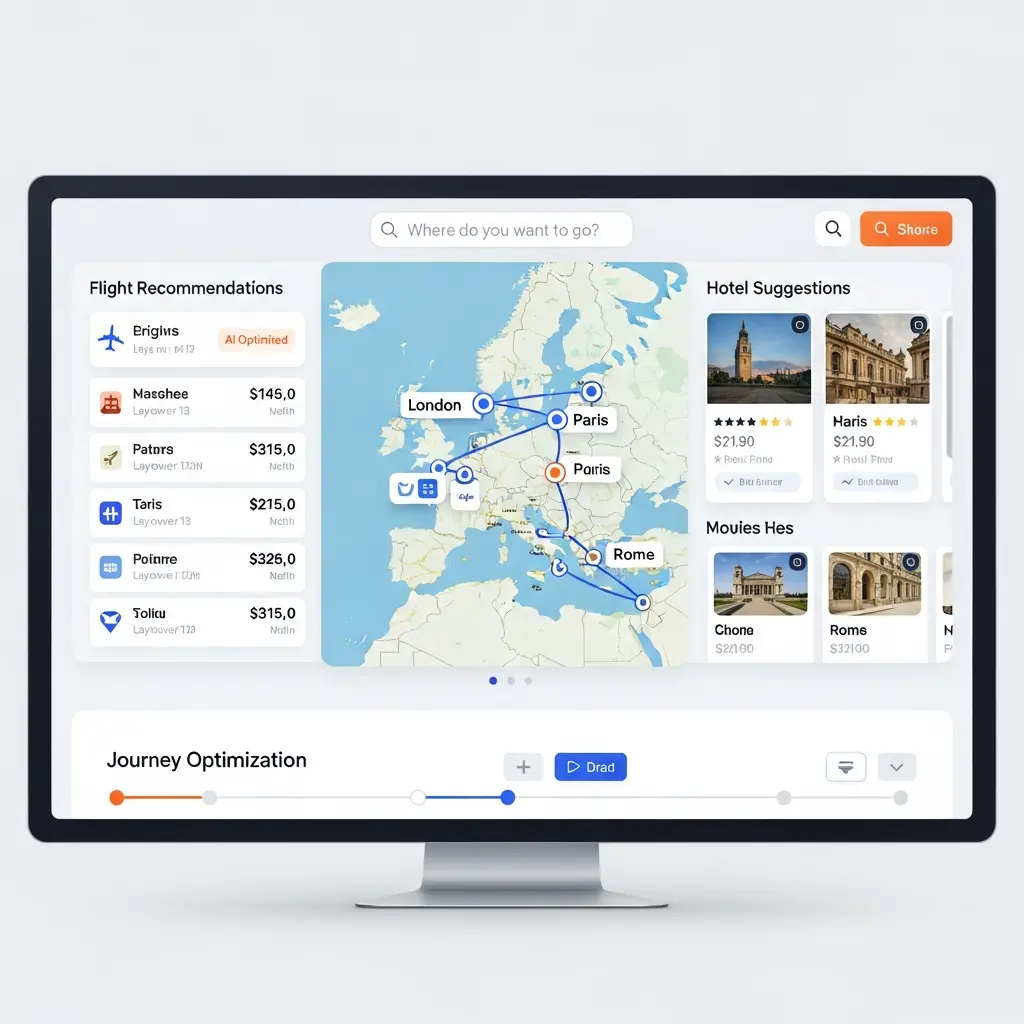
We all know the traditional travel planning nightmare. You decide to take a week-long trip to Rome.
The Death of the "50 Open Browser Tabs"
Suddenly, you have 50 browser tabs open: Google Flights, three different hotel booking sites, TripAdvisor for reviews, Google Maps to check the walking distance between the hotel and the Colosseum, and a chaotic Excel spreadsheet trying to keep the budget together.
Historically, planning a customized, multi-day vacation took an average of 10 to 15 hours of grueling research.
As a data scientist, I look at travel planning and see what we call a "Constraint Satisfaction Problem" mixed with the classic "Traveling Salesperson Problem." You have a strict set of variables: a fixed budget, specific dates, dietary restrictions, and a desire to minimize transit time while maximizing sightseeing.
For a human brain, calculating all those overlapping variables is exhausting. For an Artificial Intelligence model, it takes about four seconds.
In 2026, the travel industry has been completely upended by generative AI and predictive machine learning. We aren't just using AI to find cheap flights anymore — we are using intelligent agents that generate hyper-personalized, minute-by-minute itineraries that actually make geographical sense, then book the entire trip with one click.
Travelers utilizing modern AI tech stacks are reporting 15–30% savings on total trip costs and reducing planning time from 15 hours to under 45 minutes.
The Data Science of Travel AI
Before diving into the software, it helps to understand how these platforms actually work. Modern AI travel planners rely on three major technological pillars:
Geospatial Intelligence
Early AI models (like ChatGPT in 2023) were terrible at travel because they didn't understand physical space. They would suggest eating lunch at a cafe, and then visiting a museum that was a two-hour train ride away, pretending it was a five-minute walk. In 2026, travel AI is deeply integrated with mapping APIs, calculating exact transit times and traffic patterns before suggesting an itinerary.
Time-Series Forecasting
Flight and hotel prices are highly volatile. AI platforms ingest decades of historical pricing data, weather patterns, and local event schedules to run predictive models. The AI knows that a flight to Tokyo will likely drop by 15% next Tuesday — and tells you to wait.
Real-Time API Booking (Agentic AI)
The newest wave of AI doesn't just give you a text list of recommendations. These models have API access to Global Distribution Systems (GDS). You can tell the AI, "This itinerary looks great, book it," and it will autonomously reserve the flights, hotels, and dinner tables on your behalf.
Quick Comparison: Top AI Travel Planners in 2026
| Platform | Best For | Standout AI Feature | Cost |
|---|---|---|---|
| Mindtrip | Visual Itineraries | Interactive map-based generative planning | Free |
| GuideGeek | On-the-Go Support | WhatsApp/Instagram native AI agent | Free |
| Hopper | Budget Optimization | 95% accurate predictive price forecasting | Free app |
| Wonderplan | Strict Constraints | Deep customization (dietary, mobility, budget) | Free tier |
| Expedia (Romi) | All-in-One Booking | Conversational booking with live inventory | Free |
| Roam Around | Instant City Breaks | 1-click hyper-local itinerary generation | Free / Premium |
Deep Dive: The 6 Best AI Travel Tools in 2026
1. Mindtrip — Best for Visual & Bookable Itineraries
If you are a visual planner who hates reading massive blocks of text, Mindtrip is the current gold standard.
The Tech: Mindtrip bridges the gap between Large Language Models (LLMs) and rich media.
How the AI Works: You type a prompt like, "Plan a 5-day romantic trip to Kyoto for under $3,000, focusing on hidden temples and authentic sushi." Instead of just giving you text, Mindtrip generates a beautiful, interactive digital itinerary. Every location appears as a pin on an integrated map, complete with high-res photos, real-time operating hours, and live pricing. If you drag and drop a museum from Day 1 to Day 3, the AI automatically recalculates the transit times and reshuffles your lunch plans to match the new neighborhood.
The Verdict: The absolute best tool for people who want to see their trip before they book it.
2. GuideGeek — Best AI Agent in Your Pocket
Created by the Matador Network, GuideGeek is fundamentally changing how people navigate a city once they actually arrive.
The Tech: GuideGeek lives entirely inside the apps you already use — WhatsApp and Instagram Direct Messages.
How the AI Works: It acts as a concierge in your pocket. While walking around Paris, you can simply text the GuideGeek WhatsApp number: "I am standing outside the Louvre, it's raining, and I need a vegetarian-friendly cafe within a 10-minute walk that is open right now." The AI instantly cross-references your GPS location, live restaurant hours, and menu data to give you three perfect options.
The Verdict: Essential for on-the-ground, real-time pivots when travel plans inevitably change.
3. Hopper — Best for Predictive Flight & Hotel Deals
Hopper has been around for a while, but their 2026 machine learning models have reached an astonishing level of accuracy.
The Tech: Time-Series Forecasting and predictive analytics.
How the AI Works: Hopper processes trillions of historical flight and hotel prices. When you search for a flight to London, the AI doesn't just show you the current price — it gives you a "Price Prediction" with up to 95% accuracy, explicitly telling you to "Wait" or "Buy Now." If it tells you to wait and the price goes up, their price freeze guarantees often cover the difference.
The Verdict: If your primary constraint is budget, do not book a flight without running it through Hopper's algorithm first.
4. Wonderplan — Best for Complex Constraints
Planning a trip for a solo backpacker is easy. Planning a trip for a family of four, where one person is gluten-free, one uses a wheelchair, and you only have $150 per day, is incredibly difficult.
The Tech: Advanced Constraint Satisfaction algorithms.
How the AI Works: Wonderplan asks you a detailed series of questions before generating anything. It ingests your exact budget limits, dietary needs, mobility restrictions, and pacing preferences (e.g., "fast-paced sightseeing" vs. "relaxed mornings"). The AI then filters millions of global data points to build an itinerary that strictly adheres to your specific parameters — ensuring you never get recommended a 5-mile hike if you requested accessible activities.
The Verdict: The ultimate tool for family travel and highly specific niche vacations.
5. Expedia & Booking.com Native AI — Best for Loyalty Members
The major Online Travel Agencies (OTAs) haven't been sitting still. In 2026, tools like Expedia's AI agent have deeply integrated LLMs directly into their massive inventory databases.
The Tech: Conversational commerce.
How the AI Works: Instead of checking filter boxes, you just talk to the app. "Find me a boutique hotel in downtown Chicago with a rooftop bar, under $250 a night, and book it using my loyalty points." Because the AI is natively connected to the OTA's inventory and your user profile, it can execute the entire transaction via chat.
The Verdict: Best for corporate travelers and those who want to earn or spend loyalty points natively.
The 3-Step AI Workflow for Planning a Trip
If you want to plan a massive international trip in under an hour, here is the ultimate 2026 data-driven workflow:
Phase 1: Ideation & Budgeting (Hopper + ChatGPT Plus)
Don't know where to go? Tell ChatGPT your total budget, the month you want to travel, and the vibe you want (e.g., "warm, historical, cheap street food"). Once it suggests a location like Mexico City, plug those dates into Hopper to establish a baseline budget for flights and start tracking price drops.
Phase 2: Itinerary Generation (Mindtrip or Wonderplan)
Take the dates you secured and feed them into Mindtrip. Let the AI generate the day-by-day routing. Spend 20 minutes tweaking the map — deleting tourist traps and asking the AI to substitute them with "hidden gems favored by locals."
Phase 3: On-the-Ground Assistant (GuideGeek)
Once you land, close your laptop. Rely entirely on GuideGeek via WhatsApp. Let the AI handle the language translations, currency conversions, and real-time dinner reservations while you actually enjoy the vacation.
The Data Scientist's Warning: Beware of "Temporal Hallucinations"
While these tools are incredible, they are not flawless. The biggest risk when using AI for travel in 2026 is what data scientists call Temporal Hallucinations.
An AI might recommend a brilliant, authentic pasta restaurant in Rome for your Tuesday night dinner. The restaurant exists, the address is correct, and the reviews are stellar. However, the AI might fail to realize this specific restaurant is closed on Tuesdays, or that it requires reservations three months in advance.
The Golden Rule: Let the AI do 90% of the heavy lifting — routing, sequencing, idea generation — but always apply a human touch for the final 10%. Verify the opening hours of critical museums or restaurants directly on their official websites before you get on the plane.
Frequently Asked Questions
Q: Are AI travel planners actually free to use?
Yes, the vast majority are free for the consumer. Platforms like Mindtrip, Roam Around, and GuideGeek make their money through affiliate commissions. If you book a hotel through their AI-generated link, they get a cut from the hotel — meaning the software remains free for you.
Q: Can AI book my flights and hotels for me automatically?
We are in the early stages of "Agentic AI." While Expedia's native AI can book hotels within its own ecosystem, third-party AI planners will usually build your itinerary and then provide you with deep links. You click the link, it pre-fills your cart on an airline or hotel site, and you review the final details before swiping your card.
Q: Is it safe to share my travel plans with these AI bots?
Treat AI travel planners like public search engines. Do not feed them your passport numbers, credit card details, or exact home address. Share only your destination, dates, and general preferences.
Conclusion
The days of drowning in browser tabs and stressing over complex logistical spreadsheets are officially over. By leveraging tools like Mindtrip, Hopper, and GuideGeek, you are essentially hiring a team of elite travel agents, local tour guides, and financial analysts to orchestrate your vacation — for free.
Pick your next destination, open one of these platforms today, and let the algorithms handle the logistics so you can focus on the experience.
Pro Tips from Power Users
To take your travel planning to the next level, consider the following expert tips from seasoned travelers who have mastered the use of AI tools:
- Leverage AI-powered travel assistants: Utilize AI-driven travel assistants like chatbots or virtual assistants to get personalized recommendations for your trip. These assistants can help you discover hidden gems, such as local restaurants or off-the-beaten-path attractions, that might not be easily found through traditional travel guides.
- Integrate your loyalty programs: Make sure to link your loyalty programs, such as airline miles or hotel rewards, to your AI travel planner to get the most out of your points and miles. This can help you redeem rewards, get upgrades, or access exclusive perks that can enhance your travel experience.
- Use predictive analytics for flight bookings: Take advantage of AI-powered predictive analytics to forecast flight price drops and get notified when the best time to book your flight is. This can help you save up to 20% on your flight costs, according to some studies.
- Optimize your itinerary with machine learning: Use machine learning algorithms to optimize your daily itinerary, taking into account factors like traffic patterns, weather, and attraction opening hours. This can help you make the most of your time and minimize unnecessary travel.
- Monitor travel restrictions and alerts: Stay up-to-date with the latest travel restrictions, health advisories, and safety alerts using AI-powered travel monitoring tools. These tools can provide real-time updates and help you make informed decisions about your travel plans.
- Customize your travel preferences: Use AI-driven travel planners to customize your travel preferences, such as dietary restrictions, activity levels, or interests, to get personalized recommendations for your trip. This can help you create a tailored itinerary that meets your unique needs and preferences.
Frequently Asked Questions
Here are some common questions and concerns that users have when using AI tools for travel planning: Q: What is the best way to get started with AI-powered travel planning? A: To get started with AI-powered travel planning, begin by identifying your travel goals and preferences. Determine your budget, destination, and travel dates, and then use an AI travel planner to get personalized recommendations. You can also explore different AI travel tools and platforms to find the one that best suits your needs. Q: How do AI travel planners ensure the accuracy of their recommendations? A: AI travel planners use advanced algorithms and machine learning models to analyze vast amounts of data, including user reviews, ratings, and feedback. They also integrate with multiple data sources, such as Google Maps, TripAdvisor, and travel blogs, to provide accurate and up-to-date information. Additionally, many AI travel planners use natural language processing to understand user preferences and provide tailored recommendations. Q: Can AI travel planners help with booking flights and hotels? A: Yes, many AI travel planners can help with booking flights and hotels. They can provide personalized recommendations for flights and hotels based on your budget, preferences, and travel dates. Some AI travel planners also offer integrated booking capabilities, allowing you to book your flights and hotels directly through the platform. Q: How do AI travel planners handle last-minute changes or cancellations? A: AI travel planners can help you handle last-minute changes or cancellations by providing alternative options and recommendations. They can also assist with rebooking flights or hotels, and even offer refunds or compensation in case of cancellations. However, it's essential to review the terms and conditions of your AI travel planner to understand their policies on last-minute changes and cancellations. Q: Are AI travel planners secure and reliable? A: Yes, most AI travel planners prioritize security and reliability. They use advanced encryption methods to protect user data and ensure that all transactions are secure. Additionally, many AI travel planners have robust customer support systems in place to assist with any issues or concerns that may arise during the travel planning process. Q: Can AI travel planners help with planning group trips? A: Yes, many AI travel planners can help with planning group trips. They can provide personalized recommendations for group activities, accommodations, and transportation, taking into account the diverse preferences and needs of the group. Some AI travel planners also offer features such as collaborative planning tools and group chat functionality to facilitate communication and coordination among group members. Q: How do AI travel planners handle special requests or requirements? A: AI travel planners can handle special requests or requirements, such as dietary restrictions, accessibility needs, or pet-friendly accommodations. They can provide personalized recommendations and suggestions based on your specific needs and preferences, and even assist with booking special services or accommodations. Q: Can AI travel planners help with planning trips to destinations with limited infrastructure or resources? A: Yes, many AI travel planners can help with planning trips to destinations with limited infrastructure or resources. They can provide information on local customs, transportation options, and safety concerns, and even offer recommendations for alternative destinations or routes. However, it's essential to research and understand the local conditions and challenges before planning a trip to such destinations.
Tags
Written by

Sourabh Gupta
Founder & Data Scientist, AI Tools Specialist · 2+ years in AI/ML
Sourabh tests every AI tool he writes about — hands-on, with real use cases. His background in data science means he goes beyond marketing claims to benchmark actual performance, cost, and reliability for developers and creators.
Full bio & editorial process →