Best AI Music Recommendation Engines 2025
The Science Behind Your Perfect Playlist
Have you ever wondered how Spotify seems to know your music taste better than you do? Or how YouTube Music consistently surfaces obscure artists you've never heard of but instantly love? The answer lies in sophisticated AI music recommendation engines that analyze billions of data points to predict what you'll want to hear next.
Impact Reality: AI-powered music recommendations have increased music discovery by 60-80% and user engagement by 40-50% on major streaming platforms.
How AI Music Recommendation Works
The Three Pillars of Music Recommendation
1. Collaborative Filtering
What it is: "Users who listened to Artist A also enjoyed Artist B"
How it works:
- Analyzes listening patterns across millions of users
- Identifies users with similar tastes to yours
- Recommends music those similar users enjoy
- Creates "taste clusters" of listeners
Strength: Discovers unexpected connections between artists Weakness: Struggles with new music (cold start problem)
2. Content-Based Filtering
What it is: Analyzes the actual audio characteristics of songs
AI analyzes:
- Tempo (BPM)
- Key and mode (major/minor)
- Acousticness vs electronic elements
- Energy and danceability
- Vocal vs instrumental
- Genre and subgenre markers
- Mood and emotion
Strength: Works well for new music without listening history Weakness: May create echo chambers (only similar-sounding music)
3. Natural Language Processing (NLP)
What it is: AI reads and analyzes text about music
Data sources:
- Music blogs and reviews
- Social media mentions
- Playlist titles and descriptions
- Artist biographies
- Song lyrics
- User comments
Use: Understands cultural context, emerging trends, and subjective qualities computers can't "hear"
Leading AI Music Recommendation Platforms
1. Spotify
Algorithm: Combines all three approaches plus proprietary AI
Unique Features:
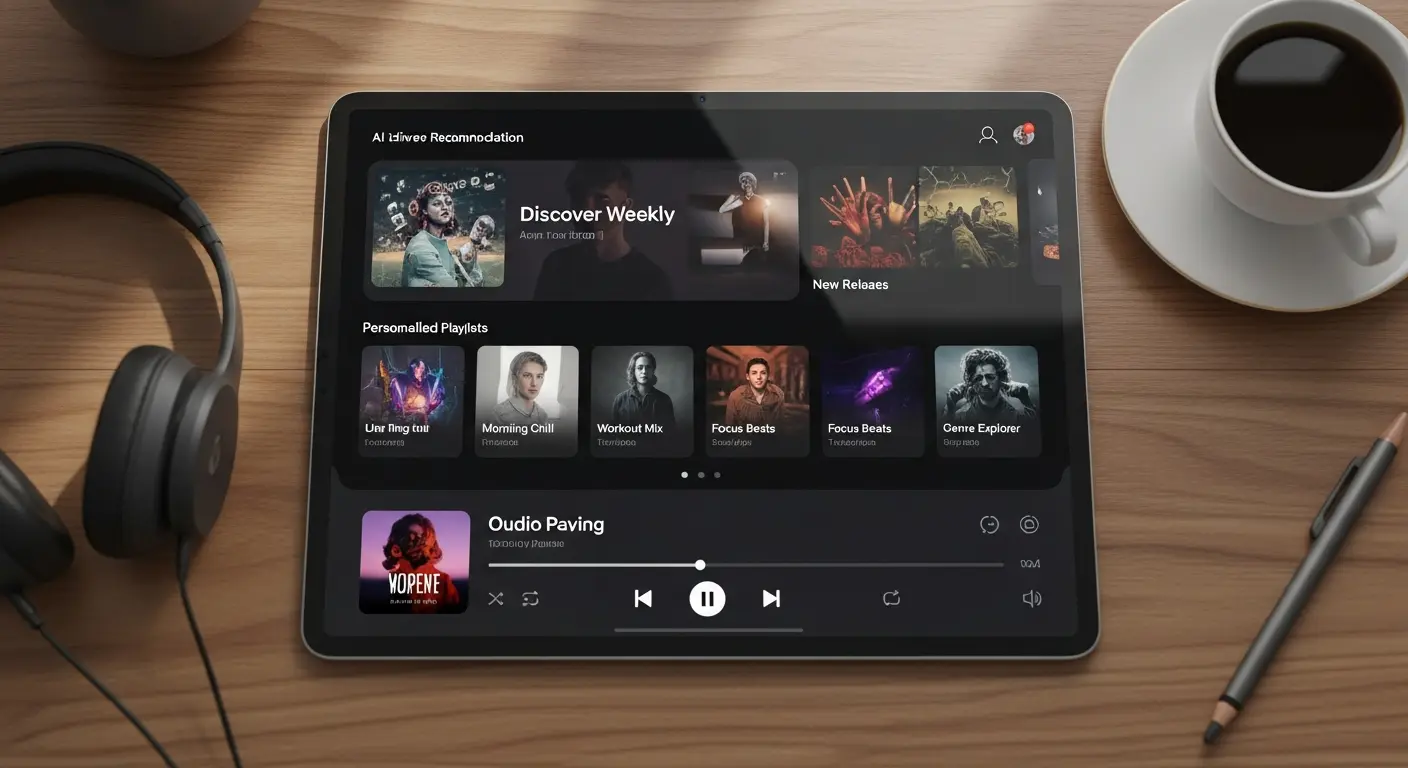
- Discover Weekly: Personalized 30-song playlist updated every Monday
- Release Radar: New releases from artists you follow + recommendations
- Daily Mixes: Genre-specific endless playlists based on your taste
- Spotify DJ: AI-generated radio with contextual commentary
- Blend: Shared taste profiles with friends
AI Innovations:
- Analyze 100+ audio features per song
- Process 400+ billion listening events annually
- Update recommendations in real-time based on recent listens
- "Bandit" algorithm optimizes exploration vs exploitation
Accuracy: Users report 70-80% satisfaction with Discover Weekly recommendations
What makes it special: Industry-leading discovery engine; invested $1+ billion in recommendation AI
2. Apple Music
Algorithm: Hybrid of algorithmic recommendations + human curation
Standout Features:
- Personal Station: Creates endless radio based on your taste
- For You section: Daily curated recommendations
- Listen Now: Algorithmic + editorial blend
- New Music Mix: Fresh releases matching your taste
Unique Approach:
- Combines AI with expert human curators
- Editorial playlists complement algorithms
- Genre specialists create foundational playlists
- AI learns from curator choices
Differentiator: Human + AI hybrid approach for higher quality curation
3. YouTube Music
Algorithm: Leverages Google's AI and YouTube's vast data
Recommendation Features:
- Discover Mix: Weekly personalized playlist
- New Release Mix: Recent music matching your taste
- Your Mix: Continuous radio based on current mood
- Hotlist: Trending music personalized to your taste
Advantages:
- Access to YouTube's music video catalog
- AI analyzes watching behavior, not just listening
- Integrates official releases + user uploads + live performances
- Mood and activity-based recommendations
Unique: Video data provides additional context for recommendations
4. Pandora (Music Genome Project)
Algorithm: Manual music analysis + machine learning
How it works:
- Music Genome Project: 450+ musical attributes per song
- Human musicians analyze and tag each track
- AI uses these tags for recommendations
- Creates detailed music DNA for matching
Strengths:
- Extremely detailed musical analysis
- Excels at finding similar-sounding music
- "Thumbs up/down" training creates precise stations
Best For: Finding music similar to specific artists or songs
5. Tidal
Algorithm: AI + artist-curated playlists
Features:
- My Mix: Personalized daily playlists
- Discovery: Algorithmic new music
- Tidal Rising: Emerging artist recommendations
- Master Quality Audio: Hi-res audio for audiophiles
Differentiator: Focus on high-quality audio + artist compensation
6. Amazon Music Unlimited
Algorithm: Leverages Amazon's e-commerce recommendation AI
Capabilities:
- Cross-platform data (Alexa, Echo, purchase history)
- Voice-based recommendations ("Alexa, play music I'd like")
- Activity-based suggestions (workout, focus, sleep)
- Integration with Amazon devices
Advantage: Deep integration with Alexa and smart home ecosystem
How Platforms Learn Your Taste
Explicit Feedback
Actions that train AI:
- ❤️ Liking/favoriting songs
- ⭐ Rating tracks (thumbs up/down)
- ➕ Adding to playlists
- 🔁 Repeating songs
- ⏭️ Skipping within 30 seconds
Implicit Signals
Passive data AI analyzes:
- Complete listen-through = strong positive signal
- Time of day you listen
- Playlist context
- What you listen to before/after
- How often you return to a song
- Share or add to public playlists
Contextual Understanding
AI considers:
- Time: Morning pop vs evening jazz
- Day: Weekday focus music vs weekend party playlist
- Season: Summer vibes vs winter moods
- Location: Gym music vs commute music (if location enabled)
- Activity: Running, working, studying
Advanced AI Techniques
Deep Learning for Audio Analysis
Neural networks process raw audio:
- Spectrograms (visual representation of sound)
- Waveform analysis
- Automatic genre classification
- Mood detection from audio alone
- Singing voice vs instrumentation separation
Reinforcement Learning
AI optimizes long-term engagement:
- Balances familiar favorites with discovery
- Tests recommendations and learns from feedback
- Optimizes playlist flow and transitions
- Adjusts exploration vs exploitation ratio
Natural Language Understanding
AI reads about music:
- Processes millions of music articles and reviews
- Understands cultural context and trends
- Connects sonic qualities to written descriptions
- Identifies emerging genres before they're mainstream
Optimizing Your Recommendations
Train Your Algorithm
Best practices:
- Be active: Like/favorite songs you enjoy
- Curate playlists: Create theme-based playlists
- Skip aggressively: Skip songs you don't like within 5 seconds
- Listen completely: Let songs you love play through
- Use multiple playlists: Separate work, workout, and relaxation music
- Explore regularly: Give recommendations a chance
Fresh Start Strategy
If recommendations feel stale:
- Create a new profile for experimentation
- Use "private session" mode to explore without affecting recommendations
- Delete or hide playlists you no longer enjoy
- Actively unlike old favorites that no longer fit your taste
Multi-Platform Approach
Why use multiple services:
- Each algorithm has different strengths
- Discover music one platform's AI misses
- Cross-reference recommendations
- Backup access to music
Use Cases Beyond Personal Listening
Business and Retail
AI music for commercial spaces:
- Soundtrack Your Brand
- Cloud Cover Music
- Custom mood and brand-aligned playlists
- Time-of-day music programming
- Customer demographic targeting
Impact: Proper music increases customer dwell time by 20-30% and sales by 10-15%
Fitness and Wellness
Workout-optimized AI recommendations:
- BPM-matched running playlists
- Energy progression (warm-up → peak → cool-down)
- Motivation-optimized selections
- Tempo-based recommendations
Focus and Productivity
AI-curated concentration music:
- Brain.fm: Science-backed focus music
- Endel: AI-generated soundscapes
- Flow State playlists
- Pomodoro-timed music sessions
Sleep and Relaxation
AI-optimized sleep music:
- Gradually decreasing tempo
- Reducing energy and stimulation
- Consistent, predictable sounds
- Fade-out algorithms
The Future of AI Music Recommendations
Emerging Technologies
Emotion Recognition:
- AI detects your mood from voice, photos, calendar
- Recommends music matching or shifting emotional state
- Integration with wearables (heart rate, stress levels)
Predictive Recommendations:
- AI predicts what you'll want before you search
- Context-aware preloading
- Proactive "you might like this today" notifications
Social Integration:
- Shared taste profiles with friends
- Group playlist optimization
- Social listening parties with hybrid tastes
Generative AI Music:
- AI creates original music matching your taste
- Infinite playlists of similar-but-new music
- Custom soundtrack generation
Privacy Considerations
What Data Platforms Collect
Typical data points:
- Every song played, when, and for how long
- Playlists created and followed
- Searches and browsing behavior
- Device and location (if permitted)
- Demographics and account info
Protecting Privacy
Options to consider:
- Review privacy settings
- Use private/incognito sessions for experimentation
- Disable location tracking
- Limit social sharing
- Opt out of personalized ads
Trade-off: Less data sharing = less personalized recommendations
Frequently Asked Questions
Q: How long does it take for AI to learn my taste? A: Most platforms need 1-2 weeks of active listening (20-30 hours) to generate quality recommendations. Accuracy improves continuously over months.
Q: Why does the algorithm sometimes feel stuck? A: Echo chamber effect. AI optimizes for engagement, which can narrow recommendations. Solution: Actively explore new genres and use "private session" for experimentation.
Q: Can I reset my recommendations? A: Most platforms don't offer full reset, but you can unlike songs, delete playlists, and actively train the algorithm toward new preferences. Some allow creating fresh profiles.
Q: Do human curators still matter? A: Yes! Platforms like Apple Music combine AI with expert human curation. Humans excel at identifying cultural trends and qualitative aspects AI misses.
Q: How do platforms discover brand new music? A: Combination of content-based analysis (audio features), early adopter listening patterns, label partnerships, and algorithmic promotion of emerging artists.
Q: Are recommendations biased toward popular music? A: Platforms balance popularity with personalization. Early algorithms favored popular music, but modern systems increasingly surface niche artists matching your taste.
Conclusion
AI music recommendation engines have fundamentally changed how we discover and experience music. What once required hours of radio listening, magazine reading, or record store browsing now happens automatically, introducing us to perfect-fit artists we'd never find otherwise.
Your Action Plan:
- This Week: Actively train your algorithm (like 20+ songs, create a playlist)
- This Month: Explore all algorithmic playlists (Discover Weekly, Release Radar, etc.)
- Ongoing: Try one new artist or genre weekly from recommendations
The best music recommendation engine is the one you actively engage with—feed it data, train it consistently, and it will reward you with discoveries you'll love.
Ready to enhance your music discovery? Start actively training your favorite platform's AI today and unlock a personalized soundtrack to your life.
Related Resources:
Tags:
Admin
Expert in AI tools and technologies. Passionate about helping others learn and master AI to boost their productivity.