Google’s A2A Protocol Joins the Agentic AI Foundation: What an Open Agent Ecosystem Could Change
Editorial note: Some links in this article are affiliate links — we may earn a commission if you sign up, at no extra cost to you. Research guides are distinguished from documented firsthand reviews in our editorial standards. Read our editorial standards →
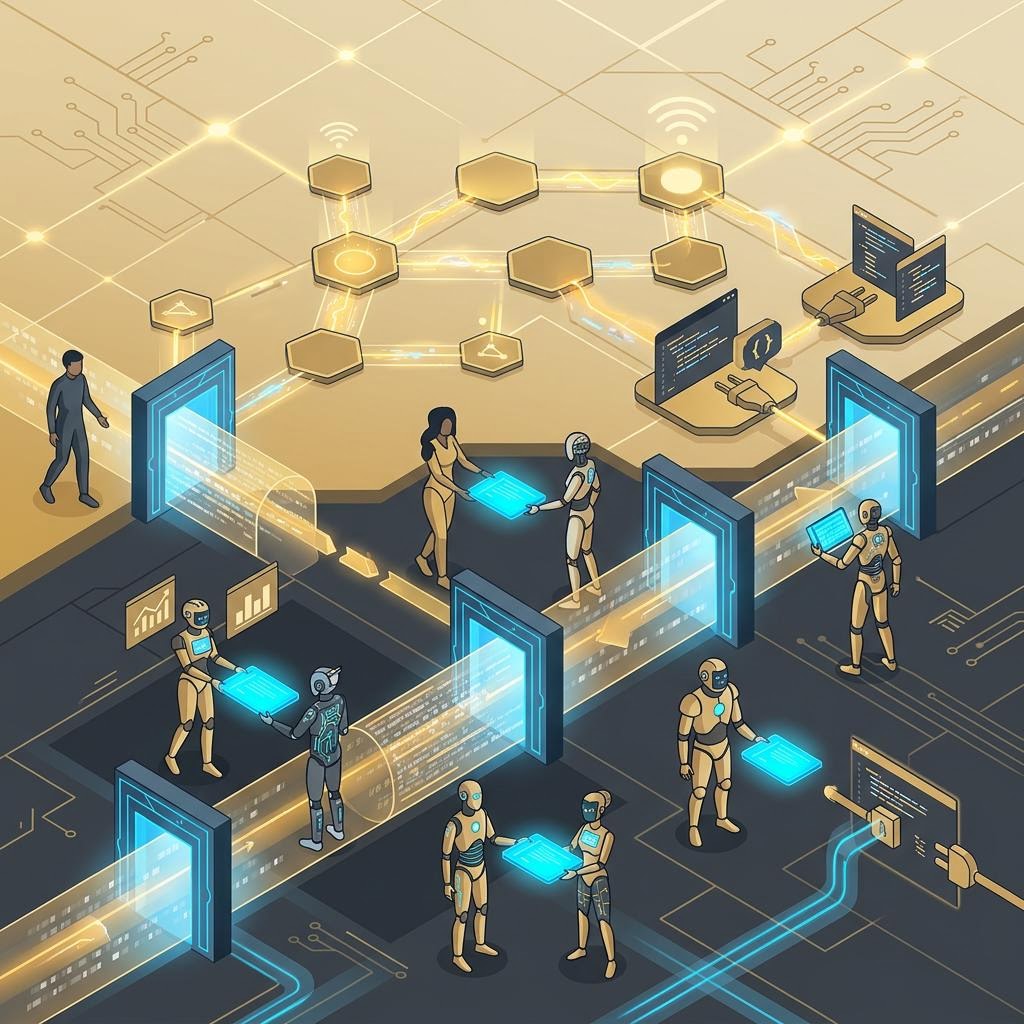
Original illustration created for Teach AI Tools.
For years, enterprise software integrations have followed a familiar pattern: one system calls another through a documented API, a developer writes glue code, and the connection survives until one side changes an assumption. Agentic AI introduces a new version of the same problem. Instead of connecting a customer system to a payment system, organizations may need a planning agent to find a specialist agent, understand what it can do, delegate a task, receive a result, and keep a record of the exchange. If every vendor invents its own format, multi-agent systems become an expensive maze of custom adapters.
Google’s Agent2Agent (A2A) protocol is an attempt to make that exchange more standard. Its move into the Agentic AI Foundation (AAIF) gives the effort a more neutral governance home. The practical promise is not that agents will suddenly work together without engineering. It is that the vocabulary for discovering capabilities, assigning work, sharing task status, and returning artifacts can be shared across frameworks and vendors.

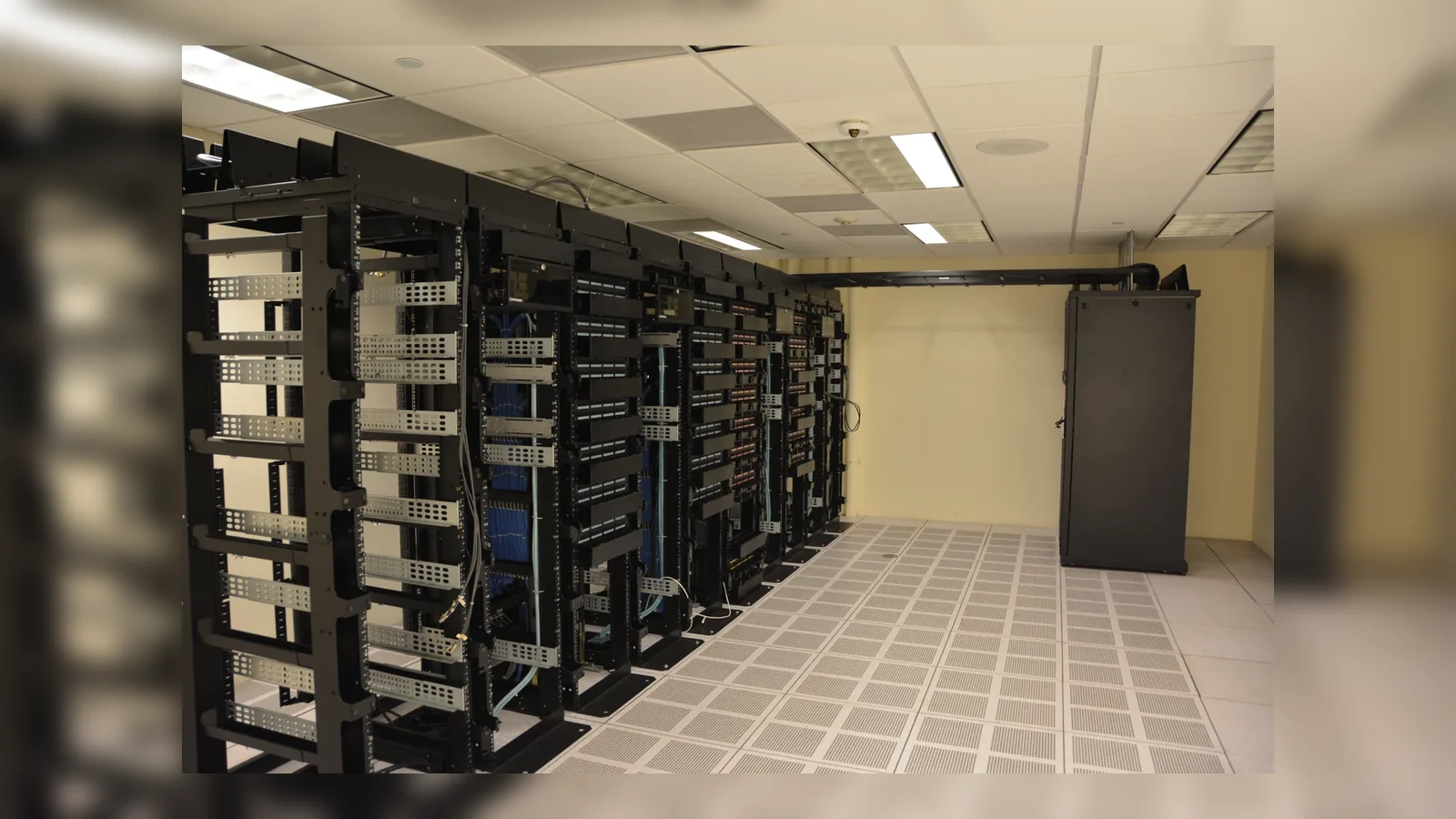
Source photo: Pexels, used under the Pexels License.
The Problem A2A Is Trying to Solve
An agent is often built for a particular domain. A procurement agent may know company policy and approved suppliers. A data agent may be allowed to query a warehouse. A legal agent may retrieve contract clauses but be prohibited from making commitments. A travel agent may search itineraries and submit requests for approval. None of these agents needs to be built by the same vendor or even use the same model.
The difficulty arrives when a workflow crosses those boundaries. Suppose a sales-operations agent receives a request for a proposal. It needs current account data, pricing guidance, an approved contract template, and a final review. In a closed ecosystem, one platform may offer all of those functions. In a real enterprise, the capabilities are likely distributed across teams, clouds, and suppliers. The coordinating agent needs a way to ask, “Who can do this task?”, “What inputs do you need?”, “What is the status?”, and “What did you produce?” without learning each specialist’s private API.
A2A describes that conversation. The protocol uses the idea of an agent card: structured information an agent can publish about its identity, skills, endpoint, and supported interaction modes. A client agent can read the card, select a suitable remote agent, create a task, monitor updates, and receive results or artifacts. That is a modest but important piece of shared plumbing.
Why Foundation Governance Matters
Standards become valuable when people trust that they will not be shaped solely around one vendor’s product strategy. The AAIF describes itself as a home for open agentic infrastructure, and A2A joining it places the protocol alongside other ecosystem work rather than under a single company’s control. That can make adoption easier for organizations that need an exit path, a transparent roadmap, or representation from multiple cloud and software providers.
Neutral governance does not guarantee interoperability. Specifications still need stable versions, reference implementations, test suites, security guidance, and real deployments that expose ambiguous corners. But it changes the incentive structure. A customer can ask whether a supplier implements a published protocol rather than accepting a proprietary “multi-agent” claim at face value. A framework author can target a shared interface rather than choosing a winner in advance.
The AAIF announcement describes A2A as a hosted project for agent discovery, delegation, and cross-vendor collaboration. That wording is useful because it focuses attention on the workflow boundary. A2A is not a replacement for an application’s internal reasoning loop. It is not a universal permission system. It is a contract for an agent-to-agent handoff.
A2A and MCP Do Different Jobs
The most common confusion is treating A2A and the Model Context Protocol as rivals. They operate at different layers. MCP is largely about connecting an AI application to tools and data: a file store, a database, a search service, a repository, or a business system. It gives a model-facing application a standard way to discover and call those capabilities.
A2A is about delegating work to another agent. That remote agent may itself use MCP to reach its tools. A planner might send an A2A task to a finance-analysis agent. The finance agent could then use an MCP connection to query approved financial data and return an audited artifact. One protocol helps the agent use a tool; the other helps an agent ask another agent to do a bounded piece of work.
The distinction has operational consequences. Tool access normally needs narrow credentials, rate limits, and input validation. Agent delegation also needs identity, task ownership, lifecycle rules, and a way to define what a completed result means. Treating an A2A endpoint like a casual chatbot connection would be a mistake. It is closer to exposing a specialized service with a conversational interface and a dynamic work queue.
A Concrete Enterprise Pattern
Consider a customer escalation. A service agent receives the issue and needs three things: a technical diagnosis, an account-risk assessment, and a policy-approved response. With a multi-agent architecture, the service agent can create a task for a diagnostic agent, another for an account-data agent, and a third for a policy agent. Each specialist works inside its own boundary. The service agent combines their outputs and presents a draft to a human escalation manager.
The value is not that three agents make the process more futuristic. The value is separation of concerns. The diagnostic agent should not automatically have access to commercial terms. The account-risk agent should not be able to modify a support ticket. The policy agent should return citations, not send customer email. A shared delegation protocol makes it easier to preserve those boundaries while letting the workflow move across them.
This pattern also clarifies what must be logged. Teams need the delegating agent’s identity, the target agent’s identity and version, the task inputs, the tools used by the specialist where relevant, the returned artifact, and the human approval that allowed any consequential step. Without that record, a multi-agent architecture simply spreads accountability across more components.
What Changes for Developers
For developers, an open agent protocol can reduce the cost of building integrations that would otherwise be custom. It can also make product requirements more precise. Instead of saying “our agent integrates with external assistants,” a team can specify discovery, capability advertisement, streaming updates, artifact exchange, cancellation, and error behavior. Those requirements can be tested.
It does not mean developers can stop thinking about schemas. An agent card may tell you that a remote agent can “analyze a contract,” but the business still needs to define the expected inputs, jurisdiction constraints, confidentiality rules, and acceptable output format. Protocol-level interoperability is only the start of semantic interoperability. Two systems can exchange a valid message and still misunderstand the work.
The healthiest approach is to treat A2A as an abstraction boundary. Build a small adapter around it, define internal task types, and test the failure paths: the remote agent is unavailable, returns incomplete work, takes too long, or asks for a permission the caller cannot grant. The success path is rarely the hard part.
Security Cannot Be an Afterthought
Agent-to-agent communication expands the trust surface. A malicious or compromised agent card could advertise a capability it should not have. An agent could be manipulated through untrusted content embedded in a task. A delegated result could contain instructions rather than evidence. A workflow could accidentally grant a remote system access to more information than the task requires.
That is why discovery should be authenticated, capabilities should be allow-listed, and task payloads should be treated as untrusted inputs. High-impact actions need a human approval or a policy engine that evaluates the action independently of the model’s prose. Agents should use distinct identities, short-lived credentials, and narrowly scoped tool permissions. A2A can make delegation easier; it cannot make delegation safe by itself.
The Larger Shift
The move to AAIF is a sign that the agent ecosystem is beginning to develop its own infrastructure layer. In the early chatbot era, integration meant embedding a model in an application. In the agent era, integration means coordinating systems that can plan, act, and return work. The standards that survive will be the ones that make that coordination less brittle without hiding the security and governance work underneath it.
For enterprises, the near-term opportunity is not an open marketplace of autonomous agents. It is a more manageable internal architecture: specialist agents with clear contracts, shared observability, and small, reversible delegations. A2A is worth watching because it may make those internal connections less proprietary at exactly the moment companies are trying to avoid being locked into one agent platform.
A Sensible Evaluation Checklist
Before putting A2A into a production roadmap, ask a vendor to demonstrate more than a successful handoff. Have it show capability discovery from an authenticated registry, a task with a deliberately malformed payload, cancellation of a slow task, a failed remote agent, and a returned artifact that requires human approval. Ask whether task state can be retained for audit, whether agent cards can be versioned, and how a caller learns that a specialist’s permissions or capability have changed.
The best proof of interoperability is a modest one: two independently implemented agents exchanging a task under a shared security policy. That test reveals much more than a polished demo. It forces teams to agree on ownership, identity, error semantics, data classification, and what the result is actually allowed to mean. Those are the conditions under which an open protocol becomes an enterprise asset rather than another integration label.
Sources and Further Reading
- Agentic AI Foundation: A2A joins the open agentic stack
- A2A project proposal and protocol description
- Enterprise AI World: A2A and AAIF
A Practical Response for Teams
The useful response to an open protocol for agent-to-agent delegation is neither to declare a revolution on the strength of one launch nor to wait until the category is settled. The productive middle path is to treat the change as a design input. A2A’s move to AAIF gives enterprises a public interoperability target rather than another vendor-specific multi-agent claim. That is enough information to make a small, controlled decision; it is not a license to make an irreversible one.
Start by choosing a workflow with a visible owner, a known baseline, and a consequence that can be contained. Model one handoff between two internal specialists and document the input, output, failure, and approval contract before connecting more agents. A pilot should have one accountable business sponsor and one technical owner who can stop it. It should also have an explicit definition of a successful handoff: what the system may do automatically, what it may prepare for review, and what must still be decided by a person. That clarity matters more than a fashionable agent framework or a perfect prompt.
Design the trial around boundaries, not just capability. Authenticate discovery, allow-list capabilities, isolate identities, treat delegated content as untrusted, and retain a complete task trace. Treat permissions, data exposure, budgets, and time limits as product requirements. A capable system with a small blast radius is far more informative than an impressive demo with unrestricted access. Keep a trace of the inputs, tool calls, outputs, approvals, and exceptions so the team can explain what happened later without reconstructing it from memory.
Measure the result as an operational change rather than a model score. Measure handoff completion, time to resolution, duplicate work, permission denials, escalation rate, and the clarity of returned artifacts. A model can look exceptional in a benchmark and still make a workflow slower if people must repeatedly repair unclear handoffs. Conversely, a less glamorous model can create value when it is paired with reliable retrieval, constrained tools, and a review queue. The question is not “did the agent look intelligent?” It is “did the service level, error rate, cost, and accountability improve?”
There is also a people dimension. Give the people closest to the work a way to challenge the system, correct it, and see what it did. In a healthy deployment, the agent makes routine work more legible: it shows the evidence it used, declares uncertainty, and escalates exceptions. In an unhealthy deployment, it becomes a black box that quietly adds work to the people who are supposed to supervise it. The difference is architecture and operating discipline, not optimism.
Finally, revisit the pilot after a fixed interval. Review the incidents that did not become tickets: near misses, confusing recommendations, permissions that were too broad, and tasks that users quietly took back from the agent. Those are often more valuable than the headline productivity number. The teams that benefit from this wave will not be the teams that automate the most quickly. They will be the teams that learn how to delegate safely, observe clearly, and change course early.
Tags
Written by

Sourabh Gupta
Author at Teach AI Tools
Sourabh Gupta is responsible for Teach AI Tools. Research guides and documented firsthand reviews are identified separately. An author profile is not evidence of testing; look for sources, test records, and limitations in the article.
Full bio & editorial process →