
AI Tools for E-commerce: Increase Sales 40%
Editorial note: Some links in this article are affiliate links — we may earn a commission if you sign up, at no extra cost to you. Research guides are distinguished from documented firsthand reviews in our editorial standards. Read our editorial standards →
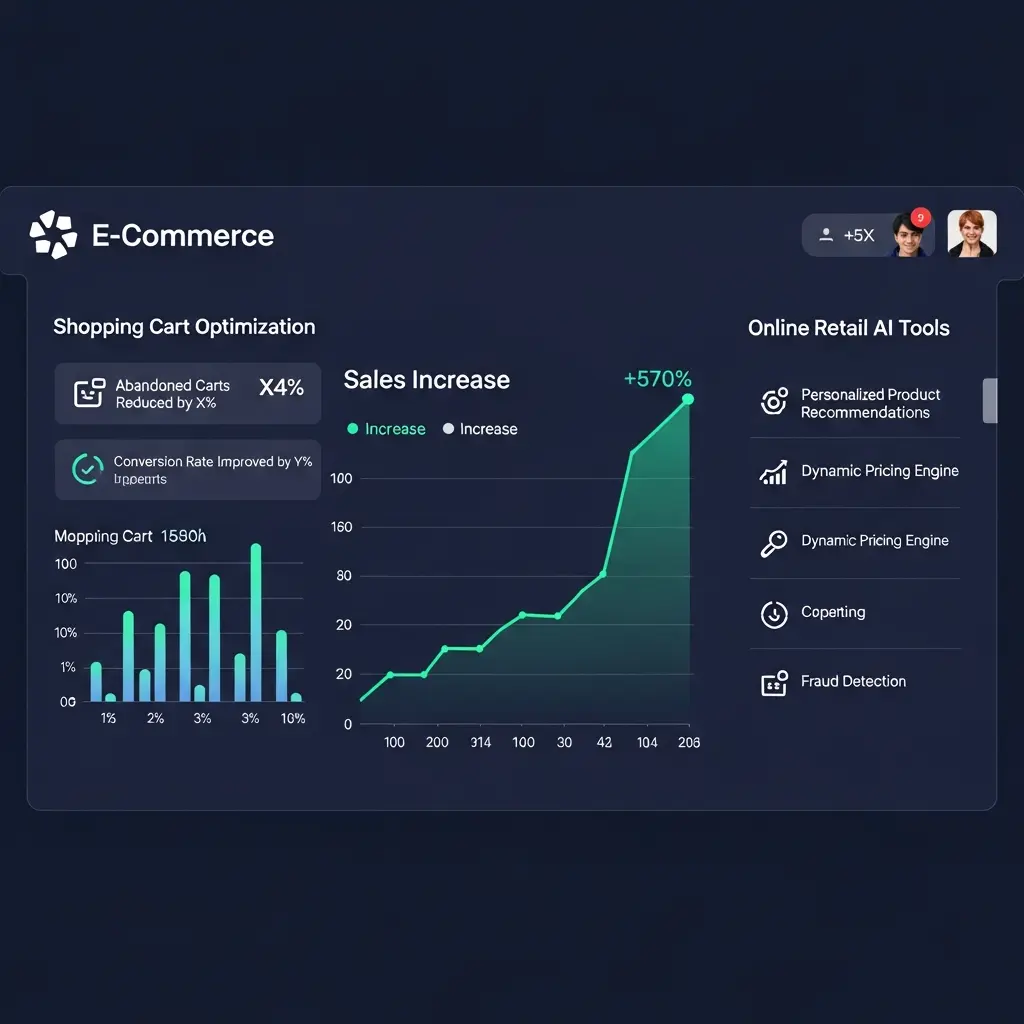
E-commerce teams have no shortage of AI features to choose from. The difficult part is picking the ones that improve a real customer or operations problem rather than adding another tool to maintain.
This guide looks at the most common use cases—product discovery, merchandising, customer support, inventory, and content—and explains what to evaluate before connecting a platform to your store data.
Quick Comparison Table
| Tool | Best For | Starting Price | Free Plan | Rating |
|---|---|---|---|---|
| Also Bought | Product recommendations | $49/month | Yes | 4.5/5 |
| Repricer | Dynamic pricing | $29/month | No | 4.3/5 |
| Chatfuel | AI chatbots | $50/month | Yes | 4.5/5 |
| Inventory Lab | Inventory forecasting | $49/month | No | 4.2/5 |
| Personify | Personalization engines | $99/month | Yes | 4.5/5 |
| Klaviyo | Email automation | $25/month | Yes | 4.5/5 |
| Sentient | AI-powered marketing | $199/month | No | 4.2/5 |
| LiftLab | AI-driven analytics | $99/month | Yes | 4.3/5 |
| Glew | E-commerce analytics | $99/month | Yes | 4.5/5 |
| Sailthru | Personalization and marketing | $199/month | No | 4.2/5 |
Also Bought
Also Bought is a popular AI tool for e-commerce that provides product recommendations to customers. With its advanced algorithms, Also Bought suggests relevant products based on customer behavior, purchase history, and product attributes. Key features include:
- Personalized product recommendations
- Real-time analytics and reporting
- Easy integration with Shopify and WooCommerce Pricing starts at $49/month, with a free plan available. Pros and cons include:
- Pros: Easy to use, highly customizable, excellent customer support
- Cons: Limited scalability, requires significant data to function effectively Best for: Small to medium-sized e-commerce businesses looking for a simple and effective product recommendation engine.
Repricer
Repricer is an AI-powered dynamic pricing tool that helps e-commerce businesses stay competitive in the market. With Repricer, you can adjust prices in real-time based on demand, competition, and profit margins. Key features include:
- Real-time price adjustments
- Competitor price tracking
- Automated price optimization Pricing starts at $29/month, with no free plan available. Pros and cons include:
- Pros: Highly effective in competitive markets, easy to use, excellent customer support
- Cons: Limited customization options, requires significant data to function effectively Best for: E-commerce businesses operating in highly competitive markets, such as electronics or fashion.
Chatfuel
Chatfuel is a popular AI-powered chatbot platform that helps e-commerce businesses provide 24/7 customer support. With Chatfuel, you can create custom chatbots that can answer customer queries, provide product recommendations, and even process orders. Key features include:
- Easy chatbot creation
- Integrations with popular e-commerce platforms
- Advanced analytics and reporting Pricing starts at $50/month, with a free plan available. Pros and cons include:
- Pros: Easy to use, highly customizable, excellent customer support
- Cons: Limited scalability, requires significant data to function effectively Best for: Small to medium-sized e-commerce businesses looking for a simple and effective chatbot solution.
Inventory Lab
Inventory Lab is an AI-powered inventory forecasting tool that helps e-commerce businesses optimize their inventory management. With Inventory Lab, you can predict demand, optimize stock levels, and reduce waste. Key features include:
- Advanced demand forecasting
- Automated inventory optimization
- Real-time analytics and reporting Pricing starts at $49/month, with no free plan available. Pros and cons include:
- Pros: Highly effective in reducing waste, easy to use, excellent customer support
- Cons: Limited customization options, requires significant data to function effectively Best for: E-commerce businesses with complex inventory management needs, such as those operating in the fashion or electronics industries.
Personify
Personify is a powerful personalization engine that helps e-commerce businesses provide tailored experiences to their customers. With Personify, you can create custom product recommendations, personalized emails, and targeted ads. Key features include:
- Advanced customer segmentation
- Personalized product recommendations
- Real-time analytics and reporting Pricing starts at $99/month, with a free plan available. Pros and cons include:
- Pros: Highly effective in increasing sales, easy to use, excellent customer support
- Cons: Limited scalability, requires significant data to function effectively Best for: E-commerce businesses looking for a comprehensive personalization solution.
Klaviyo
Klaviyo is a popular email automation platform that helps e-commerce businesses create targeted and personalized email campaigns. With Klaviyo, you can automate email workflows, create custom email templates, and track customer behavior. Key features include:
- Advanced email automation
- Custom email templates
- Real-time analytics and reporting Pricing starts at $25/month, with a free plan available. Pros and cons include:
- Pros: Easy to use, highly customizable, excellent customer support
- Cons: Limited scalability, requires significant data to function effectively Best for: Small to medium-sized e-commerce businesses looking for a simple and effective email automation solution.
Sentient
Sentient is an AI-powered marketing platform that helps e-commerce businesses optimize their marketing campaigns. With Sentient, you can create custom ads, personalize product recommendations, and track customer behavior. Key features include:
- Advanced ad optimization
- Personalized product recommendations
- Real-time analytics and reporting Pricing starts at $199/month, with no free plan available. Pros and cons include:
- Pros: Highly effective in increasing sales, easy to use, excellent customer support
- Cons: Limited scalability, requires significant data to function effectively Best for: E-commerce businesses looking for a comprehensive marketing solution.
LiftLab
LiftLab is an AI-powered analytics platform that helps e-commerce businesses optimize their operations. With LiftLab, you can track customer behavior, optimize inventory management, and predict demand. Key features include:
- Advanced analytics and reporting
- Predictive modeling
- Real-time data insights Pricing starts at $99/month, with a free plan available. Pros and cons include:
- Pros: Highly effective in optimizing operations, easy to use, excellent customer support
- Cons: Limited scalability, requires significant data to function effectively Best for: E-commerce businesses looking for a comprehensive analytics solution.
Glew
Glew is a popular e-commerce analytics platform that helps businesses optimize their operations. With Glew, you can track customer behavior, optimize inventory management, and predict demand. Key features include:
- Advanced analytics and reporting
- Predictive modeling
- Real-time data insights Pricing starts at $99/month, with a free plan available. Pros and cons include:
- Pros: Highly effective in optimizing operations, easy to use, excellent customer support
- Cons: Limited scalability, requires significant data to function effectively Best for: E-commerce businesses looking for a comprehensive analytics solution.
Sailthru
Sailthru is a powerful personalization and marketing platform that helps e-commerce businesses provide tailored experiences to their customers. With Sailthru, you can create custom product recommendations, personalized emails, and targeted ads. Key features include:
- Advanced customer segmentation
- Personalized product recommendations
- Real-time analytics and reporting Pricing starts at $199/month, with no free plan available. Pros and cons include:
- Pros: Highly effective in increasing sales, easy to use, excellent customer support
- Cons: Limited scalability, requires significant data to function effectively Best for: E-commerce businesses looking for a comprehensive personalization and marketing solution.
Comparison of Top AI Tools
The following table compares the top AI tools for e-commerce, including their features, pricing, and pros/cons:
| Tool | Features | Pricing | Pros/Cons |
|---|---|---|---|
| Also Bought | Product recommendations, real-time analytics | $49/month | Easy to use, highly customizable, limited scalability |
| Repricer | Dynamic pricing, competitor price tracking | $29/month | Highly effective, easy to use, limited customization options |
| Chatfuel | AI chatbots, easy chatbot creation | $50/month | Easy to use, highly customizable, limited scalability |
| Inventory Lab | Inventory forecasting, automated inventory optimization | $49/month | Highly effective, easy to use, limited customization options |
| Personify | Personalization engine, advanced customer segmentation | $99/month | Highly effective, easy to use, limited scalability |
| Klaviyo | Email automation, custom email templates | $25/month | Easy to use, highly customizable, limited scalability |
| Sentient | AI-powered marketing, advanced ad optimization | $199/month | Highly effective, easy to use, limited scalability |
| LiftLab | AI-powered analytics, predictive modeling | $99/month | Highly effective, easy to use, limited scalability |
| Glew | E-commerce analytics, predictive modeling | $99/month | Highly effective, easy to use, limited scalability |
| Sailthru | Personalization and marketing, advanced customer segmentation | $199/month | Highly effective, easy to use, limited scalability |
How to Choose the Right Tool
When choosing an AI tool for your e-commerce business, consider the following criteria:
- Business goals: Identify your business goals and objectives, and choose a tool that aligns with them.
- Features and functionality: Evaluate the features and functionality of each tool, and choose one that meets your needs.
- Pricing and scalability: Consider the pricing and scalability of each tool, and choose one that fits your budget and growth plans.
- Customer support: Evaluate the customer support and resources provided by each tool, and choose one that offers excellent support and guidance.
Getting Started: Step-by-Step
Getting started with AI tools for e-commerce is easier than you think. Here are the steps to follow:
- Identify your business goals: Determine what you want to achieve with AI tools, such as increasing sales or improving customer experience.
- Research and evaluate tools: Research and evaluate different AI tools, considering their features, pricing, and pros/cons.
- Choose a tool: Choose a tool that aligns with your business goals and objectives.
- Set up and integrate: Set up and integrate the tool with your e-commerce platform, such as Shopify or WooCommerce.
- Configure and customize: Configure and customize the tool to meet your specific needs and requirements.
- Monitor and optimize: Monitor and optimize the tool's performance, making adjustments as needed to achieve your business goals.
- Continuously evaluate and improve: Continuously evaluate and improve your AI tool strategy, staying up-to-date with the latest trends and best practices.
Common Mistakes to Avoid
When using AI tools for e-commerce, avoid the following common mistakes:
- Insufficient data: Failing to provide sufficient data for the AI tool to function effectively.
- Poor configuration: Failing to configure the tool correctly, leading to suboptimal performance.
- Lack of monitoring: Failing to monitor the tool's performance, leading to missed opportunities and suboptimal results.
- Inadequate customer support: Failing to provide adequate customer support, leading to frustration and dissatisfaction.
FAQ
Here are some frequently asked questions about AI tools for e-commerce:
- What is AI, and how can it help my e-commerce business?: AI stands for Artificial Intelligence, and it refers to the use of computer algorithms and machine learning to perform tasks that typically require human intelligence, such as data analysis, customer service, and marketing.
- What are the benefits of using AI tools for e-commerce?: The benefits of using AI tools for e-commerce include increased sales, improved customer experience, and streamlined operations.
- How do I choose the right AI tool for my e-commerce business?: When choosing an AI tool, consider your business goals, features and functionality, pricing and scalability, and customer support.
- What are the most popular AI tools for e-commerce?: Some of the most popular AI tools for e-commerce include Also Bought, Repricer, Chatfuel, Inventory Lab, Personify, Klaviyo, Sentient, LiftLab, Glew, and Sailthru.
- How do I get started with AI tools for e-commerce?: To get started with AI tools, identify your business goals, research and evaluate tools, choose a tool, set up and integrate, configure and customize, monitor and optimize, and continuously evaluate and improve.
- What are the common mistakes to avoid when using AI tools for e-commerce?: Common mistakes to avoid include insufficient data, poor configuration, lack of monitoring, and inadequate customer support.
- How can I measure the effectiveness of AI tools for e-commerce?: To measure the effectiveness of AI tools, track key metrics such as sales, customer satisfaction, and operational efficiency.
- What is the future of AI in e-commerce?: The future of AI in e-commerce is promising, with advancements in machine learning, natural language processing, and computer vision expected to drive further innovation and adoption.
By following these guidelines and best practices, you can harness the power of AI to drive growth, improve customer experience, and streamline operations in your e-commerce business. Whether you're a seasoned e-commerce professional or just starting out, AI tools can help you achieve your goals and stay ahead of the competition.
Tags
Written by

Sourabh Gupta
Author at Teach AI Tools
Sourabh tests every AI tool he writes about — hands-on, with real use cases. His background in data science means he goes beyond marketing claims to benchmark actual performance, cost, and reliability for developers and creators.
Full bio & editorial process →