AMD’s Taalas Acquisition Shows Why AI Inference Hardware Is Becoming a Major Battleground
Editorial note: Some links in this article are affiliate links — we may earn a commission if you sign up, at no extra cost to you. Research guides are distinguished from documented firsthand reviews in our editorial standards. Read our editorial standards →

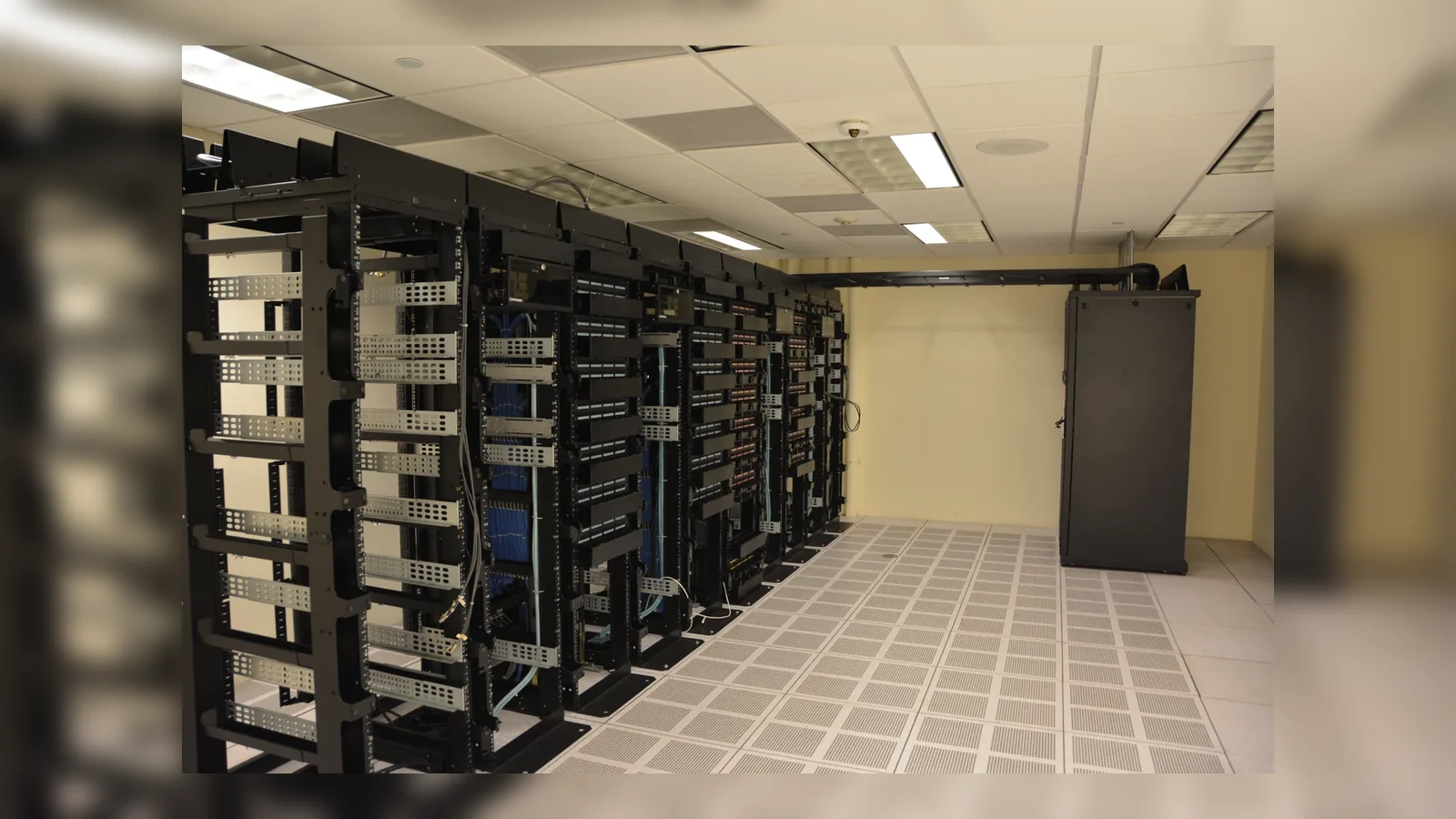
Original illustration created for Teach AI Tools.
The early generative-AI hardware story was dominated by training. Build a larger cluster, feed it more data, run for longer, and produce a more capable model. That story is still important, but it is no longer sufficient for a company trying to run AI in production. Once a model is serving customers, the everyday questions are different: How quickly does it return the first useful token? How much does each response cost? Can the system handle a peak in demand? How much memory is consumed by long context? And can the application meet a service-level objective without an unsustainable GPU bill?
AMD’s announced agreement to acquire Taalas is a clear signal that inference has become its own hardware market. Taalas develops specialized silicon designed around the inference problem. Reporting and AMD’s own announcement describe an approach in which model weights can be embedded more directly in the chip, reducing the repeated movement of data between memory and compute that constrains many conventional inference workloads.
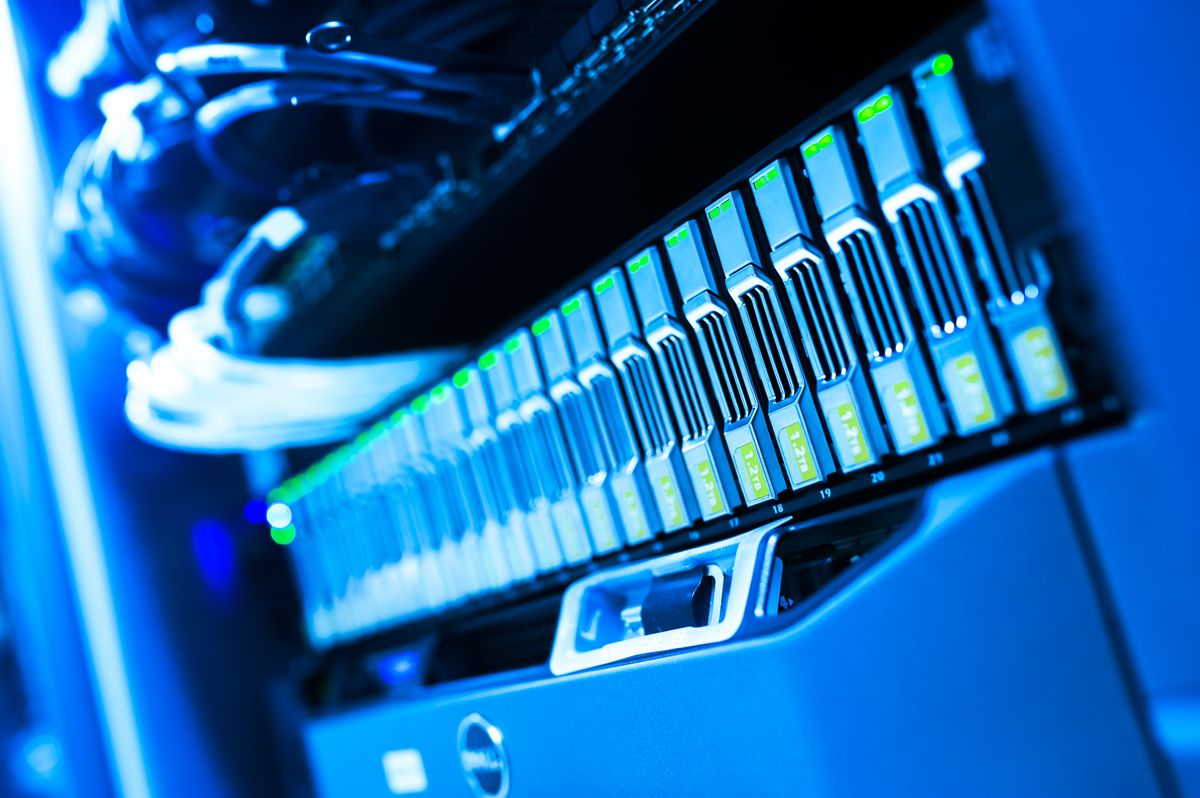
Source photo: Pexels, used under the Pexels License.
What AMD Announced
AMD said on August 6, 2026 that it had reached a definitive agreement to acquire Taalas, a company focused on specialized AI inference silicon. The company said it planned to integrate the technology into system-level solutions alongside its Instinct GPU roadmap. The terms of the deal were not disclosed publicly.
The announcement should not be read as a declaration that general-purpose GPUs are obsolete. GPUs remain exceptionally flexible. They can support many models, frequent updates, training, fine-tuning, variable batch sizes, and workloads that change week to week. That flexibility is valuable when an organization is still experimenting or serving a broad mix of models.
The Taalas proposition is different: if a model and workload are stable enough, a more specialized design can reduce the cost and latency of running it repeatedly. The trade-off is obvious. A chip optimized around a particular model or family of models may be extraordinarily efficient for that job and much less useful when the model changes. This is not an either-or market. It is a market that is becoming more heterogeneous.
Inference Is a Data-Movement Problem
It is tempting to describe AI chips in terms of raw arithmetic operations. For many production inference workloads, memory movement is at least as important. Model weights have to be available to the compute units as each token is generated. Moving very large weights repeatedly consumes energy, bandwidth, and time. Long contexts add their own pressure through key-value caches and prompt processing.
Specialized approaches try to reduce those bottlenecks. When a design is tightly coupled to a known model, it can avoid some of the generality that makes GPUs flexible. It may use memory, interconnect, and compute in a way that is tailored to a particular inference path. The result can be lower power use or lower latency for the target workload, though the real outcome depends on model architecture, batch size, context length, quantization, software stack, and deployment environment.
This is why headline claims should be tested with care. A chip can look extraordinary under a specific benchmark configuration and deliver a smaller advantage under an enterprise’s traffic pattern. Ask whether the comparison includes prompt processing as well as token generation, whether it uses the same model precision, whether batch size is realistic, and whether network, retrieval, and application latency are included. A useful inference benchmark is one that resembles the request path users actually experience.
Prefill, Decode, and the Shape of a Request
Many large-language-model requests have two broad computational phases. Prefill processes the input prompt and context. Decode generates output tokens one at a time. The balance between the two changes with the application. A long document-analysis request can be dominated by prefill. A chat or agent workflow with a long generated response can put more pressure on decode. An architecture that is excellent at one phase may need help from another system for the full path.
This is one reason hybrid infrastructure is becoming attractive. A company may retain GPU capacity for flexible models, experimentation, large prompt ingestion, and model updates, while using more specialized hardware for a mature high-volume service. The right design is based on a workload profile, not a brand preference.
An agentic application makes the profile more complex. A single user request may create many short model calls, each with tool results added to context. The system may care intensely about first-token latency because a human is watching the workflow. Or it may run batch analysis overnight, where throughput and energy efficiency matter more than interactive speed. “AI inference” is not one workload, and procurement should not treat it as one.
Why This Matters to Enterprise Teams
For a data and AI engineering team, the model is only one term in the cost equation. A useful chain is:
Model choice → model serving → accelerator and memory → orchestration → latency → cost → user experience.
A model with a low per-token API price can still create an expensive product if it triggers repeated calls, carries large contexts, or requires aggressive concurrency. A self-hosted model can look cheap until GPU utilization, energy, redundancy, observability, staffing, and capacity planning are included. Specialized inference hardware may look compelling until model updates make the optimization stale.
The consequence is that infrastructure decisions should follow measurement. Capture prompt length, output length, concurrency, queue time, first-token latency, total response time, cache hit rate, tool-call count, and cost per successful workflow. Segment by use case. A customer-support assistant, a nightly financial summarization job, and an autonomous coding agent may need different model-serving strategies even if they use the same foundation model.
The Strategic Meaning of the Taalas Deal
AMD is not alone in seeing inference specialization as an opportunity. The market includes GPUs, cloud accelerators, custom ASICs, model-specific chips, and systems that split different inference phases across different hardware. The strategic point of the Taalas acquisition is that a major compute supplier sees enough value in specialized inference to bring that capability closer to its broader product roadmap.
That can matter for buyers because systems, not chips, are what get deployed. An enterprise needs a supported software stack, monitoring, networking, failover, security controls, model serving, and integration with existing data infrastructure. A highly efficient accelerator that cannot be operated reliably is not a production advantage. AMD’s emphasis on system-level solutions suggests that the vendor competition will increasingly be about the complete path from model to application.
It also means the familiar “GPU versus ASIC” framing is too simple. A flexible GPU may be the correct answer at the beginning of a product’s life. A specialized accelerator may become attractive after the team knows exactly which model, precision, request shape, and service-level objective it needs. Good architecture leaves room for both.
Questions to Ask Before Buying Capacity
When evaluating inference infrastructure, ask for a workload-specific proof of concept rather than a generic benchmark deck. Use the actual model version, prompts with realistic length, expected concurrency, and the same security constraints that production will have. Include the cost of data transfer, storage, model updates, and operational ownership.
Ask how quickly the platform can adapt when the model changes. An agent product that evolves every month has different needs from a document-classification service using a stable fine-tuned model. Ask what happens during a hardware failure, how capacity is added, whether the serving stack supports your observability tools, and which optimizations are portable if you change vendors.
Finally, resist the urge to turn a hardware decision into an identity decision. The winning design may use hosted APIs for early product discovery, GPUs for flexible workloads, and specialized inference for a mature endpoint with predictable traffic. The job is not to choose one forever. It is to understand where the workload is spending time and money.
An Example of Workload Fit
Imagine two products. The first is an internal research assistant whose model, retrieval method, and prompt format change every week. It handles uneven traffic and needs to compare several model families. Flexible GPU capacity or a managed service is likely to be worth more than a narrowly optimized path because iteration speed is the scarce resource.
The second product generates short, structured responses for a large, stable stream of customer requests using one approved model revision. Its prompts are predictable, its latency target is strict, and its traffic is high enough to make serving cost material. That is the type of workload where specialized inference can be compelling. The contrast shows why the “best chip” question is misleading. The best system is the one whose flexibility, performance, and operational burden match the application’s current stage.
Capacity planning should also include a model-change budget. A team that adopts a hardware optimization should know how it will test a revised model, maintain a fallback service, and calculate the cost of switching. That discipline preserves the upside of specialization without making one hardware decision a hidden constraint on product strategy.
Sources and Further Reading
- AMD: acquisition announcement
- Reuters: AMD’s inference-focused Taalas deal
- CNBC: model-specific inference chips and the acquisition
A Practical Response for Teams
The useful response to AI inference becoming a specialized infrastructure decision is neither to declare a revolution on the strength of one launch nor to wait until the category is settled. The productive middle path is to treat the change as a design input. AMD’s Taalas acquisition confirms that production cost and latency are pushing the market beyond a one-hardware-fits-all approach. That is enough information to make a small, controlled decision; it is not a license to make an irreversible one.
Start by choosing a workflow with a visible owner, a known baseline, and a consequence that can be contained. Profile one production-like workload end to end before comparing any accelerator, cloud endpoint, or serving stack. A pilot should have one accountable business sponsor and one technical owner who can stop it. It should also have an explicit definition of a successful handoff: what the system may do automatically, what it may prepare for review, and what must still be decided by a person. That clarity matters more than a fashionable agent framework or a perfect prompt.
Design the trial around boundaries, not just capability. Keep models and hardware environments isolated, benchmark both prefill and decode, plan for failures, and avoid locking a business workflow to a chip before traffic is understood. Treat permissions, data exposure, budgets, and time limits as product requirements. A capable system with a small blast radius is far more informative than an impressive demo with unrestricted access. Keep a trace of the inputs, tool calls, outputs, approvals, and exceptions so the team can explain what happened later without reconstructing it from memory.
Measure the result as an operational change rather than a model score. Measure first-token latency, total latency, queue time, throughput, utilization, energy where available, cost per successful request, and cost per completed business workflow. A model can look exceptional in a benchmark and still make a workflow slower if people must repeatedly repair unclear handoffs. Conversely, a less glamorous model can create value when it is paired with reliable retrieval, constrained tools, and a review queue. The question is not “did the agent look intelligent?” It is “did the service level, error rate, cost, and accountability improve?”
There is also a people dimension. Give the people closest to the work a way to challenge the system, correct it, and see what it did. In a healthy deployment, the agent makes routine work more legible: it shows the evidence it used, declares uncertainty, and escalates exceptions. In an unhealthy deployment, it becomes a black box that quietly adds work to the people who are supposed to supervise it. The difference is architecture and operating discipline, not optimism.
Finally, revisit the pilot after a fixed interval. Review the incidents that did not become tickets: near misses, confusing recommendations, permissions that were too broad, and tasks that users quietly took back from the agent. Those are often more valuable than the headline productivity number. The teams that benefit from this wave will not be the teams that automate the most quickly. They will be the teams that learn how to delegate safely, observe clearly, and change course early.
Tags
Written by

Sourabh Gupta
Author at Teach AI Tools
Sourabh Gupta is responsible for Teach AI Tools. Research guides and documented firsthand reviews are identified separately. An author profile is not evidence of testing; look for sources, test records, and limitations in the article.
Full bio & editorial process →