
China's Moonshot AI Launches Kimi K3: A 2.8 Trillion Parameter Model That Rivals US Giants
Editorial note: Some links in this article are affiliate links — we may earn a commission if you sign up, at no extra cost to you. Every tool is independently tested by our team before being recommended. Read our editorial standards →
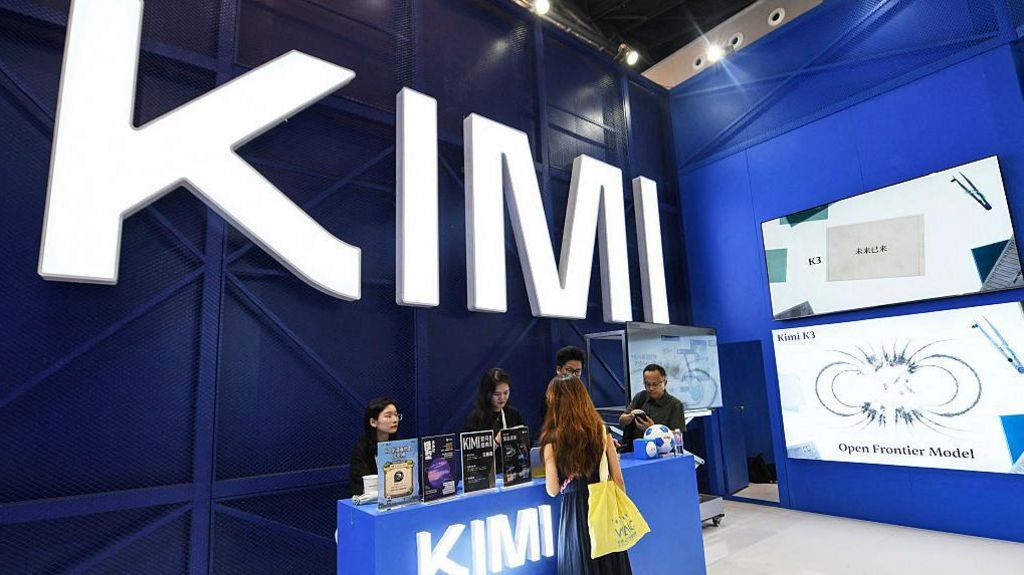
The global AI competition took a significant turn in July 2026 when Moonshot AI, a Chinese AI laboratory backed by major technology investors, unveiled Kimi K3 — a 2.8 trillion parameter model that the company claims can match or outperform some of the best AI systems produced by American labs.
China's AI Race Just Hit a New Milestone
The announcement matters not just for the raw numbers, but for what it signals about the trajectory of Chinese AI development. For years, US labs have maintained a clear performance lead at the frontier. With Kimi K3, that gap has narrowed in ways that were not anticipated even twelve months ago.
What Is Kimi K3?
Kimi K3 is Moonshot AI's largest and most capable language model to date. The model sits at the top of the Kimi family — Moonshot's flagship product lineup — and represents a step-change in the company's ambitions.
At 2.8 trillion parameters, Kimi K3 is one of the largest AI models ever released. For context, most publicly released models operate in the range of tens to hundreds of billions of parameters. A 2.8 trillion parameter model requires enormous infrastructure to train and serve, and its release signals that Moonshot has access to significant compute resources despite ongoing US chip export restrictions targeting China.
The model features:
- Advanced reasoning capabilities designed for complex, multi-step tasks
- A 1 million token context window for processing long documents and codebases
- GPU kernel optimization techniques to maximize hardware efficiency
- Native support for agentic workflows
How Does Kimi K3 Perform?
Competitive With Anthropic's Fable 5
Moonshot claims that Kimi K3 performs competitively with Claude Fable 5 (with fallback) — Anthropic's top-tier model — on a range of evaluated tasks. Specifically, the company benchmarks K3 against:
- Anthropic's Fable 5 (with fallback): competitive performance
- Anthropic's Opus 4.8: K3 outperforms
- OpenAI's GPT-5.6 Sol: K3 outperforms
- OpenAI's GPT-5.5: K3 outperforms
If these figures hold up to independent verification, Kimi K3 would be the most capable Chinese AI model ever released — and one of the most capable models globally.
GPU Kernel Optimization
One of the most technically interesting aspects of Kimi K3 is its heavy investment in GPU kernel optimization — the low-level programming techniques that determine how efficiently a model uses the underlying hardware. Moonshot claims that K3 outperforms competing models specifically on tasks that measure GPU kernel efficiency, which is significant given the compute constraints Chinese AI labs face from US chip export controls.
By squeezing more performance from each GPU cycle, Moonshot can partially compensate for having access to fewer high-end chips than US competitors like OpenAI and Anthropic.
The Architecture Behind Kimi K3
Moonshot has disclosed several architectural details that explain K3's performance:
Efficient Parallelism
K3 uses enhanced data and model parallelism — techniques that split the model's workload across many GPUs simultaneously. Better parallelism means faster training and inference at scale, which is critical when deploying a 2.8 trillion parameter model commercially.
Optimized Memory Management
Large models suffer from memory bottlenecks: the model weights and the intermediate calculations during inference consume enormous amounts of GPU memory. K3 employs advanced caching techniques to reduce memory overhead, allowing it to run on a smaller infrastructure footprint than a naive implementation of the same parameter count would require.
Customized Training Algorithms
Rather than using standard training procedures, Moonshot has developed tailored algorithms designed to improve convergence speed — the rate at which the model learns from training data. Faster convergence means you can train a better model with the same amount of compute, or the same quality model with less.
The Chip Constraint Problem — And How Moonshot Navigated It
US export controls have been progressively tightening restrictions on the sale of advanced AI chips — particularly Nvidia's H100 and H200 series — to Chinese companies. These restrictions are specifically intended to slow the development of frontier AI models in China.
Kimi K3's existence at 2.8 trillion parameters raises an obvious question: how did Moonshot build a model of this scale under these constraints?
The answer appears to involve several factors:
- Stockpiling of chips before restrictions tightened — Chinese AI labs made significant chip purchases in 2023 and 2024
- Use of less-restricted hardware — older Nvidia architectures and domestic Chinese chips like Huawei's Ascend series are not under the same export controls
- Software-level efficiency — K3's GPU kernel optimizations and memory management improvements reduce the compute requirement per unit of performance
- Distributed training across many lower-tier GPUs — compensating for lack of top-tier chips with sheer quantity
The result is a model that achieves frontier-level performance despite the hardware constraints — a software and systems engineering achievement that is arguably as impressive as the benchmark numbers themselves.
The Broader Chinese AI Landscape
Moonshot is not alone. The July 2026 announcement comes alongside model releases from several other Chinese AI labs:
Z.ai has been releasing competitive models in the 100-200 billion parameter range that punch above their weight on instruction-following and coding tasks.
MiniMax has focused on multimodal capabilities and long-context processing, and has made models available through its API to international developers.
DeepSeek, whose early 2025 release sent shockwaves through the industry, continues to develop its model family with a strong emphasis on open weights and cost efficiency.
The pattern across all of these labs: Chinese AI models are being released at sharply lower costs than their US counterparts, and they are releasing an increasing portion of their work as open-weight models — a strategy that accelerates adoption globally and builds a developer ecosystem that US labs cannot easily replicate.
What This Means for the Global AI Race
The Performance Gap Is Closing
As recently as 2024, most industry observers estimated that Chinese AI models were roughly one to two generations behind the US frontier. Kimi K3's benchmarks — if they hold up to independent evaluation — suggest that gap has compressed dramatically. Models that match or approach Claude Fable 5 represent the current state of the art, and Chinese labs are now operating at that level.
Open Weights as a Strategic Advantage
The decision by multiple Chinese labs to release open-weight models is not simply altruism. It is a deliberate strategy to build developer adoption, create a global ecosystem around Chinese AI infrastructure, and force US companies to compete on price. When a 2.8 trillion parameter model is available open-weight, every startup in the world can run it — and that is a powerful distribution advantage.
Cost Pressure on US Labs
US AI labs are increasingly being squeezed between two forces: the enormous capital expenditure required to train frontier models, and the downward price pressure from Chinese open-weight models that can be run for nearly zero marginal cost. This dynamic is likely to accelerate over the next 12 to 18 months.
Is Kimi K3 Accessible to International Users?
Kimi is available through Moonshot's consumer app and via the Kimi API. International access has historically been limited depending on geographic restrictions, but Moonshot has been gradually expanding availability. For developers in regions where Kimi API access is available, K3 represents a cost-effective alternative to US frontier models for certain workloads.
The Bottom Line
Kimi K3 is not just another Chinese AI model. At 2.8 trillion parameters, with benchmark performance that rivals US frontier models, it represents the clearest evidence yet that the Chinese AI industry has closed the gap at the top of the capability curve. The combination of scale, efficiency engineering, and competitive pricing makes Kimi K3 a model worth taking seriously — regardless of where you stand on the geopolitics.
The AI race is global. Kimi K3 is the most emphatic statement yet that China intends to compete at the very top.
Source: The Beat · New York Times · BBC
Tags
Written by

Sourabh Gupta
Data Scientist & AI Tools Specialist · 5+ years in AI/ML
Sourabh tests every AI tool he writes about — hands-on, with real use cases. His background in data science means he goes beyond marketing claims to benchmark actual performance, cost, and reliability for developers and creators.
Full bio & editorial process →