
AI for Architecture Is Great at Selling Ideas — and Great at Hiding Bad Ones
Editorial note: Some links in this article are affiliate links — we may earn a commission if you sign up, at no extra cost to you. Research guides are distinguished from documented firsthand reviews in our editorial standards. Read our editorial standards →
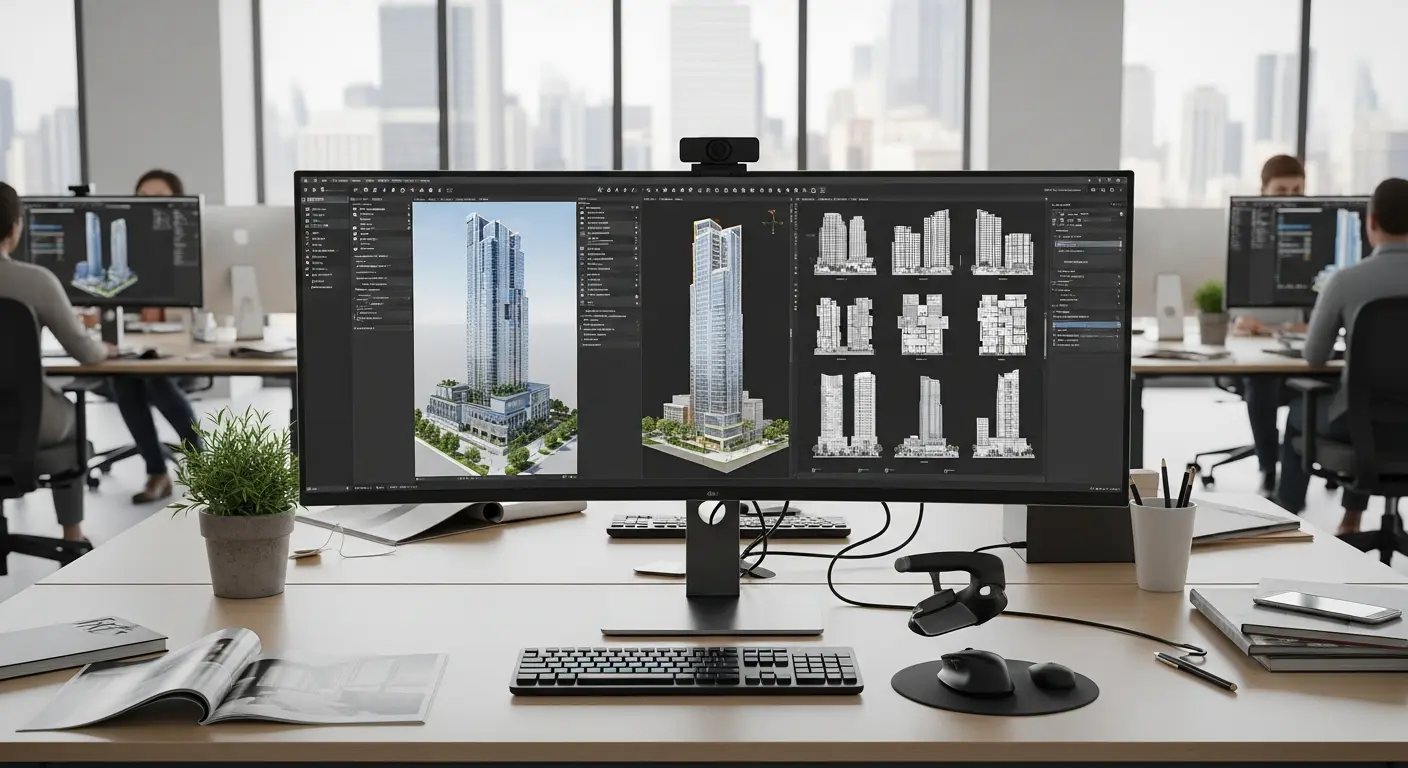
The best thing that happened to architectural presentations in 2026 is AI-generated visualization. The worst thing that happened to architectural design quality in 2026 is also AI-generated visualization.
AI for Architecture Is Great at Selling Ideas — and Great at Hiding Bad Ones
The worst thing that happened to architectural design quality in 2026 is also AI-generated visualization.
The problem isn't that AI renders are bad. They're often stunning. The problem is that they're equally stunning for a well-designed building and a poorly-designed one. The qualities that make AI renders compelling — perfect lighting, lush landscaping, flattering perspectives, implied materials — are qualities that exist entirely in the rendering and have no relationship to the building's actual design quality.
This creates a specific dynamic that every firm using these tools needs to understand and actively manage.
What AI Visualization Tools Cost in 2026
| Tool | Primary Use | Pricing |
|---|---|---|
| Midjourney v7 | Concept renders, exterior visualization | $10/mo (Basic), $30/mo (Standard), $60/mo (Pro), $120/mo (Mega) |
| DALL-E 3 (via API) | Presentation renders, material studies | ~$0.04–$0.08/image |
| Adobe Firefly (Generative Fill) | Material and texture exploration | Included in Creative Cloud ($60/mo) |
| Stable Diffusion (self-hosted) | High-volume, customizable | Free (compute cost only) |
| Veras (EvolveLAB) | ArchViz from Revit/SketchUp models | $40/mo (Pro), $75/mo (Team) |
| Maket.ai | Concept floor plans + renders | $29–$99/mo |
| Autodesk Forma | Environmental analysis with massing | From $350/seat/mo (AEC Collection) |
The price range spans from effectively free (Stable Diffusion, self-hosted) to $120/month for Midjourney's top tier. For a firm using Midjourney for concept visualization, the $30/month Standard plan is sufficient for most project volumes — the higher tiers mainly provide faster generation and more concurrent requests.
The Specific Problem: Aesthetic Value Detached from Design Value
In traditional architectural presentation, the quality of the render is roughly correlated with the effort invested in the design. A hand sketch looks like a sketch. A watercolor rendering looks like a watercolor. A full 3D render from a detailed Revit model looks like a detailed model, because it is one. The fidelity of the presentation historically carried information about the fidelity of the design.
AI visualization breaks this correlation. A Midjourney prompt — "contemporary residential building, concrete and glass, lush garden, warm evening light, architectural photography" — produces a photorealistic render in 30 seconds that looks like it was produced from a complete design. It wasn't. It was produced from a text description and whatever Midjourney decided to generate.
The architectural decisions that determine whether a building is good — the proportion of solids to voids, the relationship between interior and exterior, how the building handles site topography, whether the structural system makes sense — are invisible in the render. The AI generates something that looks like good architecture without reference to whether the underlying design is good architecture.
Three Real Failure Modes
The Committed Client Problem
A firm doing early residential design work shows a client three AI-generated concept renders at the first meeting. The client falls in love with one — specifically with the warm cedar cladding, the overhanging second floor, and the mature landscaping.
The second meeting reveals that the cedar cladding costs 40% more than the budget. The overhanging second floor requires a structural steel transfer beam that adds $35,000. The landscaping is 15 years of growth. None of this was in the render because none of it needed to be — the render was a concept image, not a design document.
The client is now committed to an aesthetic that can't be built within budget, and they feel that the "bait and switch" happened between meetings one and two.
The Bad Plan Hidden by a Good Render
A Maket.ai-generated floor plan has a kitchen positioned against the north wall with no natural light, a master bedroom that requires walking through a secondary bedroom to access the bathroom, and a living room proportioned for a furniture arrangement that would block the primary circulation path.
These are bad design decisions. They're all invisible in a Midjourney render of the exterior elevation. The client approves the scheme based on how the building looks from outside.
The problems surface in design development, at the point where changes are four to eight times more expensive than they would have been in schematic design.
The Regulatory Constraint Blind Spot
An AI-generated render shows a beautiful contemporary home on a hillside site — cantilevered deck, floor-to-ceiling glazing, clean horizontal lines. What the render doesn't show: the site has a heritage overlay that requires pitched roofs and traditional cladding materials. The contemporary design the client approved in the presentation cannot be built on this site without a discretionary approval that has a low success rate.
AI visualization tools have no knowledge of site-specific regulatory constraints. They generate what looks good, not what's buildable.
How Firms Are Managing This in 2026
The firms using AI visualization effectively have developed explicit protocols around it. The common elements:
Annotation requirements. Every AI render shown to a client is labeled "Concept Direction Only — Not a Design Proposal." This is verbal, written on the slide, and followed up in the meeting summary. It sounds obvious. It's not standard practice at most firms, and the omission creates liability.
Sequence discipline. AI renders are used after a site analysis and constraint review, not before. Understanding what can be built on the site precedes showing the client what things could look like.
Budget reality checks built into the presentation. When an AI render shows a specific material or feature — cantilever, green roof, high-end glazing — the presentation includes a rough cost range for that element alongside the image. "This overhang: estimated $45,000–$65,000 at current material costs." This prevents the committed-client problem.
Plan-first, render-second. The AI render follows approval of a hand-drawn or digital plan sketch, not the reverse. Clients approve the spatial organization before they see what it looks like. This catches the hidden-bad-plan problem at the stage where it's cheap to fix.
Where AI Visualization Genuinely Helps
None of this means AI visualization is net negative. For architectural practice in 2026, it's genuinely useful in specific applications:
Design exploration at the concept stage — generating 20 massing and material variations in an afternoon instead of spending a week on 3 hand sketches. The speed of exploration allows design teams to evaluate more options before committing to a direction.
Client communication on materials and textures — showing how a facade reads in different light conditions, different seasons, or with different cladding options. This is AI visualization at its most honest: the client understands they're looking at a material study, not a building.
Marketing and competition imagery — once the design is resolved and documented, AI visualization produces compelling marketing imagery faster and cheaper than traditional rendering pipelines.
Planning applications — some jurisdictions now accept AI-generated visualization for design review submissions, provided they're accompanied by plan and section documentation. This saves significant rendering time on projects that require planning board presentations.
The tool is powerful. The discipline around how it's used in client-facing contexts is what separates firms that benefit from it from firms that create problems with it.
Tags
Written by

Sourabh Gupta
Author at Teach AI Tools
Sourabh tests every AI tool he writes about — hands-on, with real use cases. His background in data science means he goes beyond marketing claims to benchmark actual performance, cost, and reliability for developers and creators.
Full bio & editorial process →