Most Teams Measure Virtual Events Wrong — AI Just Makes the Mistake Faster
Editorial note: Some links in this article are affiliate links — we may earn a commission if you sign up, at no extra cost to you. Research guides are distinguished from documented firsthand reviews in our editorial standards. Read our editorial standards →
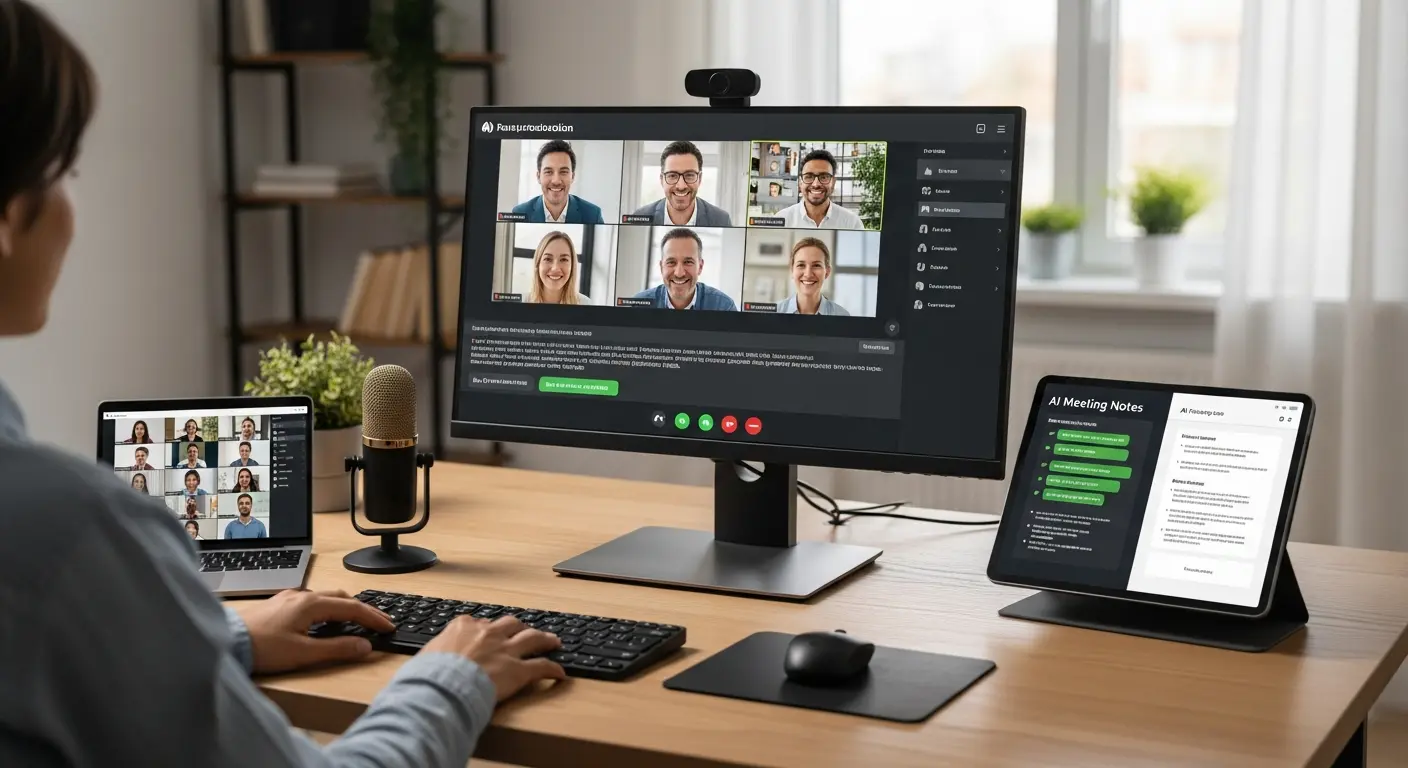
A hard truth about ai-driven virtual events: better automation does not fix bad event strategy. It scales it.
Most Teams Measure Virtual Events Wrong — AI Just Makes the Mistake Faster
It scales it.
According to Freeman research cited by the company, 78% of event organizers believed attendees hit a "peak moment" at their last event, while only 40% of attendees agreed. That gap matters more than any flashy AI feature. If your team is optimizing for keynote applause, chat volume, or average watch time while attendees care more about buyer meetings, product answers, or useful learning, your platform reports can look great while the event underperforms.
That is the real story in 2026. The useful AI features are not the ones that sound futuristic in a sales demo. They are the ones that help you route people to the right sessions, answer practical questions accurately, schedule relevant meetings, and measure outcomes your finance or sales team will actually respect.
The Real Failure in AI-Driven Virtual Events Is Measurement
Consider a common B2B scenario. A fintech company runs a quarterly virtual summit with 800 to 1,200 registrants, a few panels, a product demo block, and sponsor sessions. After the event, the platform dashboard shows a 74% attendance rate, hundreds of poll responses, and a healthy volume of chat activity. The post-event survey comes back at 4.2 out of 5.
Then sales asks the obvious question: how many qualified conversations did this event create?
If the answer is "almost none," the event did not perform nearly as well as the engagement dashboard suggests.
One explanation is that many event teams still measure what the platform can track most easily rather than what the business actually wants. Session dwell time is easy to count. Vendor-intent conversations are harder. Poll clicks are easy. Pipeline generated within 30 days is harder. AI systems will optimize for the signals you feed them, not the outcome you forgot to define.
PCMA's AI Pulse Check reported that only 15% of event professionals qualify as AI "strategic leaders." The report's broader point is useful: the gap is not just tool access. It is workflow design. Teams with stronger results tend to connect pre-event segmentation, live-event routing, follow-up, and reporting into one process instead of using AI as a grab bag of isolated features.
A better setup looks like this:
-
define one primary event outcome before registration opens
-
map that outcome to trackable attendee actions
-
choose AI features that increase those actions
-
review success 30 days after the event, not 30 minutes after the keynote
If your event exists to drive partner conversations, then AI meeting recommendations and completion rates matter more than applause reactions in chat. If the goal is product education, then post-event content consumption and demo follow-ups matter more than poll participation.
Hybrid Events Are Shrinking, Not Quietly Taking Over
A lot of event content still treats hybrid as the default future. The recent numbers are messier.
According to Swoogo's research, 2024 saw 25% fewer hybrid events than the prior period. That does not prove hybrid is dead, but it does suggest many organizers decided the format was not worth the operational complexity.
That decision makes sense. A real hybrid event is not an in-person conference with a stream attached. It is two experiences running at the same time for audiences with different needs.
The in-person audience wants hallway conversations, room energy, and fast transitions. The remote audience needs tighter pacing, better moderation, stronger context, and networking formats that do not feel like an afterthought. AI can improve parts of that setup, but it cannot remove the structural difficulty of producing two good events at once.
For many mid-size teams, the useful question is not "Which platform supports hybrid?" It is this: can we afford the staff, production quality, moderation, and content design required to make both audiences feel intentionally served?
Often, the honest answer is no.
Where AI Is Earning Its Keep
Source-grounded chatbots reduce risk
PCMA's AI Pulse Check found that 59% of event planners named data privacy as their top AI concern, especially for attendee-facing uses. That lines up with what buyers now ask in demos: where does the chatbot get its answers, what data does it retain, and what happens when it does not know?
The safer implementation is a source-grounded chatbot trained only on approved event materials such as agenda data, speaker bios, sponsor pages, venue details, and FAQ content. That setup is less exciting than a general-purpose assistant, but it is far more useful for enterprise events.
A generic chatbot might invent a session title or misstate a speaker credential. A source-grounded one is more likely to respond with a constrained answer or escalate to human support. For regulated industries, that fallback behavior is not a minor detail. It is often the reason legal and procurement approve the deployment.
Pre-event segmentation usually matters more than live personalization
Many vendors market AI as a live-event miracle: instant matchmaking, dynamic recommendations, and real-time engagement prompts. Those features can help, but the larger gain often comes before the event starts.
If you have registrant data such as role, company size, industry, and stated goals, AI can group attendees into workable cohorts and trigger different email journeys, agendas, and networking suggestions before day one. That sounds basic, but it changes how prepared attendees feel when they arrive.
The company-announced example in this space that deserves attention is the reported 34% lift in session attendance at one enterprise technology conference after introducing AI-based pre-event segmentation. Because the article source does not independently verify that figure, treat it as a reported case study rather than a universal benchmark. Even so, the logic is sound: people attend more sessions when the agenda starts making sense before the event begins.
For teams building the email side of that workflow, the blog's related guide on AI tools for email marketing is useful because the quality gap between true behavioral segmentation and glorified mail merge is still wide.
Digital twins are useful when they prevent operational failure
Digital twins get oversold as visual theater. The practical use case is much simpler.
A digital twin combines venue signals such as badge scans, Wi-Fi positioning, IoT sensor data, and sometimes computer vision into a live model of movement and capacity. The value is not the 3D map. The value is the alerting layer on top of it.
If room capacity spikes, staff can reroute overflow. If registration lines start backing up, operations gets a warning before attendees start posting complaints. If traffic unexpectedly avoids a sponsor zone, that is a signal to adjust placement, signage, or timing.
This is more relevant for large conferences and complex hybrid venues than for a standard webinar program. Small teams should not buy a high-end operations stack because a demo looked impressive.
Costs Are Rising, So AI Needs to Earn a Line Item
Cost pressure is shaping event decisions more than many AI articles admit.
Industry reporting cited in event-sector coverage has shown that 38% of U.S. event planners name rising costs as a top challenge, while 71% expect costs to increase further. Reported projections also point to roughly 6% year-over-year cost-per-attendee growth. Those figures are directionally useful because they explain why buyers increasingly ask not "What can the AI do?" but "What budget does it save or justify?"
In practice, AI helps most with:
-
attendee support that would otherwise require more staff
-
content repurposing after the event
-
segmentation and follow-up workflows
-
meeting routing and lead qualification
-
session summaries and transcript search
Where it does not reliably save money is platform spend at the top end of the market. Enterprise event software remains expensive, and AI features are often bundled into already costly plans rather than offered as cheap add-ons.
So the trade-off is straightforward: AI can reduce labor and improve follow-up, but it will not magically make an enterprise event stack inexpensive.
Choosing a Platform for AI-Driven Virtual Events Without Paying for Features You Won't Use
The market has split.
Small webinar teams often need fast setup, CRM integration, and dependable registration flows. Mid-market conference teams need networking, session tracks, sponsor exposure, and analytics that connect to pipeline. Enterprise programs need compliance controls, procurement support, SSO, deeper integrations, and scale.
That fragmentation matters because many buyers overpay for breadth they will never use.
If you run a single-track event for a specialized audience, you may not need adaptive recommendations, advanced matchmaking, or multi-audience orchestration. If you run a large user conference with sponsors, buyers, partners, and press in the same environment, those features can justify their cost.
A useful buying rule: match the platform to the complexity of your event program, not to the ambition of your internal pitch deck.
Pricing for AI-Driven Virtual Events: What the Market Looks Like
Pricing varies sharply by vendor and contract size. Self-serve webinar tools can start under $100 per month. Mid-market event platforms often land in the low hundreds to low thousands per month depending on attendee volume and feature set. Enterprise suites frequently require annual contracts starting around $30,000 and climbing well beyond that.
Pricing Comparison
| Tool | Free Plan | Starting Price | Pro/Business | Best For | | | Whova | Yes, up to 30 active contacts per month | $825/month, billed annually | Custom pricing | Mid-size conferences that need agenda, networking, and mobile event features | | | vFairs | Yes, up to 100 registrations with a 90-minute session limit | $167/month, billed annually | Custom pricing | Recurring virtual events and trade-show style experiences | | | Notified | Not publicly listed | $99 per organizer/month, billed annually | $199 to $299 per organizer/month | Teams that prefer per-seat pricing over large event packages | | | Airmeet | Yes, up to 100 participants | Not publicly listed | Not publicly listed | Community-led events and networking-heavy programs | | | Zoom Events | No standard free plan listed for the full product | $125/month for up to 50 attendees | Custom pricing for larger deployments | Companies already standardized on Zoom | | | EasyWebinar | Not publicly listed | $78/month | Higher tiers not publicly listed in the article source | Marketing webinars and automated funnel setups | | | Livestorm | Not publicly listed | About $734/month at 3,000 attendees | Custom pricing | Product demos, webinars, and lead capture | | | Demio | Not publicly listed | About $734/month at 3,000 attendees | Custom pricing | Marketing teams running recurring webinars | | | Hubilo | Not publicly listed | $1,000 to $5,000/month equivalent on some per-event deals | Custom pricing | High-production branded events | | | Cvent | No free plan | Not publicly listed | Enterprise contracts often start around $40,000 annually | Large organizations with compliance and procurement needs | | | Bizzabo | No free plan | Not publicly listed | Enterprise contracts often start around $30,000 annually | Enterprise event programs focused on attendee experience | | | ON24 | No free plan | Not publicly listed | Enterprise contracts often start around $30,000 annually | Demand generation, webinars, and content-led B2B programs | |
A few practical notes:
-
Zoom Events is inexpensive to start, but many users report thinner engagement and personalization features than dedicated event platforms. That matters if networking is central to your event.
-
Cvent, Bizzabo, and ON24 are usually not sensible choices for a small team running occasional webinars. They make more sense when security, procurement, integrations, and portfolio-wide management matter.
-
EasyWebinar's low entry price is attractive for funnel-based webinar teams, but it is not a substitute for a full conference platform.
-
Airmeet and Hubilo can work well for branded experiences, but buyers should verify CRM integrations, reporting depth, and attendee caps during evaluation.
Because vendors change packaging frequently, use current quotes for final budgeting, especially at the enterprise end of the market.
Questions Buyers Keep Asking
What's the real ROI of ai-driven virtual events?
It depends on the business goal, not the platform dashboard.
If you measure ROI through attendance rate, chat messages, and poll clicks, you can produce a healthy-looking report without proving business impact. For revenue-focused events, stronger ROI measures include qualified meetings completed, pipeline created, influenced opportunities, and post-event demo requests. For education-led events, look at session completion, repeat content consumption, certification progress, or product adoption after attendance.
Are event chatbots genuinely useful?
Yes, when they are tightly controlled.
A source-grounded chatbot that answers from approved event content can reduce support load and help attendees find sessions, sponsors, or logistics quickly. A general chatbot that improvises answers is risky, especially in healthcare, finance, or other regulated environments.
Is hybrid still worth it?
Sometimes, but the format needs a reason.
The current market suggests many organizers no longer treat hybrid as the automatic next step. If you cannot clearly describe what the remote audience gets that feels designed for them, hybrid may become a weaker version of both an in-person event and a virtual one.
How should teams compare Cvent and Bizzabo?
At a high level, Cvent is often favored when venue sourcing, procurement, and broader event operations matter alongside the virtual layer. Bizzabo is often viewed as stronger on attendee experience and event design. That is an industry pattern, not a fixed rule, and both vendors customize heavily, so direct demos still matter.
Who actually needs digital twins?
Usually large venues, multi-track conferences, and operations-heavy events.
A weekly webinar series does not need a digital twin. A large conference with complex foot traffic, sponsor zones, room capacity issues, and high service expectations might benefit. Buy the operational outcome, not the visual concept.
Do This Before You Buy Another Platform
Before your next ai-driven virtual events project, interview ten recent attendees and ask one blunt question: what did you get from the event that was useful enough to remember?
Then compare those answers with the moments your analytics platform flagged as "high engagement."
If the lists barely overlap, your problem is not missing AI. Your problem is measurement.
Fix that first. Then your AI stack can optimize for outcomes that matter, instead of producing attractive dashboards for ai-driven virtual events that never translate into real value.
Tags
ai-driven virtual eventsvirtual event AI tools 2026AI event personalizationhybrid event technologyAI virtual event platformsvirtual event engagement toolsAI matchmaking for eventsevent AI use casesvirtual conference toolsAI event automationbest virtual event softwareAI-powered event managementvirtual event ROIhybrid event strategyC
Sourabh Gupta
Author at Teach AI Tools
Table of Contents
- The Real Failure in AI-Driven Virtual Events Is Measurement
- Hybrid Events Are Shrinking, Not Quietly Taking Over
- Where AI Is Earning Its Keep
- Source-grounded chatbots reduce risk
- Pre-event segmentation usually matters more than live personalization
- Digital twins are useful when they prevent operational failure
- Costs Are Rising, So AI Needs to Earn a Line Item
- Choosing a Platform for AI-Driven Virtual Events Without Paying for Features You Won't Use
- Pricing for AI-Driven Virtual Events: What the Market Looks Like
- Pricing Comparison
- Questions Buyers Keep Asking
- What's the real ROI of ai-driven virtual events?
- Are event chatbots genuinely useful?
- Is hybrid still worth it?
- How should teams compare Cvent and Bizzabo?
- Who actually needs digital twins?
- Do This Before You Buy Another Platform
Tags
Written by

Sourabh Gupta
Author at Teach AI Tools
Sourabh tests every AI tool he writes about — hands-on, with real use cases. His background in data science means he goes beyond marketing claims to benchmark actual performance, cost, and reliability for developers and creators.
Full bio & editorial process →